A step-by-step detailed guide to growing Epiphyllum, teaching you how to produce beautiful flowers
Epiphyllum is a flower that resembles a water lily, and that is how it got its name. It is a shrub-like flowering plant with some special requirements in its growing habits: it likes a sunny, well-ventilated environment, though when the temperature is too high and the weather too dry, shade is needed. So what exactly are the specific methods for growing Epiphyllum?
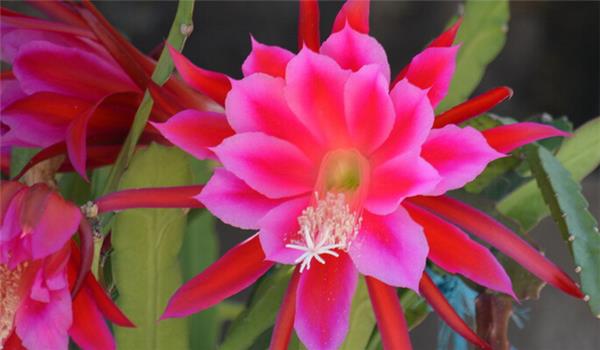
Growing Epiphyllum: temperature and light
Epiphyllum is not cold-hardy, so in northern regions it should be brought indoors around the Cold Dew solar term, and placed in a spot with plenty of sunlight once indoors. For growing Epiphyllum, from November to March of the following year, the temperature should be kept at 10-15°C; if the temperature is too high, the modified stems easily become leggy, which affects the symmetry of the plant's shape; from March to June, the temperature should be kept at 13-18°C; if the temperature is too low, it affects bud formation. For growing Epiphyllum, fertilization should be stopped in winter and watering controlled; at this time, damp potting soil combined with low temperatures is the most likely to cause root rot.
Growing Epiphyllum: planting
Epiphyllum likes fertilizer, and is generally repotted once every 1 year in spring or autumn. For growing Epiphyllum, when repotting, remove part of the old soil and dead roots, and add a growing medium mixed from 4 parts leaf mold, 3 parts garden soil, 1 part decomposed manure soil and 2 parts sandy soil, and add bone meal as a base fertilizer.
Growing Epiphyllum: watering
After each fertilization, water and loosen the soil promptly. For growing Epiphyllum, during the growth and development period, water according to the principle of "dry-wet alternation" - water when dry and let it dry between waterings - and never allow water to accumulate in the pot, otherwise root rot easily occurs. When the flower buds have appeared but have not yet opened, do not water too much, otherwise flowers and buds easily drop. For growing Epiphyllum, in the dry and windy spring and the hot summer, it is necessary to frequently spray the modified stems with clean water and also sprinkle water on the ground around the flowerpot to maintain relatively high air humidity, which is beneficial for growth and flowering.
Growing Epiphyllum: pest and disease control
Epiphyllum is prone to yellowing of the modified stems, which in severe cases turns to withered yellow and even scorching of the skin; this is often caused by improper placement of the flowerpot and exposure to direct strong light. Therefore, for growing Epiphyllum, in spring and autumn it can be placed outdoors in a sunny spot for care, while in summer it must be placed in a well-ventilated, semi-shaded spot. For growing Epiphyllum, for home cultivation, in summer it can also be placed indoors in a spot with scattered light for care, but you must remember to open the windows frequently to keep the air circulating. In addition, damage from red spider mites and scale insects can also cause the modified stems to turn yellow, so timely control should be carried out.
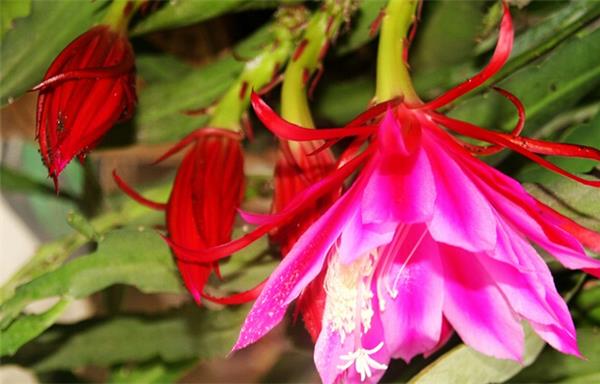
Growing Epiphyllum: shaping and pruning
Because the modified stems of Epiphyllum are soft, for growing Epiphyllum, thin bamboo canes are needed as supports; it is best to tie them into an oval trellis, and distribute the modified stems evenly and neatly on the trellis and tie them in place. This not only prevents them from breaking, but also facilitates ventilation and light penetration, making the plant's shape symmetrical and attractive.
Growing Epiphyllum: fertilizing
During the growing season, apply a dilute, well-decomposed cake fertilizer solution once every 15-20 days. For growing Epiphyllum, after the Spring Festival, change to applying liquid fertilizer once every 10 days, and promptly remove excess side buds and shoots sprouting from the base to reduce nutrient consumption and keep the plant's shape neat and attractive. For growing Epiphyllum, during the bud stage, apply 1-2 additional applications of quick-acting phosphorus fertilizer to promote larger flowers and more vivid colors.
Epiphyllum is a common household potted plant, and many homeowners want to know whether growing Epiphyllum, besides decorating the home, has any other benefits. Below, the editor will introduce the specific benefits of Epiphyllum.
Benefits of Epiphyllum:
Benefits of Epiphyllum: 1. Home decoration
Epiphyllum comes in many flower colors and varieties, and is deeply loved for its delicate, graceful posture, gorgeous colors and rich fragrance. It is mainly grown as a potted plant for ornamental viewing; in greenhouses, multiple varieties are often combined to enhance the ornamental effect. Used to decorate the area in front of windows, balconies and doorways in living rooms and studies, it is an excellent indoor potted flower with outstanding color, posture and fragrance.
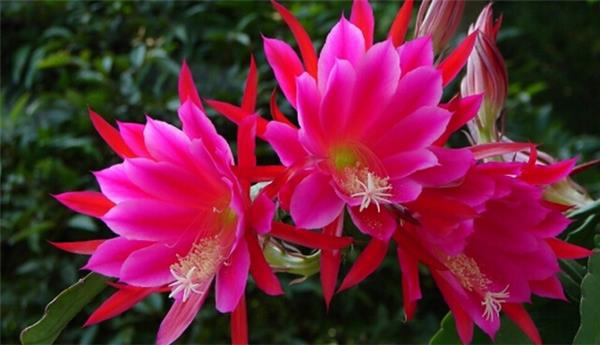
Benefits of Epiphyllum: 2. Freshening the air
Epiphyllum is a common plant with CAM metabolism; it closes the stomata on the underside of its leaves during the day, and at night, after the surrounding air temperature drops to an appropriate level, it opens the stomata on the underside of the leaves, releasing oxygen and absorbing carbon dioxide. So placing Epiphyllum in the bedroom can bring fresh air to people while they sleep, which is good for our health.
Epiphyllum can also greatly increase the negative ion content in indoor air. Epiphyllum can increase negative ions, and negative ions are something our bodies very much need. However, if a TV or computer is turned on indoors, negative ions are rapidly reduced, so if there is a pot of Epiphyllum placed next to the computer or TV, it can increase the negative ion concentration and maintain a balanced state in the environment.
Benefits of Epiphyllum: 3. Improving the energy field
Epiphyllum is a plant belonging to the fire element in the Five Elements, suitable for placement on an east- or west-facing balcony; its fire-element quality is beneficial to these two directions and can adjust and improve the energy field of the home. People born in the Year of the Ox can place the fire-element Epiphyllum in the southwest of the home, people born in the Year of the Dog can place Epiphyllum in the northeast of the home, and friends born in the Year of the Dragon and the Year of the Snake can also choose to grow a pot of Epiphyllum in the south of the home.
Placing Epiphyllum in the home can reflect the owner's taste, and it also has benefits such as freshening the air and improving the home's energy field. When arranging our homes, we can make the most of Epiphyllum's benefits to improve the home environment.
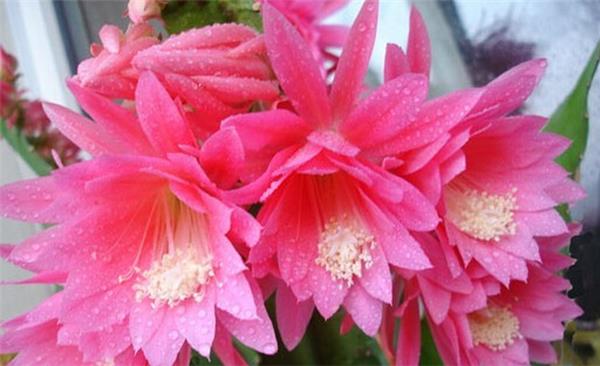
Epiphyllum, also known as red peacock, belongs to the cactus family and is native to Mexico. And because Epiphyllum is a flower that resembles a water lily, that is how it got its name. Many flower-growing enthusiasts want to understand how to grow Epiphyllum, so what are the propagation methods for Epiphyllum?
Cutting propagation method
It is best to do this between March and April each year. First cut a healthy flat stem 10 cm long as a cutting; after cutting, let it dry for 2-3 days, then insert it into moist sandy soil or vermiculite, with the depth set at 1/3 of the cutting's length, keep the temperature at 10-15°C, and spray it with water frequently. Generally, it will root in about one month, and can then be potted.
Grafting propagation method
It is best to do this at 25°C. A cactus can be chosen as the rootstock; cut a wedge-shaped opening in the rootstock with a knife, then take a healthy Epiphyllum stem segment 6-8 cm long as the scion, make one cut on each side of the scion to expose the stem pith so that it forms a wedge shape, then insert it into the slit of the rootstock, tie it firmly with hemp fiber, and place it in a cool place for care. After about 10 days, the grafted part will have grown together; remove the hemp fiber and carry out normal care.
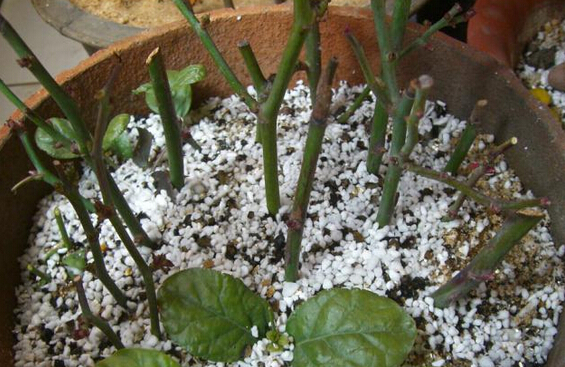
That is all for the guide to growing Epiphyllum. The Epiphyllum pictures above are great, and can create a good environment for the courtyard, bringing out the warm feeling of spring beautifully. I hope everyone will get to know this plant and let it show its proper charm.
Benefits of Epiphyllum: 3. Improving the energy field
Epiphyllum is a plant belonging to the fire element in the Five Elements, suitable for placement on an east- or west-facing balcony; its fire-element quality is beneficial to these two directions and can adjust and improve the energy field of the home. People born in the Year of the Ox can place the fire-element Epiphyllum in the southwest of the home, people born in the Year of the Dog can place Epiphyllum in the northeast of the home, and friends born in the Year of the Dragon and the Year of the Snake can also choose to grow a pot of Epiphyllum in the south of the home.
Placing Epiphyllum in the home can reflect the owner's taste, and it also has benefits such as freshening the air and improving the home's energy field. When arranging our homes, we can make the most of Epiphyllum's benefits to improve the home environment.
Epiphyllum, also known as red peacock, belongs to the cactus family and is native to Mexico. And because Epiphyllum is a flower that resembles a water lily, that is how it got its name. Many flower-growing enthusiasts want to understand how to grow Epiphyllum, so what are the propagation methods for Epiphyllum?
Cutting propagation method
It is best to do this between March and April each year. First cut a healthy flat stem 10 cm long as a cutting; after cutting, let it dry for 2-3 days, then insert it into moist sandy soil or vermiculite, with the depth set at 1/3 of the cutting's length, keep the temperature at 10-15°C, and spray it with water frequently. Generally, it will root in about one month, and can then be potted.
Grafting propagation method
It is best to do this at 25°C. A cactus can be chosen as the rootstock; cut a wedge-shaped opening in the rootstock with a knife, then take a healthy Epiphyllum stem segment 6-8 cm long as the scion, make one cut on each side of the scion to expose the stem pith so that it forms a wedge shape, then insert it into the slit of the rootstock, tie it firmly with hemp fiber, and place it in a cool place for care. After about 10 days, the grafted part will have grown together; remove the hemp fiber and carry out normal care.
That is all for the guide to growing Epiphyllum. The Epiphyllum pictures above are great, and can create a good environment for the courtyard, bringing out the warm feeling of spring beautifully. I hope everyone will get to know this plant and let it show its proper charm.