A Detailed Explanation of the Effects, Benefits and Medicinal Value of Plantain
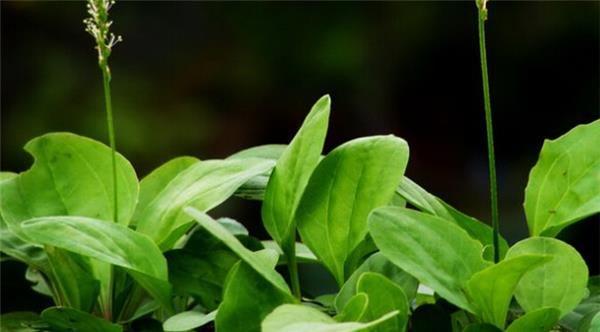
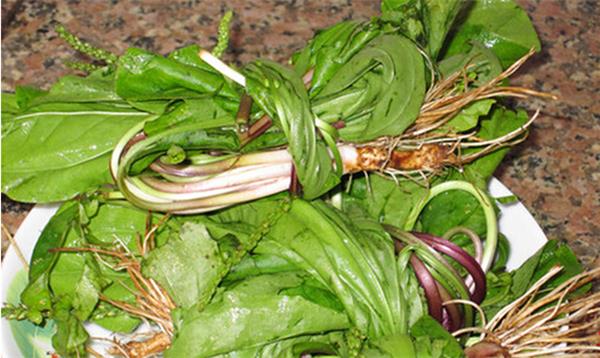
Plantain, also known as cheluncai, is a perennial herb of the Plantaginaceae family. It grows in mountain fields, roadsides, flower gardens, riversides and other places. Its rhizome is shortened and thickened, densely covered with fibrous roots. The leaves all grow from the root; the leaf blades are smooth, broadly ovate, with wavy edges and occasional indistinct blunt teeth, and five main veins that bulge toward the underside of the leaf, extending in rib-like form into the petiole; the leaf blade is often the same length as the petiole. In spring, summer and autumn, a spike inflorescence emerges from the center of the plant, with small flowers and an inconspicuous corolla. It bears an oval capsule with a persistent style at the tip; when ripe, it splits open by a lid and releases the seeds. It has the effects of promoting diuresis and treating strangury, clearing heat and detoxifying, clearing the liver and brightening the eyes, resolving phlegm and stopping diarrhea. It is not only medicinal but also edible, so what effects does plantain have?
Nutritional Components of Plantain
Plantain contains mucilage, succinic acid, plantenol, adenine, choline, plantain alkaloid, fatty oil, vitamin A and B-group vitamins, etc.
Medicinal Effects of Plantain
Plantain can promote the secretion of respiratory mucus and dilute phlegm, and has expectorant, antitussive and antiasthmatic effects; it has an inhibitory effect on various bacilli and staphylococci; it can increase the excretion of water, sodium chloride, urea and uric acid, thereby producing a diuretic effect; it can lower cholesterol; in modern clinical practice it can be used to treat congestive heart failure, upper gastrointestinal bleeding, acute icteric hepatitis, etc.
Dietary Therapeutic Effects of Plantain
1. To treat bacillary dysentery: 60 grams each of plantain and fried coptis, 15 grams each of sanguisorba, gardenia and honey-fried licorice, and 30 grams of tangerine peel (soaked to remove the white inner layer). Grind the above medicines together into coarse powder. Take 15 grams each time, decoct in rice-washed water, and take on an empty stomach.
2. To treat psoriasis: 15 grams of plantain (wrapped in cloth), 30 grams of coix seed, 9 grams of silkworm excrement (wrapped in cloth), and an appropriate amount of white sugar. Add 500 milliliters of water to the plantain and silkworm excrement and decoct down to 200 milliliters, then add the coix seed and cook into a thin porridge, and take it mixed with white sugar. 1 dose per day, taken for 8 to 10 consecutive doses.
3. To treat infantile malnutrition: an appropriate amount of plantain and 2 heads of garlic. Stir-fry and grind the plantain, mash the garlic, mix the two evenly, and apply to the navel for 4 hours.
4. To treat vomiting during pregnancy: 3 grams each of plantain, ginseng, white atractylodes, white poria, ophiopogon and honey-fried licorice, 15 grams of cinnamon heart, 100 grams of japonica rice, and a little brown sugar. Put the first 7 Chinese medicines into a clay pot, decoct in water, remove the residue and take the liquid, then add the washed japonica rice and cook into porridge, and add a small amount of brown sugar for seasoning. Take once daily on an empty stomach.
5. To treat leukorrhea caused by damp toxin: 30 grams of plantain (wrapped in gauze), 30 grams of poria powder, 60 grams of rice, and an appropriate amount of white sugar. First add 300 milliliters of water to the plantain and decoct for half an hour, then remove it. Add the rice and poria powder and cook together into porridge, and add white sugar once the porridge is done. Take twice daily.
Plantain refers to the mature seeds of Plantago asiatica or Plantago depressa, perennial herbaceous plants of the Plantaginaceae family. It is also known by other names such as cheqiantou, zhuer suizi and fengyan qianren. The seeds are harvested when they mature in summer and autumn. It is used raw or stir-fried with salt water. What effects does plantain have?
Effects:
1. Anti-inflammatory effect: When rats took plantain pectin orally at 0.5 g/kg or 1 g/kg, it had a significant inhibitory effect on inflammatory edema caused by formaldehyde or dextran.
2. Effect on the urinary system: Plantain has a certain diuretic effect, can increase water excretion in dogs, rabbits and humans, and increases the excretion of urea, uric acid and sodium chloride.
3. Antitussive, antiasthmatic and expectorant effects: When a plantain decoction was given to cats by gavage at both high and low doses, it significantly raised the threshold of electrical stimulation for inducing coughing in cats, and the effect strengthened as the dose increased.
4. Anti-pathogenic microorganism effect: A water infusion of plantain showed varying degrees of inhibitory effect in test tubes on Trichophyton concentricum, Microsporum lanosum, Nocardia asteroides, etc.
5. Effect on the stomach and intestines: When a plantain aqueous extract or infusion was given by gavage at 0.5 g/kg to dogs with Pavlov pouches and gastric disease, it had a bidirectional regulatory effect on gastric juice secretion; it antagonized both the excessive gastric juice secretion caused by pilocarpine and the reduced gastric juice secretion caused by epinephrine. Plantain has an inhibitory effect on the working stomach, but no effect on the resting stomach. Plantain can also temporarily increase intestinal juice secretion, while having no obvious effect on intestinal movement.
6. Other effects: Plantain extract has a relatively weak inhibitory effect on Ehrlich ascites carcinoma and mouse sarcoma S180. Plantaginin, at a small dose, can slow the heartbeat of rabbits, increase the amplitude and raise blood pressure; at a large dose, it can cause cardiac paralysis and lower blood pressure. It also makes respiration deeper, larger and slower, promotes secretion in the bronchi and digestive tract, and promotes the movement of the intestinal tract and uterus.
The leaves of plantain all grow from the root; the leaf blades are smooth, broadly ovate, with wavy edges and occasional indistinct blunt teeth, and five main veins that bulge toward the underside of the leaf, extending in rib-like form into the petiole; the leaf blade is often the same length as the petiole. In spring, summer and autumn, a spike inflorescence emerges from the center of the plant, with small flowers and an inconspicuous corolla. It bears an oval capsule with a persistent style at the tip; when ripe, it splits open by a lid and releases the seeds. The seeds have the effects of promoting diuresis and treating strangury, clearing heat and detoxifying, clearing the liver and brightening the eyes, resolving phlegm and stopping diarrhea. So what are the characteristics of plantain?
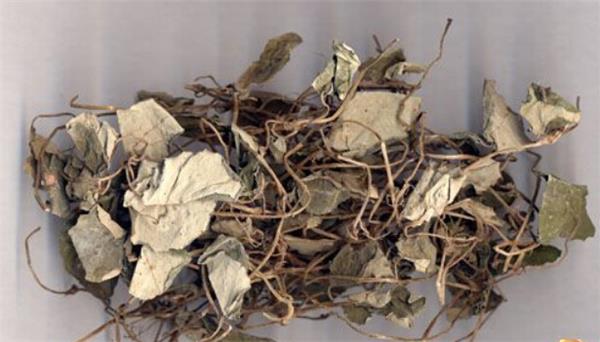
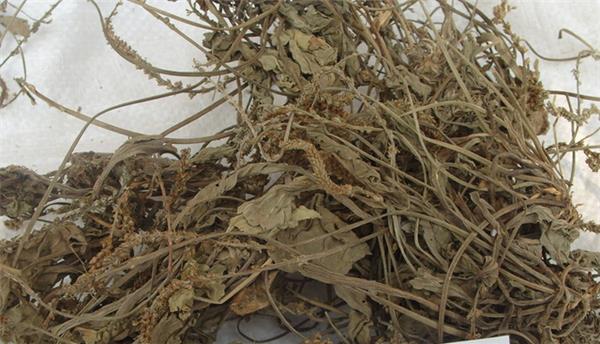
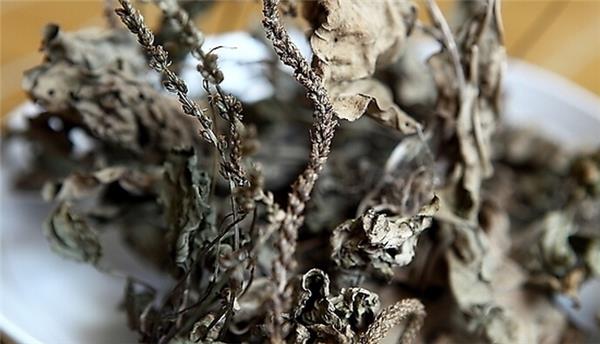
1. The roots of Plantago asiatica are clustered and fibrous. The leaves are basal and have long petioles; the leaf blades are shrunken and, after being flattened, are elongated-elliptic or broadly ovate; 4 to 13 cm long and 2 to 8 cm wide; the surface is grayish green or dirty green, with 5 to 7 obvious arcuate veins; the tip is blunt or shortly pointed, the base is broadly wedge-shaped, and the margin is entire or has irregular wavy shallow teeth; the inflorescence is a spike, the capsule is oval and circumscissile, with a slight fragrance and a slightly bitter taste.
2. The main root of Plantago depressa is conical, straight and long. The leaf blades are relatively narrow, elongated-elliptic or elliptic-lanceolate, 5 to 14 cm long and 1 to 3 cm wide, with small teeth at the margin and a narrow base. The flowers at the top of the spike inflorescence are densely arranged; the rest is the same as above.
[Nature and Flavor] Sweet, cold.
[Meridian Entry] Enters the liver, kidney, lung and small intestine meridians.
Clears heat and promotes diuresis, cools the blood and detoxifies. It mainly treats heat accumulation in the bladder, difficult urination, strangury, turbid urine and leukorrhea, summerheat-damp diarrhea and dysentery, nosebleed, blood in the urine, red eyes due to liver heat, sore and swollen throat, and carbuncles, swellings and sores.
Ancient Clinical Use
Used for heat strangury, stone strangury, blood strangury and blood in the urine, women's leukorrhea, and summerheat-damp diarrhea and dysentery; used for conditions such as red eyes due to liver heat, sore and swollen throat, mumps, and carbuncles, swellings and sores. In addition, plantain also treats phlegm-heat cough, hypertension, scanty dark difficult urination in nephritis, and gouty arthritis.
Medication Contraindications:
Anyone with internal injury from overexertion, sinking of yang qi, kidney deficiency with spermatorrhea, or no damp-heat internally should take it with caution.
"Bencao Jingshu": For diseases of internal injury from overexertion and sinking of yang qi, it should not be used in all cases; for those with kidney qi deficiency and collapse, it is contraindicated to use together with bland diuretic medicines.
"Bencao Huiyan": Those with kidney deficiency and cold should especially avoid it.
"Rihua Zi Bencao": "Changshan is used as the guiding medicine."
The above is the editor's introduction to plantain, and I hope it can help everyone.
1. The roots of Plantago asiatica are clustered and fibrous. The leaves are basal and have long petioles; the leaf blades are shrunken and, after being flattened, are elongated-elliptic or broadly ovate; 4 to 13 cm long and 2 to 8 cm wide; the surface is grayish green or dirty green, with 5 to 7 obvious arcuate veins; the tip is blunt or shortly pointed, the base is broadly wedge-shaped, and the margin is entire or has irregular wavy shallow teeth; the inflorescence is a spike, the capsule is oval and circumscissile, with a slight fragrance and a slightly bitter taste.
2. The main root of Plantago depressa is conical, straight and long. The leaf blades are relatively narrow, elongated-elliptic or elliptic-lanceolate, 5 to 14 cm long and 1 to 3 cm wide, with small teeth at the margin and a narrow base. The flowers at the top of the spike inflorescence are densely arranged; the rest is the same as above.
[Nature and Flavor] Sweet, cold.
[Meridian Entry] Enters the liver, kidney, lung and small intestine meridians.
Clears heat and promotes diuresis, cools the blood and detoxifies. It mainly treats heat accumulation in the bladder, difficult urination, strangury, turbid urine and leukorrhea, summerheat-damp diarrhea and dysentery, nosebleed, blood in the urine, red eyes due to liver heat, sore and swollen throat, and carbuncles, swellings and sores.
Ancient Clinical Use
Used for heat strangury, stone strangury, blood strangury and blood in the urine, women's leukorrhea, and summerheat-damp diarrhea and dysentery; used for conditions such as red eyes due to liver heat, sore and swollen throat, mumps, and carbuncles, swellings and sores. In addition, plantain also treats phlegm-heat cough, hypertension, scanty dark difficult urination in nephritis, and gouty arthritis.
Medication Contraindications:
Anyone with internal injury from overexertion, sinking of yang qi, kidney deficiency with spermatorrhea, or no damp-heat internally should take it with caution.
"Bencao Jingshu": For diseases of internal injury from overexertion and sinking of yang qi, it should not be used in all cases; for those with kidney qi deficiency and collapse, it is contraindicated to use together with bland diuretic medicines.
"Bencao Huiyan": Those with kidney deficiency and cold should especially avoid it.
"Rihua Zi Bencao": "Changshan is used as the guiding medicine."
The above is the editor's introduction to plantain, and I hope it can help everyone.