Narrow-breasted longhorn beetle damage to pomelo: a detailed guide to control measures during the egg-laying period
According to statistics from the Council of Agriculture, as of 2017 (ROC year 106) the total pomelo planting area in Taiwan, China was about 4272 hectares, with production concentrated in Tainan City and Hualien County. The narrow-breasted longhorn beetle, one of the pomelo pests that previously appeared only in the western half of the production areas, was first found in Hualien County the year before last. The Hualien District Agricultural Improvement Station calls on farmers to seize the opportunity to carry out field control in May, when the narrow-breasted longhorn beetle emerges as adults and lays eggs, so as to avoid affecting pomelo quality.
Adult narrow-breasted longhorn beetles emerge from the ground every May, mate and lay eggs in cracks in the bark, and after the eggs hatch the larvae burrow into the soil and begin gnawing on the roots of the pomelo tree, reducing the plant's ability to absorb nutrients and water and affecting plant growth. The wounds from their gnawing may even allow pathogens to invade, causing compounded damage and reducing pomelo fruit yields.
Lin Li, assistant researcher at the Hualien Station, said that in the past the narrow-breasted longhorn beetle was mostly found in the western half of the region. The year before last, farmers in Hualien reported finding the narrow-breasted longhorn beetle, and last year the Hualien Station promoted control work. Because the larvae of the narrow-breasted longhorn beetle all grow in the soil, it is relatively difficult to control them with pesticides, so control must be carried out during the period when they emerge as adults and lay eggs. Although eradication is impossible, the hope is to keep them below a certain density. Zheng Rongrui, director of the Tainan District Agricultural Improvement Station, also said that the narrow-breasted longhorn beetle is a soil-dwelling pest and is difficult to control or eradicate with pesticides, so at present physical control methods are mostly used to make its offspring fewer and fewer.
Based on the Tainan Station's past control experience, methods including "light trapping to kill adults" and "newspaper or wooden boards to attract egg-laying" can effectively control the narrow-breasted longhorn beetle.
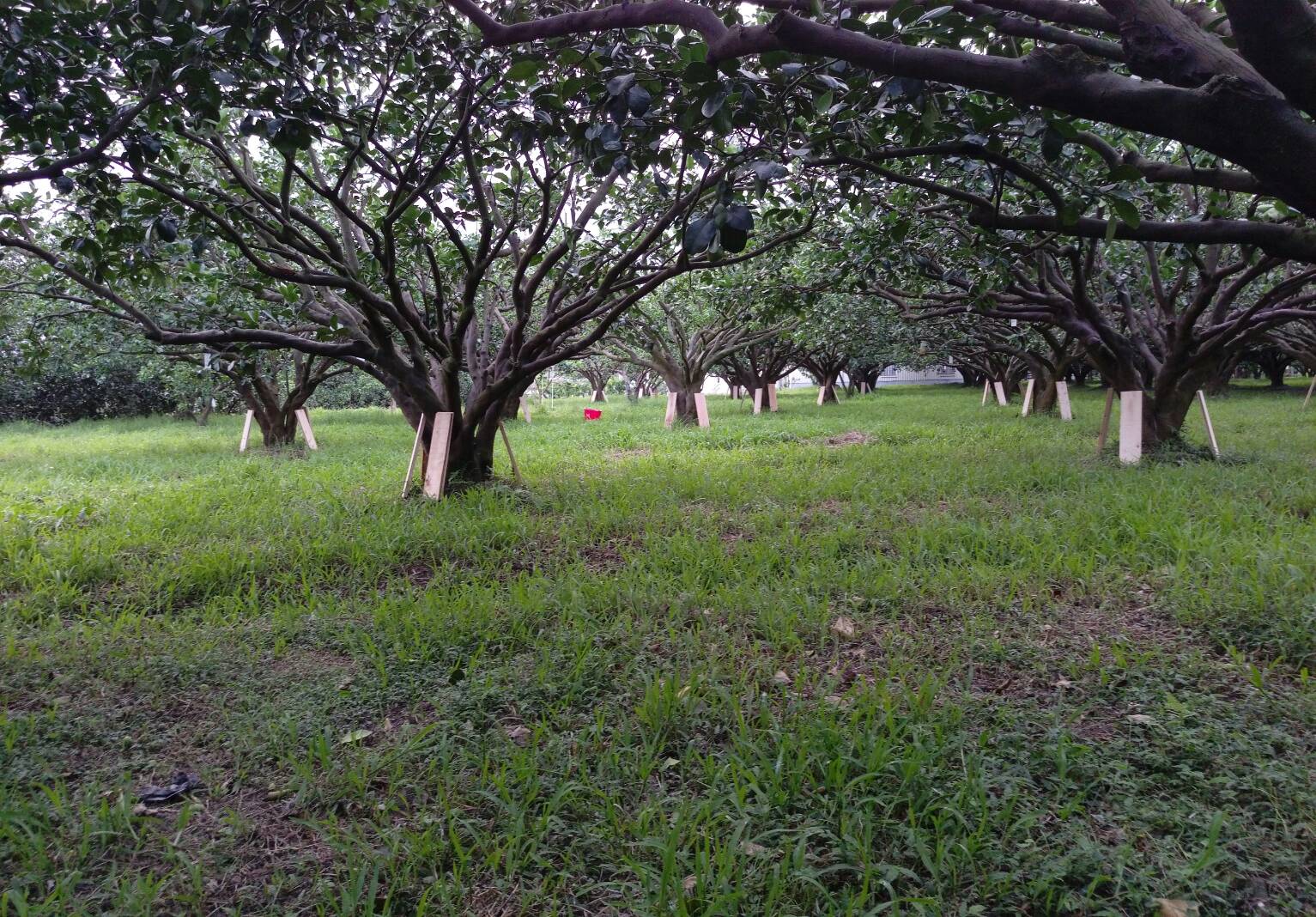
"Light trapping to kill adults" uses the phototaxis of adult narrow-breasted longhorn beetles, using white energy-saving light bulbs to trap and kill them. A shade is set up above the bulb to prevent rain from causing electrical leakage, and a water basin is placed below, filled to eight-tenths with water, with detergent added to prevent the longhorn beetles from escaping. "Newspaper and corrugated paper to attract egg-laying" uses the wrinkles of newspaper and corrugated paper as traps wrapped around the base of the tree trunk, or spread on the ridges to concentrate egg-laying, with the eggs collected and destroyed every week. "Wooden boards to attract egg-laying" involves selecting smooth, crack-free wooden boards and leaning them diagonally against the base of the tree trunk, using the overlap of the boards to create gaps that attract females to lay eggs. After setting them up, they should be inspected every week, and the eggs removed, continuing until the end of the emergence period in June.