A detailed explanation of the benefits and effects of Dichondra repens, teaching you how to use it properly
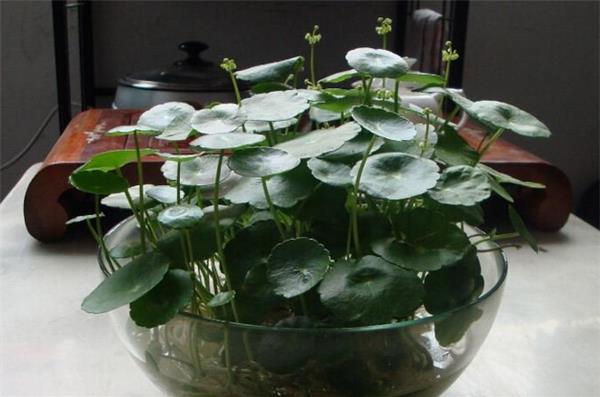
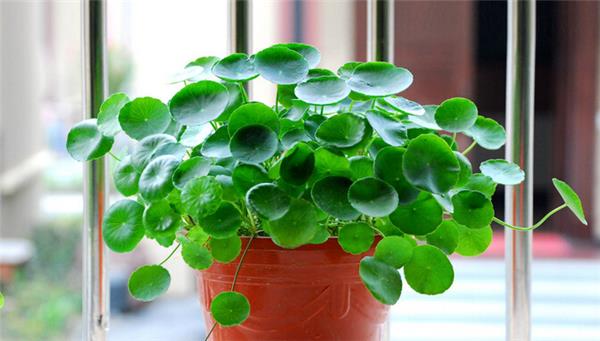
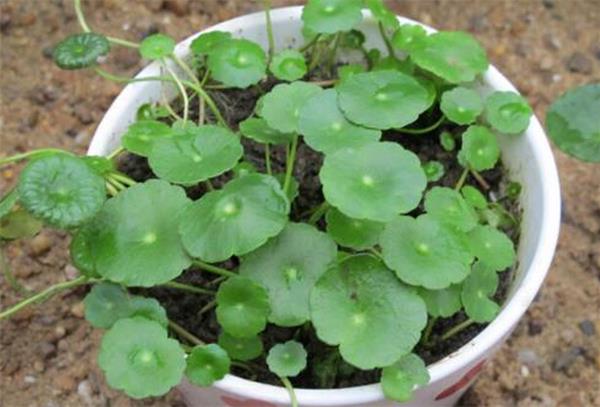
The original name of Jinqiancao is Matijin (Dichondra repens); aliases: Guoluhuang, Jingmiancao, Cuipingcao, Hebaocao, Rouhuntuncao, Jinsuosui, Lianqiancao, etc. Its Latin name is Dichondra repens Forst. It is a perennial creeping small herbaceous plant in the order Tubiflorae, family Convolvulaceae. The leaves are kidney-shaped to round, 4-25 mm in diameter; flowers are solitary in the leaf axils, the flower stalk shorter than the leaf stalk, thread-like; the leaves are green, and it bears small yellow flowers. So, what are the effects and benefits of Dichondra repens?
The benefits of Dichondra repens
Clears heat and drains dampness, relieves strangury, and reduces swelling. Used for heat strangury, sand strangury, painful difficult urination, jaundice with dark urine, carbuncles, swellings and boils, and venomous snake bites; for liver and gallbladder stones and urinary tract stones. Used for heat strangury, it is especially good at treating stone strangury; it can be decocted alone in a strong decoction and taken as a tea, or used together with Lygodium japonicum (Hai Jin Sha) and chicken gizzard lining (Ji Nei Jin). For damp-heat jaundice, it can be used with Yinchen (Artemisia capillaris) and Zhizi (Gardenia jasminoides). In modern treatment of cholelithiasis, it is used in combination with Yinchen, Huangqin (Scutellaria baicalensis) and Muxiang (Aucklandia lappa). For boils, swellings and toxic sores, snake and insect bites, and burns, fresh Dichondra repens can be pounded to extract the juice for drinking, and the residue applied externally to the affected area.
Used for liver and gallbladder stones and urinary tract stones, heat strangury, and jaundice. Dichondra repens has good effects in draining dampness, reducing jaundice, expelling stones and relieving strangury. To treat liver and gallbladder stones and jaundice, this product can be decocted alone and taken as a tea, or combined with Yinchen, Yujin (Curcuma aromatica) and Dahuang (Rheum officinale) to enhance the effects of clearing and draining the liver and gallbladder and expelling stones.
To treat stone strangury and heat strangury, it can also be used alone for effect, or used together with Lygodium japonicum, chicken gizzard lining and Shiwei (Pyrrosia lingua) to enhance the effects of clearing damp-heat from the lower jiao and relieving strangury and expelling stones; for stone strangury with symptoms of kidney deficiency, it can be used in combination with kidney-tonifying herbs such as Sangjisheng (Taxillus chinensis) and Hutaoren (walnut kernel).
Used for sore toxins, carbuncles and swellings, breast carbuncles, erysipelas, venomous snake bites and traumatic injuries. Dichondra repens has the effects of resolving toxins and dispersing blood stasis, reducing swelling and relieving pain. Fresh material is commonly used internally or applied externally; the fresh herb can be pounded alone to extract juice for drinking, or pounded and applied to the affected area, and it can also be used together with Yejuhua (wild chrysanthemum), Pugongying (dandelion) and Wannianqing (Rohdea japonica) to strengthen the effects of clearing heat and resolving toxins.
The effects of Dichondra repens
1. Used for liver and gallbladder stones and urinary tract stones, heat strangury, and jaundice. Dichondra repens has good effects in draining dampness, reducing jaundice, expelling stones and relieving strangury. To treat liver and gallbladder stones and jaundice, this product can be decocted alone and taken as a tea, or combined with Yinchen, Yujin and Dahuang to enhance the effects of clearing and draining the liver and gallbladder and expelling stones.
2. To treat stone strangury and heat strangury, it can also be used alone for effect, or used together with Lygodium japonicum, chicken gizzard lining and Shiwei to enhance the effects of clearing damp-heat from the lower jiao and relieving strangury and expelling stones; for stone strangury with symptoms of kidney deficiency, it can be used in combination with kidney-tonifying herbs such as Sangjisheng and Hutaoren.
3. Used for sore toxins, carbuncles and swellings, breast carbuncles, erysipelas, venomous snake bites and traumatic injuries. Dichondra repens has the effects of resolving toxins and dispersing blood stasis, reducing swelling and relieving pain. Fresh material is commonly used internally or applied externally; the fresh herb can be pounded alone to extract juice for drinking, or pounded and applied to the affected area, and it can also be used together with Yejuhua, Pugongying and Wannianqing to strengthen the effects of clearing heat and resolving toxins.
4. Dichondra repens is used for edema and abdominal distension; whether taken internally or applied externally, it has the effect of promoting urination and reducing swelling. For lung-heat cough and high fever in children, its heat-clearing and toxin-resolving effect is used.
The side effects of Dichondra repens
Every medicine has some toxicity, and no medicine can be taken over the long term. Dichondra repens is a medicine that promotes urination and relieves strangury; it has no stone-expelling or stone-dissolving function of its own. It merely uses its effect of promoting urination and relieving strangury to flush out stones. Long-term use will damage vital qi and will not only fail to expel stones, but will actually hinder stone expulsion and promote continued stone formation.
Dichondra repens is a perennial small herbaceous plant, with slender creeping stems covered in gray short soft hairs and rooting at the nodes. The leaves are kidney-shaped to round, 4-25 mm in diameter, with a broadly rounded or slightly notched apex, a broad heart-shaped base, sparsely hairy on the upper surface, appressed short soft hairs on the underside, and entire margins; it has long leaf stalks, with the leaf stalk 1.5-3-6-6 cm long. What are the pharmacological effects of Dichondra repens?
The pharmacological effects of Dichondra repens:
1. Stone-expelling effect
Dichondra repens has the effects of promoting bile flow and expelling stones and promoting urination and expelling stones. Experiments using a tadpole experimental calcium oxalate kidney stone model showed that Dichondra repens decoction is effective in preventing and treating experimental kidney stones in tadpoles. Results from a semi-open recording system experiment in anesthetized dogs showed that Dichondra repens can cause increased pressure in the upper ureteral lumen, enhanced ureteral peristalsis, and increased urine volume, exerting a squeezing and impacting effect on ureteral stones and promoting their expulsion.
2. Anti-inflammatory effect
Intraperitoneal injection of Dichondra repens at 50 g/kg and its total flavonoids and phenolic acids at 3.75 g/kg significantly inhibited histamine-induced increased vascular permeability in mice, had a very significant inhibitory effect on croton oil-induced ear inflammation in mice, and significantly inhibited egg white injection-induced ankle swelling in rats and cotton pellet granuloma in rats.
3. Effects on vascular smooth muscle and human platelets
Dichondra repens has a relaxing effect on vascular smooth muscle, and also has a certain inhibitory effect on ADP- and arachidonic acid-induced human platelet aggregation in test tubes.
4. Toxicity
Clinical reports indicate that Dichondra repens can cause contact dermatitis and allergic reactions.
Now that people's living standards have improved, diet is no longer just a matter of solving food and clothing; more importantly, it is about eating for health. In the relevant benefits and effects of Dichondra repens, many of its advantages have been introduced. However, here everyone is reminded that not everyone is suitable to consume it; especially for patients with liver disease, heart disease, high blood pressure, and diabetes, it should not be taken indiscriminately. It is hoped that this introduction can help everyone better understand Dichondra repens.