A Detailed Guide to Growing Pineapple Plants and Their Benefits
Ornamental pineapple is a very beautiful indoor potted flower that offers both flowers and foliage for enjoyment. With its distinctive rosette-shaped plant form, bright spicate inflorescences, and long flowering period, it has gradually become the "darling" of the New Year flower market. So, what are the methods for growing pineapple plants?
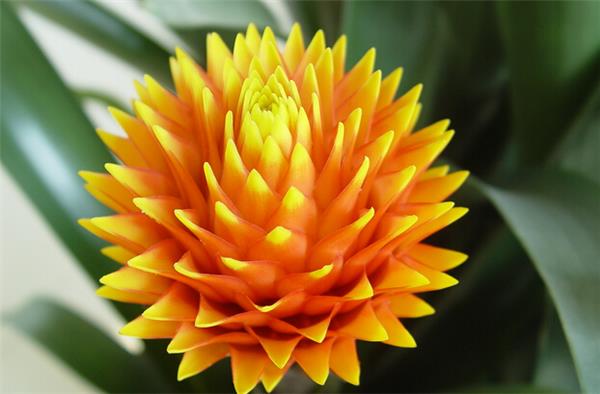
1. Soil: The growing medium for pineapple should have good water retention and air permeability. Peat soil, tree bark fragments, coal cinder, and similar materials are suitable, as they can meet the requirements for regulating moisture and aeration.
2. Watering: Pineapple belongs to the moisture-loving epiphytic bromeliads, so watering should be given special attention in daily care. In hot summer, evaporation is high, so water thoroughly every day to keep the water at the leaf base uninterrupted; in winter, reduce watering appropriately, keeping only the bottom of the leaf cup moist.
3. Sunlight: Pineapple likes light, and its leaves become more brilliant in color under sufficient light, but strong direct sunlight should be avoided in summer to prevent scorching the leaves. Generally, first cultivate leaves with beautiful color under relatively strong sunlight, then place the plant in a bright room for appreciation. Too dim light will cause the leaf color to fade.
4. Temperature: The most suitable growing temperature for pineapple is 22-25°C. In winter, it should be placed indoors at a temperature above 15°C. Below 15°C, growth stops, and prolonged exposure below 10°C will cause cold damage.
5. Fertilizing: During the growing season, apply a compound flower fertilizer or chemical liquid fertilizer once every half month, with foliar spraying being more effective. However, be sure to avoid too high a concentration, lest fertilizer accumulate at the stem base and damage the leaves.
6. Pests and diseases: Pineapple commonly suffers from leaf spot disease. Spray 100-fold Bordeaux mixture once every half month, for 3-4 consecutive sprays.
Pineapple is a perennial herbaceous fruit plant of the genus Ananas in the family Bromeliaceae. It has rapid vegetative growth and a short production cycle, and can grow year-round in areas with an annual average temperature above 23°C. Pineapple fruit is rich in nutrients. In addition to reducing sugars, sucrose, protein, crude fiber, and organic acids, the flesh also contains vitamins essential to the human body, such as vitamin C, carotene, thiamine, and nicotinic acid.
Because of its verdant leaves and brilliant inflorescences, it is displayed in pots in halls, on windowsills, and other places for appreciation, making it a plant valued for both flowers and foliage. So, what value does pineapple have?
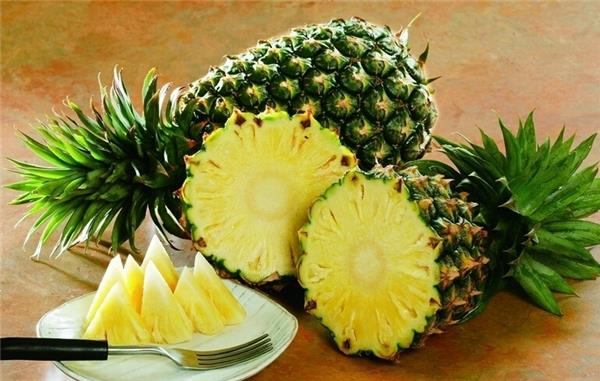
Nutritional and Medicinal Value
[Properties] Sweet in taste, slightly sour, neutral in nature. It can promote fluid production, quench thirst, and aid digestion.
[Reference] It contains fructose, glucose, protein, amino acids, organic acids, and other components. It also contains an enzyme that can break down protein.
[Uses] For insufficient stomach yin with dry mouth and excessive thirst; indigestion with poor appetite and diarrhea.
[Usage] Eat raw, squeeze for juice, decoct in soup, etc.
[Supplementary Formulas]
Pineapple juice: Take 1 pineapple, mash and squeeze out the juice. Take half a cup each time, mixed with cool boiled water.
Taking fresh pineapple juice with cool boiled water has quite good effects in clearing heat, relieving restlessness, promoting fluid production, and quenching thirst. It is used for summerheat injury or thirst and restlessness due to febrile disease.
Pineapple is sweet in taste, slightly sour, neutral in nature, and enters the stomach and kidney meridians;
It has the effects of quenching thirst and relieving restlessness, strengthening the spleen and quenching thirst, reducing swelling, removing dampness, and sobering up while boosting qi;
It can be used for indigestion, enteritis and diarrhea, summerheat injury, fever with thirst and restlessness, and can also be used as auxiliary treatment for hypertension with dizziness and weakness and numbness of the hands and feet.
Suitable Groups
1. The general population can eat it.
2. It is especially suitable for people with fever and restlessness, nephritis, hypertension, bronchitis, and indigestion.
3. People with ulcers, kidney disease, or coagulation disorders should avoid eating pineapple, and those with fever and eczema or scabies should not eat too much of it.
Benefits
1. Because pineapple contains irritating glycoside substances and bromelain, the peel and fruit eyes should be thoroughly removed, the flesh cut into pieces, soaked in dilute salt water or sugar water to leach out the glycosides, and then eaten;
2. After eating meat or greasy foods, eating some pineapple is very beneficial to the body. "Pineapple sweet and sour pork" and "pineapple beef" are dishes that can be eaten with confidence.
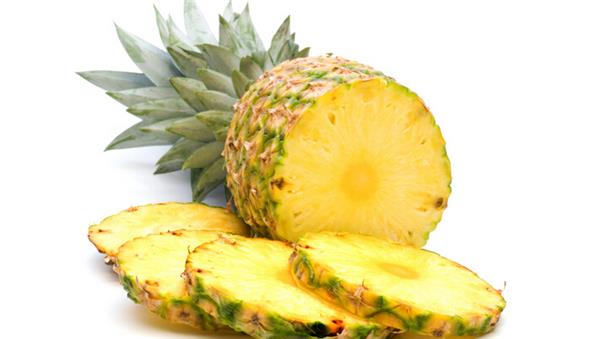
3. In addition, there is also a folk taboo about eating pineapple, namely that pineapple and honey should not be eaten at the same time. It is said that eating them this way can cause poisoning.
Ornamental pineapple is a fashionable flower that combines flower and foliage appreciation in one. Its plant form is beautiful and varied, and its flower spikes are brilliant and can last for several months. Its forms are truly diverse: some are tall like trees, some are only 15 cm tall, some have flowers as large as basins with a diameter of 30 cm, and some pineapples can even grow on rocks. So, what types of pineapple are there?
The leaves of the flame pineapple are narrow and long like swords, verdant and glossy. From winter to early spring, bright red columnar inflorescences emerge from the tender green leaf cup, about 30 cm tall; at the top are 6-12 small flowers, with 3 petals, pale yellow-green, with blue edges, curling outward after opening. When in full bloom, strings of blue-green flowers, set off by the red bracts, appear especially brilliant and eye-catching, and the ornamental period can last as long as two months.
Neoregelia, also known as mini pineapple, is most suitable for potted ornamental display. Its leaves are firm and slender, with wavy edges, and colors include creamy yellow, red, or purplish red. The leaf surface has longitudinal stripes radiating like a crab shape. The flowers are white or light green and grow among the leaf clusters, forming a disc.
The dragonfly pineapple, also known as beautiful-leaved Aechmea and spotted pink pineapple, has a plant body composed of 10-20 leaves forming a rosette-shaped leaf cluster, with a cup-shaped base. The leaf tips are bluntly rounded and turned outward, light green, with the surface coated in a silvery white layer, and the leaf surface forms irregular silver-colored and dark green horizontal stripes and patches. Between summer and autumn, after the peach-pink columnar flower, it is about 15 cm tall. The dense small flowers first open blue, then turn rose red, like a dragonfly flying with spread wings, and the ornamental period can last several months.
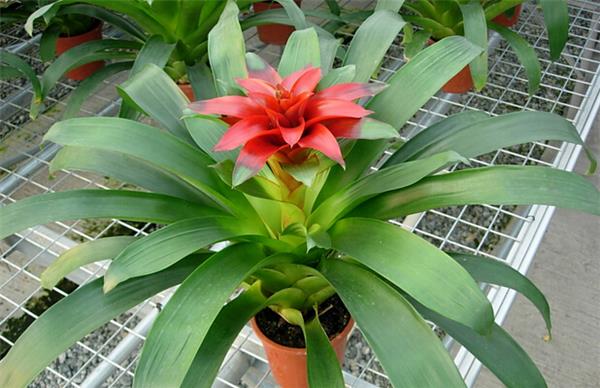
The leaves of the golden-edged pineapple are sword-shaped, curling outward, crisp and glossy. The upper surface of the leaves is dark green, the edges are yellow-green, and some leaves also gradually show varying yellow-green stripes in the middle. The underside of the leaves is light green, with the same yellow-green hidden stripes as the upper surface. In spring and summer, the cylindrical flower bud emerging from the leaf cup is about 2.5 cm thick, and 25-30 sepals wrap from bottom to top like bamboo shoot shells into a column from dark red to pink, resembling a red bamboo shoot set in the leaf cup. Within two or three weeks, the columnar flower bud splits open, sending up a straight flower stem bearing more than a dozen small flowers. Each small flower shows three colors from bottom to top: yellow, red, and purple, and is very ornamental.
The rainbow bract pineapple, also called torch, is a hybrid. The leaf edges are smooth and without serrations. From the center rises an upright flower stem, 35-40 cm long, with a spicate inflorescence at the top, and the flower spike has 2-4 branches. The flower bracts are dark red, thick, and glossy, and the entire inflorescence looks like a blazing torch. The flowering period can reach three months, and it is also a darling among ornamental pineapples.
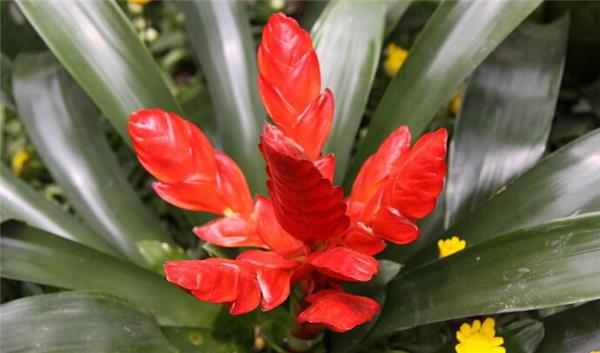
Pineapple is a potted plant very suitable for indoor arrangement, with high ornamental value, and its growing method is also relatively simple. The growing methods for pineapple are introduced here, and I hope they are helpful to everyone.
cup-shaped base. The leaf tips are bluntly rounded and turned outward, light green, with the surface coated in a silvery white layer, and the leaf surface forms irregular silver-colored and dark green horizontal stripes and patches. Between summer and autumn, after the peach-pink columnar flower, it is about 15 cm tall. The dense small flowers first open blue, then turn rose red, like a dragonfly flying with spread wings, and the ornamental period can last several months.
The leaves of the golden-edged pineapple are sword-shaped, curling outward, crisp and glossy. The upper surface of the leaves is dark green, the edges are yellow-green, and some leaves also gradually show varying yellow-green stripes in the middle. The underside of the leaves is light green, with the same yellow-green hidden stripes as the upper surface. In spring and summer, the cylindrical flower bud emerging from the leaf cup is about 2.5 cm thick, and 25-30 sepals wrap from bottom to top like bamboo shoot shells into a column from dark red to pink, resembling a red bamboo shoot set in the leaf cup. Within two or three weeks, the columnar flower bud splits open, sending up a straight flower stem bearing more than a dozen small flowers. Each small flower shows three colors from bottom to top: yellow, red, and purple, and is very ornamental.
The rainbow bract pineapple, also called torch, is a hybrid. The leaf edges are smooth and without serrations. From the center rises an upright flower stem, 35-40 cm long, with a spicate inflorescence at the top, and the flower spike has 2-4 branches. The flower bracts are dark red, thick, and glossy, and the entire inflorescence looks like a blazing torch. The flowering period can reach three months, and it is also a darling among ornamental pineapples.
Pineapple is a potted plant very suitable for indoor arrangement, with high ornamental value, and its growing method is also relatively simple. The growing methods for pineapple are introduced here, and I hope they are helpful to everyone.