How to Cultivate Orange Jessamine Flowers: A Detailed Guide to the Methods
Orange jessamine, also known as shi la jiao and jiu qiu xiang, is an evergreen shrub. Let us now take a look at the cultivation methods for orange jessamine flowers.
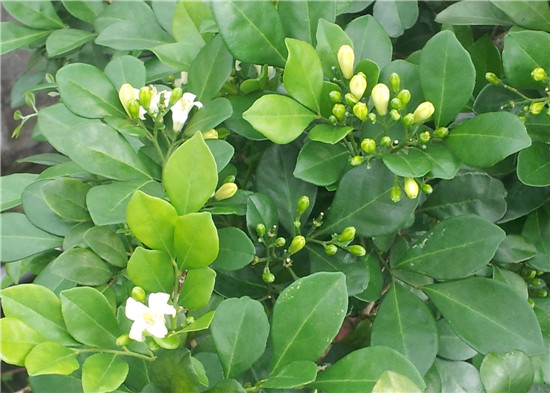
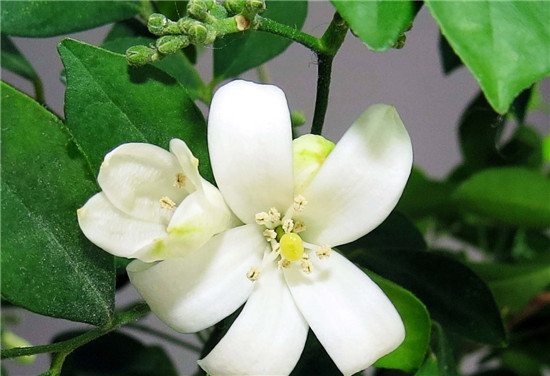
The inflorescence of orange jessamine is usually terminal, or both terminal and axillary. The flowers are numerous and gathered into umbel-like clusters, forming a shortened paniculate cyme. The flowers are white and fragrant, with ovate, oblong-elliptic sepals that reflex when in full bloom. There are 10 stamens of unequal length, slightly shorter than the petals, with white filaments; the anthers bear 2 fine oil dots on the back. The style is slightly more slender than the ovary, with no obvious boundary between them, both being pale green; the stigma is yellow and thick. The fruit is orange-yellow to vermilion, broadly ovate or elliptical, with a short pointed tip, slightly skewed, sometimes spherical.
The Value of Orange Jessamine Flowers
1. A decoction of the stems and leaves of orange jessamine has a local anesthetic effect. At a concentration of 12.5%, it is used for infiltration anesthesia with fairly good results, though it is rather irritating locally. It has no significant effect on the blood pressure or respiration of anesthetized dogs.
2. A nitrogen-free crystalline component isolated from the petroleum ether extract of orange jessamine has a marked relaxing effect on isolated rat intestine and can counteract smooth muscle spasms induced by histamine and barium chloride, but has no antagonistic effect on smooth muscle spasms caused by acetylcholine.
3. A glycoprotein isolated from orange jessamine, when injected intraperitoneally at 10mg/kg or into the amniotic cavity at 3mg/embryo in pregnant rabbits at 12-16 days of gestation, can terminate pregnancy in the rabbits.
How to Grow Orange Jessamine: Planting
Potting container and potting soil: A container with a diameter of 40-50 cm and good air permeability is suitable for cultivating orange jessamine. Orange jessamine prefers fertile, well-drained acidic soil; when planted in alkaline soil, it grows poorly. It dislikes waterlogging and is relatively drought-tolerant. The potting soil should be loose, well-aerated, good at water retention, high in organic matter, and good at retaining fertilizer. It can be prepared with garden soil : peat : sand = 4:3:3. An appropriate amount of organic fertilizer and ferrous sulfate can also be added to the nutrient soil.
Planting method: Select strong seedlings and plant them in pots after leaf fall or before budding in spring. When transplanting, it is advisable to keep more of the soil ball, retain a certain amount of fibrous roots, and properly thin out the branches and leaves. Before planting, first place a tile over the drainage hole at the bottom of the container, and fill part of the nutrient soil into the container. After planting, add more soil so that the roots are in close contact with the soil, with the soil surface level with the pot rim. After watering thoroughly and letting it settle, keep the soil surface about 5 cm below the pot rim as a watering lip. Newly potted plants should first be placed in a shady spot for one week, then moved to a spot with half shade and half sun, with light exposure increasing from short to long. After 20 days, place them in a sunny spot for normal care.
How to Grow Orange Jessamine: Ecological Habits
Orange jessamine likes a warm, humid climate and plenty of sunlight, and also tolerates partial shade. It likes warmth, with the most suitable growing temperature being 20-30°C. It is sensitive to cold, so in the north it can only be grown in pots. In winter it can be moved indoors at 5-10°C to overwinter; if the room temperature is too low, it easily drops leaves, and below 0°C it may freeze to death. During the growing season it likes plenty of sunlight and air circulation, which allows it to bloom and leaf abundantly, but it dislikes direct sunlight; in partial shade it grows weakly and the floral fragrance is faint, while too much shade makes the branches thin and soft with few or no flowers. In winter, even in a greenhouse, it should be placed in a sunny spot. It is not demanding about soil, growing best in loose, fertile acidic sandy soil rich in humus. It has strong sprouting ability, vigorous growth, and tolerates pruning.
When Does Orange Jessamine Bloom
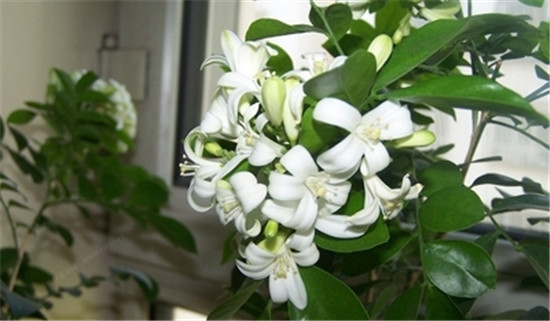
Orange jessamine grown from seed takes 3-4 years to bloom, while small cuttings may bloom in the same year (this depends on the age of the mother plant). The flowering period of orange jessamine is from July to October. Regional differences may cause the flowering period to come earlier or later, mainly determined by environmental temperature and humidity.
To make orange jessamine bloom more and produce fragrant flowers, pay attention to the following points:
1. Orange jessamine likes warmth, so the cultivation site should be chosen in a sunny area that does not accumulate water.
2. Fertilization should combine nitrogen, phosphorus, and potassium. Before flowering and bud formation, applying more phosphorus and potassium fertilizer helps produce more flowers with a stronger fragrance. A lack of phosphorus and potassium fertilizer leads to excessive growth of branches and leaves without bud formation.
3. Before bud formation, watering should be reduced. After bud formation and during the flowering period, water normally.
Precautions for Growing Orange Jessamine
1. Fertilize and water reasonably, cultivate robust plants, and improve disease resistance. Loosen the soil in time, pay attention to matching the supply of water and fertilizer at each growth stage, and spray New High Lipid Membrane to preserve soil moisture, maintain fertilizer effectiveness, prevent water loss, and ensure the plant has a good growing environment and conditions.
2. Prevent in time and combine prevention with control. In combination with the production season and weather changes, apply pesticides in time, and add New High Lipid Membrane to enhance pesticide efficacy, prevent pest and disease invasion, and effectively kill pests and diseases. For plant branches and tips already infected with disease, promptly prune and clean them, and apply callus anti-corrosion membrane to the cuts to prevent infection and invasion by pathogens. Before overwintering, treat the soil to kill pests and diseases, and spray New High Lipid Membrane to protect against cold, preserve warmth, and prevent the migration of pests and diseases.
3. Thicken branches and leaves, and spray Zhuang Jing Ling to promote thick plant stems, plump leaves, fresh leaf color, and luxuriant plant growth, which can enhance disaster resistance, reduce the use of pesticides and chemical fertilizers, and lower residual toxicity.
The above is the complete content I have summarized for you on how to cultivate orange jessamine flowers. I hope this article can help everyone. Please also continue to follow us.
Apply pesticides in time, and add New High Lipid Membrane to enhance pesticide efficacy, prevent pest and disease invasion, and effectively kill pests and diseases. For plant branches and tips already infected with disease, promptly prune and clean them, and apply callus anti-corrosion membrane to the cuts to prevent infection and invasion by pathogens. Before overwintering, treat the soil to kill pests and diseases, and spray New High Lipid Membrane to protect against cold, preserve warmth, and prevent the migration of pests and diseases.3. Thicken branches and leaves, and spray Zhuang Jing Ling to promote thick plant stems, plump leaves, fresh leaf color, and luxuriant plant growth, which can enhance disaster resistance, reduce the use of pesticides and chemical fertilizers, and lower residual toxicity.
The above is the complete content I have summarized for you on how to cultivate orange jessamine flowers. I hope this article can help everyone. Please also continue to follow us.