What is the flower language of magnolia? A complete analysis of its meaning and symbolism
Every flower has its own flower language, so what is the flower language of magnolia? Next, let us take a look at the flower language of magnolia!
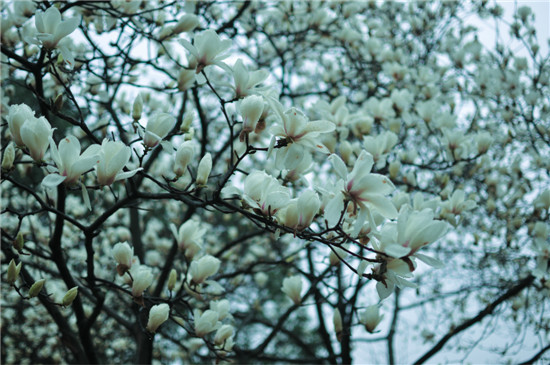
I like magnolia, I like its purity and elegance, its rejection of gaudy colors. It casts aside frivolous airs, has no intention of competing with other flowers for splendor, and does not attract bees and butterflies to dance madly around it. It does not choose to bloom in the warm and comfortable late spring, but instead stands upright in cold rain and blossoms proudly in chilly wind. Whether hanging high on the branches or drifting to the ground, it always maintains a character unstained by a speck of dust.
Even when buried in the soil, it is still a heart of fragrance and a heart of feeling, pure and flawless. The white magnolia, draped in holy white gauze, spreads its fragrance throughout the world. The pure white magnolia never competes with the hundred flowers for color, and insists on conveying the message of spring to the world. A Tang Dynasty poet praised it: "Gazing at the white magnolia morning and evening, even in old age one finds springtime." It can be seen that the white magnolia has been widely loved by people since ancient times.
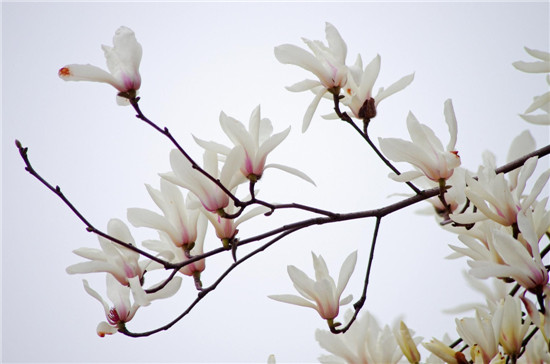
Magnolia subgenus of the Magnoliaceae family, a deciduous tree, generally 2-5 m tall or up to 15 m tall. Magnolia flowers are white as jade, and their fragrance resembles that of orchids. In the north, the common one is also the Yulan magnolia 'Erqiao', with petals purplish on the outside and white on the inside. The shape of the magnolia flower closely resembles a lotus. When in full bloom, the petals spread out in all directions, making the courtyard appear in patches of green and white, with white light dazzling the eyes, giving it high ornamental value; together with waves of delicate fragrance that refresh the heart and mind, it is truly an ideal flower for beautifying a courtyard.
Long ago there was a happy and harmonious family. In front of their home they planted a southern magnolia, and the flowers on the tree were colorful and truly beautiful, attracting many butterflies to dance gracefully. One day, the child's father went up the mountain to gather firewood and, losing his footing, fell into a valley. When the child saw that his father had not returned, he went to the mountain to look for him. Just as he reached the mountain, he was eaten by a hungry tiger. When the child's mother saw that neither the child nor the child's father had returned, she went out to look for them. Beside the tiger's den she found her son's shoes, knew that something had happened to him, and cried loudly. Her crying attracted the tiger, and the mother immediately climbed up a tree, thus narrowly escaping the disaster.
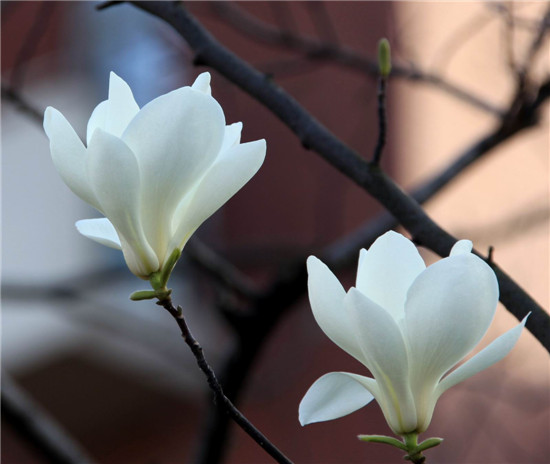
After coming down from the tree, she went again to look for the child's father. By a cliff, she found her husband's axe and also knew that something had happened to him. After returning home, she ended her life in front of the southern magnolia at the gate of the house. As a result, the southern magnolias all over the mountain no longer bloomed in colorful flowers, but only in white flowers.
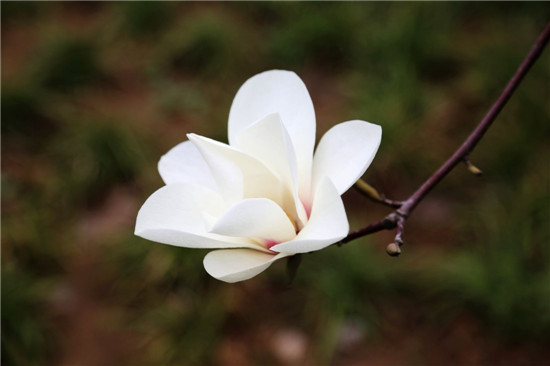
Magnolia represents gratitude. Magnolia often blooms large white flowers amid lush greenery, and with its rich fragrance it gives people a sense of indescribable temperament, truly fresh and lovely. Because its plant is tall and its flowering position is relatively high, it sways in the wind with a spirited appearance, just like a heavenly maiden scattering flowers, very adorable. New poems are already too old to bear hearing; the desolate lodge in Jiangnan is separated by autumn clouds. Passionate, it does not change its color year after year; through a thousand ages its fragrant heart remains, ever increasing for you.
The above is all the content I have summarized for you on what the flower language of magnolia is. I hope this article can help everyone. Please also continue to follow us.