What to do when the leaves of a peace lily turn yellow? Here is how to solve it easily
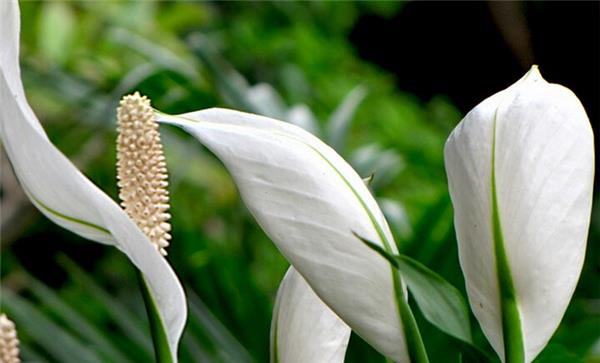
The peace lily, also known as the white sail or spathe flower, is a perennial herbaceous plant and a flower often grown for ornamental purposes. Nowadays it is mostly used as a potted ornamental. The peace lily is hailed as a "flower of purity," carrying the meaning of purity, calm, peace and well-being. Many people often find its leaves turning yellow while growing it, so how should yellowing leaves on a peace lily be dealt with?
Causes
1. Too much light
The peace lily likes light, but not strong light; partial shade is preferable. It grows poorly in shady or strongly lit environments, showing rolled leaves, scorched edges and yellowing.
2. Insufficient humidity
The peace lily requires air humidity between 70-90%; below 50%, the leaves show yellowing, scorched edges, curling and wilting.
3. Improper watering
Watering should mainly alternate between drying out and staying moist; do not let the potting soil stay constantly soggy, and even more importantly do not let it dry out. Moist is best, because the peace lily is neither drought-tolerant nor waterlogging-tolerant. In addition, if the potting soil stays wet for a long time, lack of oxygen will cause root rot, and the leaves will turn yellow and even die.
4. Pest damage
Damage from pests such as red spider mites and scale insects can also cause leaves to wilt and yellow. Control should focus on hand-picking, with spraying as a secondary measure. You can also spray chili water or tobacco-butt soak as eco-friendly treatments.
5. Alkaline soil
Growing it in water or soil with a high salt-alkali content easily makes the leaves wilt and yellow.
6. Insufficient nutrients
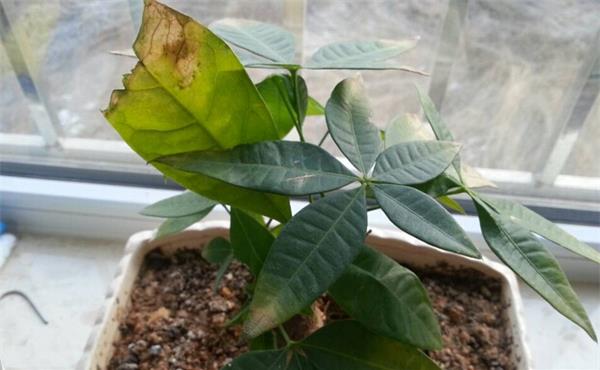
Not changing the soil for a long time leads to a lack of nutrients, making the leaves turn yellow.
7. Improper fertilizing
Applying fertilizer that is too concentrated or unrotted organic fertilizer causes "root burn," leading to withering and yellowing.
Solutions
1. Light
In winter and early spring, the peace lily needs good light and should not be shaded; as the light grows stronger, shade it gradually. If it has been enjoyed in a shady spot, do not put it directly in the sun to bake, otherwise the abrupt change in environment will cause discomfort, shown as wilting, yellow leaves and even death.
2. Humidity
The peace lily needs relatively high growing humidity. If the air is too dry, the leaves will wilt; this can be solved by misting more or sprinkling water on the floor of the environment. Covering it with a transparent plastic bag also works, but when the light is good, ventilate it a little or cut an opening at the top of the bag for ventilation, otherwise the temperature inside the bag will rise sharply.
3. Fertilizing
Fertilize lightly; do not apply concentrated or raw fertilizer, and after applying solid fertilizer, water once with clear water. It is best to use dilute fertilizer water instead of clear water for watering; this generally avoids fertilizer damage and keeps the plant growing vigorously.
4. Temperature
Generally this situation does not occur at other times; it mostly appears when the temperature is below 5°C or above 35°C.
5. Pests
If harmful mites cause damage, the leaves show wilting, faded gloss, yellowing and withering and other undesirable symptoms. You can spray miticides specific to mites for control, such as dicofol, hexythiazox, pyridaben and so on.
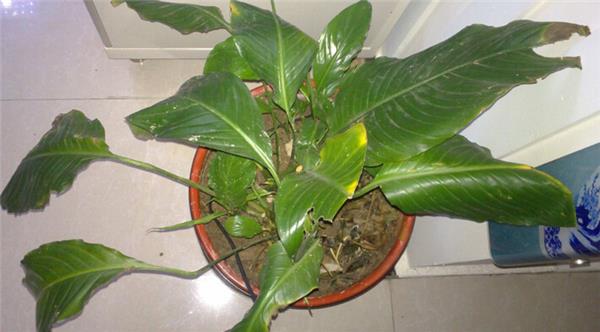
The peace lily itself carries an auspicious meaning, and because it is easy to grow, it is often kept in homes. It not only has a strong ornamental effect, but is also highly practical and has strong medicinal value. So what are the propagation methods for the peace lily?
The peace lily is commonly propagated by division, sowing and tissue culture:
1. Division propagation: best done in May to June. Take the whole peace lily out of the pot, cut the rhizome apart from the base of the clump, with at least 3-4 leaves per clump, and after planting separately place it in partial shade to recover.
2. Seed propagation: after the peace lily flowers, hand-pollination can produce seeds. After collecting the seeds, sow them immediately; the germination temperature is 30°C, and they sprout 10-15 days after sowing. If the temperature is too low during germination, the seeds easily rot.
3. Tissue culture propagation: in the late 1970s and early 1980s, tissue culture propagation of the peace lily had already begun in the United States and Germany. Using young inflorescences and lateral buds as explants, after disinfection they are inoculated on MS medium supplemented with 10 mg/L 6-benzylaminopurine and 2 mg/L indoleacetic acid, and after 40-45 days callus tissue and adventitious buds grow. The adventitious buds are then transferred to MS medium supplemented with 2 mg/L indoleacetic acid, and in about 30-40 days roots are induced, forming a complete plant.
The peace lily is an excellent foliage plant. In southern regions it can be planted in the ground, while in other regions it is mostly grown in pots for ornament. The role of the peace lily is not limited to ornament. Do not underestimate it: the peace lily's high transpiration rate can prevent nasal mucous membranes from drying out and greatly reduce the likelihood of illness. Especially in the now-dry winter, placing a pot of peace lily at home can make the body more comfortable. So what are the properties of the peace lily?
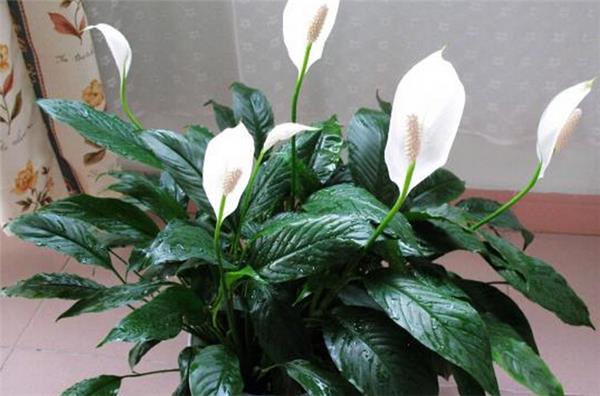
In addition, the feng shui significance of the peace lily mainly comes from the following two characteristics of the peace lily, namely its ornamental value and its functionality.
The ornamental value of the peace lily
Because its leaves resemble those of the arrowroot and its flowers resemble a crane holding its head up, slender and graceful, pure white and flawless, the peace lily gives people a sense of "purity, calm, peace and well-being" and is regarded as a "flower of purity." Because people feel the peace lily carries an auspicious meaning, they specially named it "peace lily" after the beauty of its flower's image.
The functionality of the peace lily
The peace lily is a famous exhaust gas screening program; especially when grown with water roots, the peace lily can regulate indoor temperature and humidity through transpiration and effectively purify volatile organic compounds in the air, such as: alcohol, acetone, trichloroethylene, benzene, toluene, nitrogen monoxide, ozone and so on. Among these, its purification rate for ozone is especially high; placed next to the kitchen gas stove, it can purify the air and remove cooking odors, oil fumes and volatile substances. This beautiful indoor plant, native to the tropical rainforests of Venezuela, is undoubtedly a miracle of medicinal biology.
The peace lily flower is a common ornamental plant. Because its flower language is rather auspicious, many people like to grow it. Is the peace lily flower toxic? Let me introduce it to you below.
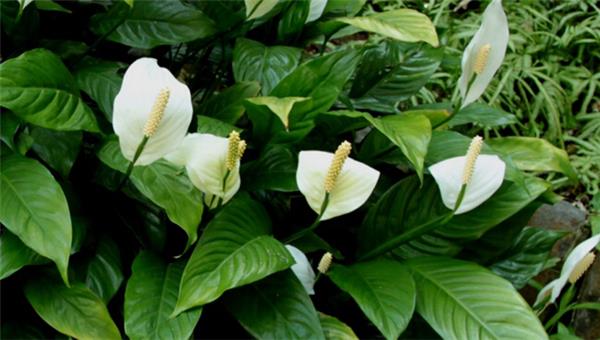
Is the peace lily flower toxic?
Although the peace lily flower and others are natural scavengers that can remove harmful substances from the air, their sap is toxic. The "peace lily flower" leaves contain oxalic acid and asparagine; if eaten by mistake, it causes tumors of the mouth, throat, esophagus and gastrointestinal tract, and even damages the vocal cords, making a person mute. Contact with the skin causes severe itching and uncomfortable symptoms.
If a child accidentally eats a peace lily, you can boil ginger slices in brown sugar water and take it orally, or hold ginger slices in the mouth. If it is relatively serious, you can go to a local hospital for treatment.
The spathe flower is an "expert" at suppressing waste gases exhaled by the human body, such as ammonia and acetone. Is the peace lily flower toxic? At the same time, it can also filter benzene, trichloroethylene and formaldehyde from the air. Its high transpiration rate can prevent nasal mucous membranes from drying out and greatly reduce the likelihood of illness.
The above is my introduction to the peace lily, and I hope it can help everyone.
In addition, the feng shui significance of the peace lily mainly comes from the following two characteristics of the peace lily, namely its ornamental value and its functionality.
The ornamental value of the peace lily
Because its leaves resemble those of the arrowroot and its flowers resemble a crane holding its head up, slender and graceful, pure white and flawless, the peace lily gives people a sense of "purity, calm, peace and well-being" and is regarded as a "flower of purity." Because people feel the peace lily carries an auspicious meaning, they specially named it "peace lily" after the beauty of its flower's image.
The functionality of the peace lily
The peace lily is a famous exhaust gas screening program; especially when grown with water roots, the peace lily can regulate indoor temperature and humidity through transpiration and effectively purify volatile organic compounds in the air, such as: alcohol, acetone, trichloroethylene, benzene, toluene, nitrogen monoxide, ozone and so on. Among these, its purification rate for ozone is especially high; placed next to the kitchen gas stove, it can purify the air and remove cooking odors, oil fumes and volatile substances. This beautiful indoor plant, native to the tropical rainforests of Venezuela, is undoubtedly a miracle of medicinal biology.
The peace lily flower is a common ornamental plant. Because its flower language is rather auspicious, many people like to grow it. Is the peace lily flower toxic? Let me introduce it to you below.
Is the peace lily flower toxic?
Although the peace lily flower and others are natural scavengers that can remove harmful substances from the air, their sap is toxic. The "peace lily flower" leaves contain oxalic acid and asparagine; if eaten by mistake, it causes tumors of the mouth, throat, esophagus and gastrointestinal tract, and even damages the vocal cords, making a person mute. Contact with the skin causes severe itching and uncomfortable symptoms.
If a child accidentally eats a peace lily, you can boil ginger slices in brown sugar water and take it orally, or hold ginger slices in the mouth. If it is relatively serious, you can go to a local hospital for treatment.
The spathe flower is an "expert" at suppressing waste gases exhaled by the human body, such as ammonia and acetone. Is the peace lily flower toxic? At the same time, it can also filter benzene, trichloroethylene and formaldehyde from the air. Its high transpiration rate can prevent nasal mucous membranes from drying out and greatly reduce the likelihood of illness.
The above is my introduction to the peace lily, and I hope it can help everyone.