What to Do When Clivia Leaves Turn Yellow? Practical Solutions to Recommend
Clivia is a perennial herbaceous plant in the genus Clivia of the Amaryllidaceae family. It is a semi-shade plant that prefers cool conditions and dislikes high temperatures. The optimal growing temperature is 15-25°C; below 5°C it stops growing. It has very high ornamental value. However, Clivia can also run into trouble during growth. What should you do when Clivia leaves turn yellow, and what are the causes?
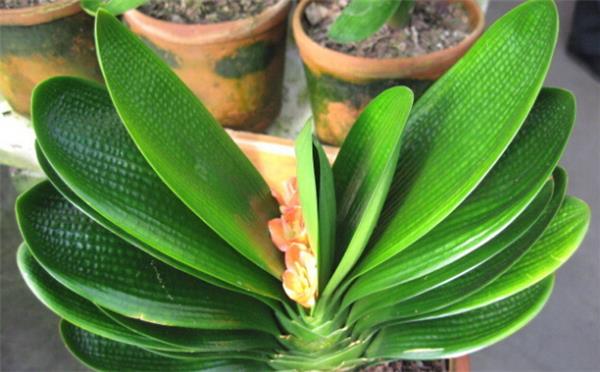
Causes of Yellowing Clivia Leaves
1. Water-induced yellowing. Caused by overly frequent watering. Its characteristic is that old leaves show no obvious change while young leaves turn yellow; in this case, watering should be stopped immediately.
2. Drought-induced yellowing. Caused by lack of water and drought. Its characteristic is that old leaves turn yellow first, from the bottom upward. If the water shortage lasts a little longer, the whole plant's leaves will turn yellow and it may even die; water promptly.
3. Fertilizer-induced yellowing. Caused by overly frequent fertilizing or too high a concentration; its characteristic is that young leaves are thick and fleshy, glossy, and uneven; fertilizing should be stopped, and the soil should be loosened and watered.
4. Starvation-induced yellowing. Caused by insufficient fertilizer, too low a fertilizing concentration, and too long an interval between fertilizing; its characteristic is that yellowing starts at the young leaves and tender stems. If this phenomenon is seen and fertilizer is not applied in time, it can also cause the whole plant's leaves to turn yellow and even die; for flowers lacking fertilizer, never apply a large amount of concentrated fertilizer at one time, to avoid burning the roots.
5. Iron-deficiency yellowing of leaves. For woody flowering plants in greenhouses and the like, because soil fertility conditions vary greatly, yellowing of leaves often occurs. Its characteristic is that young leaves are clearly affected, old leaves less so, with leaf flesh yellow and veins green, forming a typical network pattern; this can be solved by applying a ferrous sulfate aqueous solution. The method is: mix 7 parts cake fertilizer, 5 parts ferrous sulfate, and 200 parts water into a diluted solution and water with it.
6. Nutrient-deficiency chlorosis. If the potting soil lacks iron, the leaf tips turn yellow first. If it lacks nitrogen, new leaves appear yellow-white.
7. Sunscald. After strong direct sunlight (in summer), yellow spots appear on the leaves, known as sunscald. When it is hot (above 30°C) and dry, the leaves also tend to wilt and turn yellow.
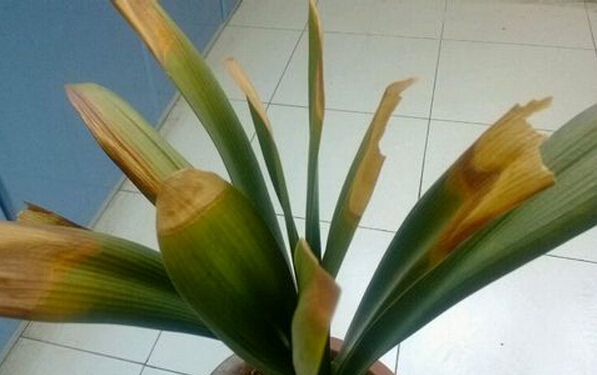
8. Pollution. Clivia leaves should be kept clean; if dirty things splash onto them, the contaminated spots may turn yellow.
9. Freeze damage. Clivia suffers freeze damage below 0°C, and the symptom is still yellow leaves.
10. Sunburn. Clivia is a shade plant; under blazing sun, its leaves will dry up, and they are easily scorched even in a high-temperature indoor setting. The solution is to avoid exposure to blazing sun, and regularly wipe the leaves with a cloth dipped in beer. Clivia wiped with beer not only looks good but also loses leaf moisture less easily.
11. Leaf spot disease. It is caused by bacterial infection. The main causes are repotting with unrotted raw soil, applying fertilizer that has not fermented well, not changing the potting soil for a long time, an imbalance of nitrogen, phosphorus, and potassium in the fertilizer applied, and applying too much fertilizer. In the early stage of the disease, small yellow-brown spots appear on the leaf surface, after which the spot color gradually deepens and the spotted area continuously expands, producing rot, until the entire plant rots away.
Questions About Handling Yellowing Clivia Leaves
1. Can yellowing Clivia leaves be pruned?
The key is to figure out why there are yellow leaves.
Common causes of yellow leaves include:
① Keep it in a semi-shade spot for care; when the sun is strong, the leaves will get sunburned and turn yellow.
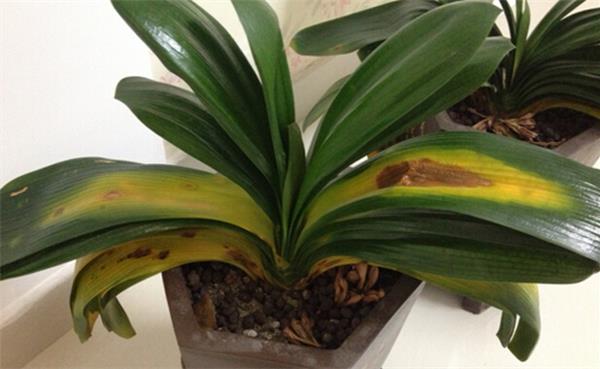
② Clivia has fleshy roots, so the potting soil only needs to be kept slightly moist; watering too much damages the roots and the leaves will turn yellow.
③ Yellow leaves from lack of fertilizer: Clivia only needs a dilute nitrogen fertilizer once every half month; do not fertilize in the hot summer season to avoid damaging the roots. Yellowing Clivia leaves can be pruned. Hold the scissors over a flame to sterilize them, then cut off the yellow leaves; but do not tear them off.
2. Solutions for yellowing Clivia leaves in spring:
After Clivia has been through a winter, its leaves have turned yellow and withered. Will it still live in spring?
It should be able to. Repot it: remove the dead leaves, remove hollow roots, use special Clivia soil mixed with large pieces of orchid stone; soil:orchid stone = 3:2. After repotting, water thoroughly once, place it in a spot with diffused light and good ventilation to recover for 1 month, then gradually expose it to light over the course of a week, and resume normal care. Do not expose it to blazing sun.
3. Solutions for yellowing Clivia leaves in summer:
Check whether it is usually being watered too much. Too much watering easily causes root rot, leaf rot, and core rot, and water should be poured into the potting soil, not onto the leaves, especially not into the central leaves. If the potting soil is often too wet, it will cause water to flow backward, and then, as you said, blackening and rot will gradually spread from the leaf tips. Therefore, Clivia's potting soil should preferably be on the drier side. In addition, summer temperatures are relatively high; if the temperature of its growing environment drops below 25°C, a dilute liquid fertilizer of 1:20 or more can also be applied in summer, once every half month. This can promote the growth of Clivia and shorten or eliminate its dormancy period. There is another situation: light that is too strong. Clivia likes soft light; if exposed to strong direct light, the leaf surface will become rough, the leaf color will turn yellow and dark, losing its emerald green, and it is also prone to "sunscald."
Clivia is very common in the home. It is a tasteful flowering plant with cultural connotations, so let us look at what uses Clivia has.
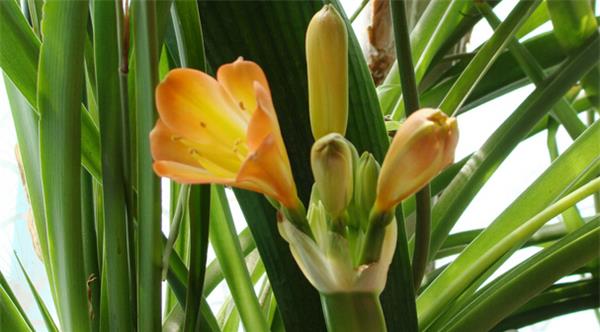
Uses of Clivia: 1. Cultural cultivation
Clivia is a high-grade, precious flower with meanings of wealth, nobility, beauty, and magnificence. It can satisfy people's many needs, such as beautifying the home, cultivating character, purifying the air, improving health, and enhancing cultural and artistic cultivation. It gives the home an elegant and luxurious air, adding splendor and charm to enrich and vary people's lives.
Uses of Clivia: 2. Ornamental value
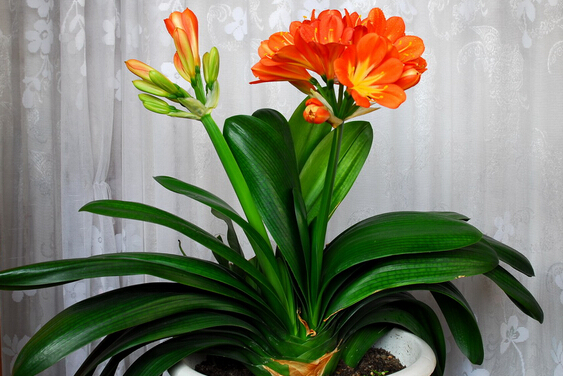
Clivia has a dignified and graceful plant form, with verdant and upright leaves, large and brightly colored flowers, and red and glossy fruit. Leaves, flowers, and fruit are all beautiful, and it is known as having flowers to view in one season, fruit to view in three seasons, and leaves to view in all four seasons. Its flowering period lasts as long as forty to fifty days, and it can bloom in early spring, making it an important holiday flower.
Uses of Clivia: 3. Purifying the air
During its growth and development, although Clivia can absorb water and mineral nutrients from the soil to synthesize organic substances (such as amino acids and amides), this is still not enough for its entire physiological activity. It must use sunlight, temperature, carbon dioxide, and water for photosynthesis to produce various nutrients to supply its own activities, and release energy and oxygen. Therefore, people can take advantage of Clivia's characteristic of absorbing a large amount of carbon dioxide while releasing oxygen, and keep it indoors for long-term cultivation. This is extremely significant for Clivia's growth and development, for beautifying the home, for purifying indoor air, and for improving people's health.
Uses of Clivia: 4. Absorbing dust
The Clivia plant, especially its broad, thick, and fleshy leaves, has many stomata and fine hairs and can secrete a large amount of mucus. Through air circulation, it can absorb large amounts of dust, dirt, and harmful gases, filtering indoor air, reducing the dust content of indoor spaces, and making the air clean. Thus Clivia is praised by people as an ideal "absorbing machine" and "dust collector."
Uses of Clivia: 5. Medicinal value
Clivia is both ornamental and enjoyable, and the whole plant can be used as medicine. Besides beautifying the environment, it also has a certain medicinal value. The Clivia plant contains lycorine and clivine, and also contains the trace element selenium. Now pharmaceutical researchers use Clivia plants containing these chemical components for scientific research, and they have already been used to treat cancer, hepatitis, cirrhotic ascites, and poliovirus, among others. Experiments have proved that the lycorine extracted from Clivia leaves and roots not only has antiviral effects but also anticancer effects.
Clivia is a kind of home flowering plant that people like very much and is very common in the home. Clivia not only has relatively high ornamental value, but its effects in purifying air and other aspects are also quite good. The above is the introduction to related information about Clivia that the editor has shared with everyone, and I hope it can help.
Uses of Clivia: 1. Cultural cultivation
Clivia is a high-grade, precious flower with meanings of wealth, nobility, beauty, and magnificence. It can satisfy people's many needs, such as beautifying the home, cultivating character, purifying the air, improving health, and enhancing cultural and artistic cultivation. It gives the home an elegant and luxurious air, adding splendor and charm to enrich and vary people's lives.
Uses of Clivia: 2. Ornamental value
Clivia has a dignified and graceful plant form, with verdant and upright leaves, large and brightly colored flowers, and red and glossy fruit. Leaves, flowers, and fruit are all beautiful, and it is known as having flowers to view in one season, fruit to view in three seasons, and leaves to view in all four seasons. Its flowering period lasts as long as forty to fifty days, and it can bloom in early spring, making it an important holiday flower.
Uses of Clivia: 3. Purifying the air
During its growth and development, although Clivia can absorb water and mineral nutrients from the soil to synthesize organic substances (such as amino acids and amides), this is still not enough for its entire physiological activity. It must use sunlight, temperature, carbon dioxide, and water for photosynthesis to produce various nutrients to supply its own activities, and release energy and oxygen. Therefore, people can take advantage of Clivia's characteristic of absorbing a large amount of carbon dioxide while releasing oxygen, and keep it indoors for long-term cultivation. This is extremely significant for Clivia's growth and development, for beautifying the home, for purifying indoor air, and for improving people's health.
Uses of Clivia: 4. Absorbing dust
The Clivia plant, especially its broad, thick, and fleshy leaves, has many stomata and fine hairs and can secrete a large amount of mucus. Through air circulation, it can absorb large amounts of dust, dirt, and harmful gases, filtering indoor air, reducing the dust content of indoor spaces, and making the air clean. Thus Clivia is praised by people as an ideal "absorbing machine" and "dust collector."
Uses of Clivia: 5. Medicinal value
Clivia is both ornamental and enjoyable, and the whole plant can be used as medicine. Besides beautifying the environment, it also has a certain medicinal value. The Clivia plant contains lycorine and clivine, and also contains the trace element selenium. Now pharmaceutical researchers use Clivia plants containing these chemical components for scientific research, and they have already been used to treat cancer, hepatitis, cirrhotic ascites, and poliovirus, among others. Experiments have proved that the lycorine extracted from Clivia leaves and roots not only has antiviral effects but also anticancer effects.
Clivia is a kind of home flowering plant that people like very much and is very common in the home. Clivia not only has relatively high ornamental value, but its effects in purifying air and other aspects are also quite good. The above is the introduction to related information about Clivia that the editor has shared with everyone, and I hope it can help.