Dumb Cane (Alocasia) Growing Methods and Precautions: Teach You to Grow Healthy and Beautiful Plants
Dumb Cane, also known as Drip-drop Lotus and Buddha's Hand Lotus, has a delicate inner character; its leaves are large yet unassuming, reserved and low-key. Because its flowers resemble Guanyin and it drips water from the leaf tips when moisture is plentiful, it earned the beautiful name "Dumb Cane," and it is often used by people to decorate interiors. Despite its beautiful name and inner refinement, few people know the growing methods and precautions for Dumb Cane. Here the editor will introduce some knowledge on how to grow Dumb Cane.
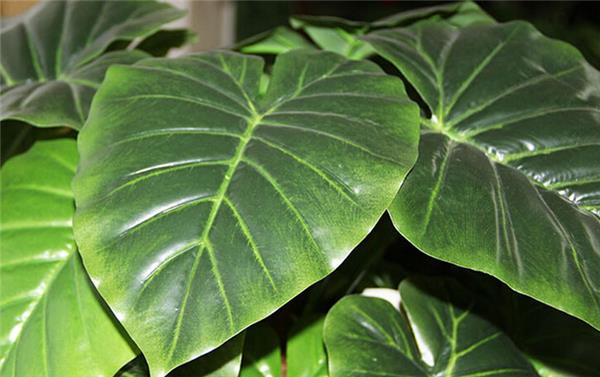
1. Temperature: It likes warmth, grows rapidly above 25°C, and the most suitable temperature for growth is 25-30°C. It has a certain cold resistance; as long as the overwintering temperature is maintained above 2°C, it is fine.
2. Light: It likes partial shade and cannot tolerate intense sunlight exposure. From May to September, shading should be applied, blocking about 50% of sunlight. At other times, it should be given sufficient sunlight. It cannot tolerate excessive shade, otherwise the leaf stalks become thin and elongated, and not only is the plant shape unattractive, but they also break easily.
3. Watering: Because the leaves are large and consume more water, it is afraid of drought. It likes a slightly moist soil environment. During the growing period, watering should follow "alternating dry and wet, leaning toward moist." Water thoroughly; even watering a bit more is harmless. Especially on hot, sunny summer days, pay even more attention to water supply to meet the plant's water needs. Because the leaves are large, in the morning water droplets often form at the leaf tips, which is quite strange, hence the name "Dumb Cane." However, the potting soil must usually be kept moist to ensure the plant absorbs sufficient water, relying on root pressure to transport water to the leaf tips and exude it; when the potting soil is dry, there will be no water to drip. In winter, water should be controlled, keeping the potting soil slightly moist, as long as the leaves do not become soft and drooping; overly wet potting soil easily causes root rot.
4. Environmental humidity: It likes a humid environment and dislikes dry air. During the growing season, on sunny and dry days, water should often be sprayed on the branches, leaves, and surroundings to maintain a relatively high air humidity.
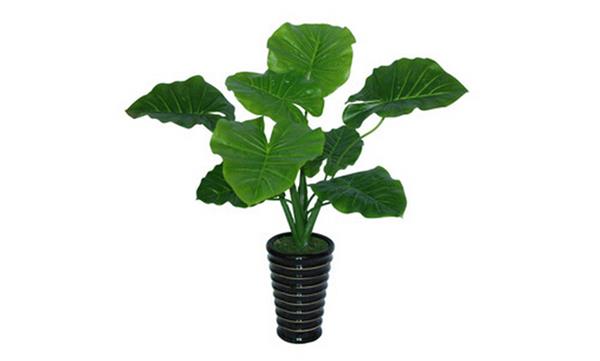
5. Fertilizing: It likes fertilizer. Because of its large growth volume, nutrients need to be supplemented in time so that the stems grow thick and strong and the leaves become large, dark green, and glossy; when lacking fertilizer, the leaves are small and yellow. During the growing period, apply a nitrogen-based fertilizer once about every 10 days. After the beginning of autumn, stop applying nitrogen fertilizer and apply 2-3 applications of phosphorus-potassium fertilizer. Stop fertilizing in winter.
6. Pruning: Yellow leaves should be cut off at any time. Because the leaf stalks are long, when moving, placing, and caring for the plant, avoid breaking the leaf stalks. If broken, cut them off promptly.
7. Repotting: Repot once every 1-2 years. It has low requirements for soil, but likes fertile, loose, and well-drained sandy loam. The growing medium can be prepared from materials such as leaf mold, garden soil, peat soil, and river sand. If sufficient base fertilizer is applied, the leaves can grow large and plump. Because the leaves are large but few in number and the leaf stalks are long, when moving the plant and caring for it, avoid damaging the leaves, otherwise the ornamental value will be reduced.
8. Propagation: seeding, cuttings, division, etc.
(1) Seeding: Wild plants often bear seeds. Sow in spring. The suitable germination temperature is 25-28°C, and germination occurs 20-25 days after sowing.
(2) Cuttings: Carry out in April. Cut thick, strong stems into stem sections about 10 cm long with several buds as cuttings. After drying slightly, insert them obliquely or lay them flat on the seedbed; when laying flat, the depth should be just enough to bury the stem section. The cuttings can also be inserted directly into pots. After insertion, keep the medium moist and the environmental temperature at 25-2TC; roots can form and the plant can survive after 4-5 weeks.
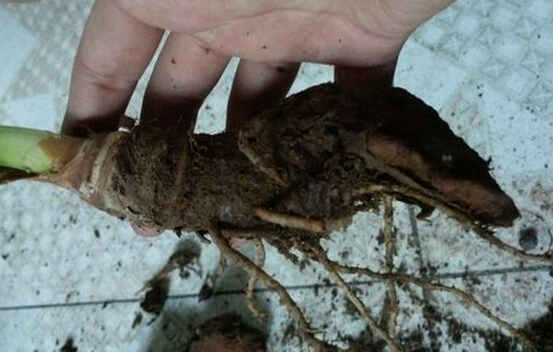
(3) Division: Potted plants easily produce many small plantlets at the base. In April, combine division with repotting, separate the small plantlets from the mother plant, and plant them separately. Division should be carried out when the temperature reaches 20C or higher. While keeping the medium moist, new buds can emerge in about 20 days.
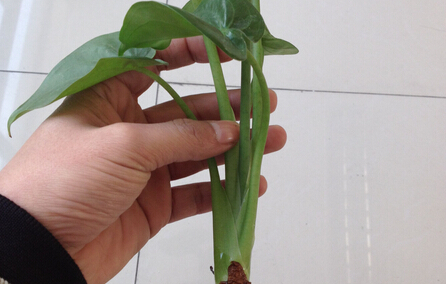
Dumb Cane, also known as Drip-drop Lotus and Buddha's Hand Lotus, is a perennial herbaceous plant. It has a delicate inner character; its leaves are large yet unassuming, reserved and low-key. Because its flowers resemble Guanyin and it drips water from the leaf tips when moisture is plentiful, it earned the beautiful name "Dumb Cane," and it is often used by people to decorate interiors. So, when growing Dumb Cane, various problems always come up. What should we do?
1. What causes Dumb Cane leaves to turn yellow?
Answer: The potting soil of Dumb Cane has been too wet or too dry for a long time, and watering has not followed the rule of watering once the soil is dry. Watering with "half water," that is, not watering thoroughly, so that no seepage appears at the bottom of the Dumb Cane pot. Exposure to cold in winter has already frozen and damaged the Dumb Cane roots. The leaf surface of Dumb Cane has not been sprayed and cleaned for a long time, allowing dust to accumulate and hinder photosynthesis. After overwintering, Dumb Cane is eager to be moved outdoors and placed in a warm place to bask in the sun, and it temporarily cannot adapt to the sudden climate change. Dumb Cane has been placed for a long time in an environment with poor ventilation.
2. What should be done if poisoned by touching Dumb Cane sap?
Answer: It is recommended to use vinegar for detoxification. Rinse with plenty of clean water. The toxic components are calcium oxalate and saponin (Sapotoxin); itching occurs after skin contact with the sap; contact with the eyes can cause blindness. Folk remedies use vinegar plus a little ginger juice boiled together, taken orally or used as a gargle to detoxify. If the poisoning symptoms are obvious, it is recommended to go to the hospital for medical treatment.
3. What should be done if Dumb Cane roots rot?
Answer: Dumb Cane easily suffers root rot in summer, mainly caused by potting soil that is too wet. Pull up the Dumb Cane, cut off the rotten roots, and wear rubber gloves when cutting the roots (Dumb Cane is toxic! Those with skin allergies should be careful.). Cut off a little of the healthy tissue near the rotten part. Dry it, replant after the wound heals, plant it in plain sand or sandy soil, and do not water for the time being; water only after the potting soil has dried completely. Do the same from then on: do not water unless dry. In addition, place it in a ventilated spot.
4. Why does Dumb Cane drip water in the morning?
Answer: Dumb Cane, under warm and humid conditions with sufficient soil moisture, will drip water downward from the leaf tips or leaf edges; if the air humidity is too low, the water that comes out will evaporate immediately. Because the temperature is lower at night, there is no sunlight, and the air humidity is high, the water-exuding phenomenon is obvious in the morning. Therefore, water droplets generally appear more often in the morning as water exudation.
5. How should Dumb Cane be grown in water?
Answer: Hydroponic requirements: diffused light, and sufficient light in winter. The water in the container should be changed frequently, and when changing the water, clean the container and the plant roots. Note that it is best to rinse with tap water; if conditions permit, it can be disinfected with potassium permanganate solution. The temperature should preferably be kept above 12°C. Since it is hydroponic, air humidity can generally meet the demand. When growing hydroponically, do not submerge too much in the water; it is enough for half of the lower root system to be in the water.
6. What is the problem if Dumb Cane falls over?
Answer: Because ordinary watering is generally only applied at the roots, water cannot reach the leaf parts, so it falls over. It is recommended to put clean water in a spray bottle and spray it on the leaves. After a few days, there will be an effect.
7. How should Dumb Cane be cared for?
Answer: In winter, its transpiration will decrease. If it is a newly transplanted small seedling, after the original soil it came with is moistened, just keep the environment around the seedling moist; use a spray bottle to moisten the surrounding environment. If it is an old seedling, feel the surface soil with your hand and water only when it is dry, but do not water too much, because when the temperature is below 18 degrees, Dumb Cane goes into dormancy and hardly grows, so it does not need much water; otherwise the roots will rot.
8. What should be done if Dumb Cane is too tall?
Answer: By spraying the whole plant with a 2% paclobutrazol solution, in the later growth process of Dumb Cane you will find that the growth height of Dumb Cane will not exceed 40cm. If Dumb Cane continues to grow, the whole plant can be sprayed again. Generally, spraying once about every six months can achieve the effect of controlling height.
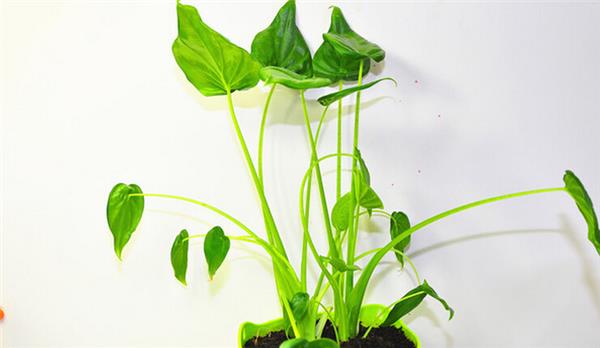
Dumb Cane is also a permanent family member in the editor's home. It is elegant and beautiful in appearance, with thin, long branches and stems and large, green leaves, and in summer it even drips water droplets from time to time. The editor likes it very much. So, what is the feng shui effect of Dumb Cane?
Because the leaves of Dumb Cane are very large, it is very eye-catching when placed in a room. Using it to adjust color and set off the home atmosphere is a very good choice. This kind of ornamental plant is often used as the background of a home "picture," so without much thought we also know that Dumb Cane, a plant with an extremely strong presence, is so suitable for setting off a grand home background, so Chinese style is also relatively suitable for placing Dumb Cane.
The growing methods and precautions for Dumb Cane are introduced here. I hope everyone can understand the related habits of how to grow Dumb Cane, as well as the knowledge that its sap and rhizomes are toxic. Achieve the principle of admiring it from afar without treating it disrespectfully, so as to carry forward its ornamental value.
If the poisoning symptoms are obvious, it is recommended to go to the hospital for medical treatment.3. What should be done if Dumb Cane roots rot?
Answer: Dumb Cane easily suffers root rot in summer, mainly caused by potting soil that is too wet. Pull up the Dumb Cane, cut off the rotten roots, and wear rubber gloves when cutting the roots (Dumb Cane is toxic! Those with skin allergies should be careful.). Cut off a little of the healthy tissue near the rotten part. Dry it, replant after the wound heals, plant it in plain sand or sandy soil, and do not water for the time being; water only after the potting soil has dried completely. Do the same from then on: do not water unless dry. In addition, place it in a ventilated spot.
4. Why does Dumb Cane drip water in the morning?
Answer: Dumb Cane, under warm and humid conditions with sufficient soil moisture, will drip water downward from the leaf tips or leaf edges; if the air humidity is too low, the water that comes out will evaporate immediately. Because the temperature is lower at night, there is no sunlight, and the air humidity is high, the water-exuding phenomenon is obvious in the morning. Therefore, water droplets generally appear more often in the morning as water exudation.
5. How should Dumb Cane be grown in water?
Answer: Hydroponic requirements: diffused light, and sufficient light in winter. The water in the container should be changed frequently, and when changing the water, clean the container and the plant roots. Note that it is best to rinse with tap water; if conditions permit, it can be disinfected with potassium permanganate solution. The temperature should preferably be kept above 12°C. Since it is hydroponic, air humidity can generally meet the demand. When growing hydroponically, do not submerge too much in the water; it is enough for half of the lower root system to be in the water.
6. What is the problem if Dumb Cane falls over?
Answer: Because ordinary watering is generally only applied at the roots, water cannot reach the leaf parts, so it falls over. It is recommended to put clean water in a spray bottle and spray it on the leaves. After a few days, there will be an effect.
7. How should Dumb Cane be cared for?
Answer: In winter, its transpiration will decrease. If it is a newly transplanted small seedling, after the original soil it came with is moistened, just keep the environment around the seedling moist; use a spray bottle to moisten the surrounding environment. If it is an old seedling, feel the surface soil with your hand and water only when it is dry, but do not water too much, because when the temperature is below 18 degrees, Dumb Cane goes into dormancy and hardly grows, so it does not need much water; otherwise the roots will rot.
8. What should be done if Dumb Cane is too tall?
Answer: By spraying the whole plant with a 2% paclobutrazol solution, in the later growth process of Dumb Cane you will find that the growth height of Dumb Cane will not exceed 40cm. If Dumb Cane continues to grow, the whole plant can be sprayed again. Generally, spraying once about every six months can achieve the effect of controlling height.
Dumb Cane is also a permanent family member in the editor's home. It is elegant and beautiful in appearance, with thin, long branches and stems and large, green leaves, and in summer it even drips water droplets from time to time. The editor likes it very much. So, what is the feng shui effect of Dumb Cane?
Because the leaves of Dumb Cane are very large, it is very eye-catching when placed in a room. Using it to adjust color and set off the home atmosphere is a very good choice. This kind of ornamental plant is often used as the background of a home "picture," so without much thought we also know that Dumb Cane, a plant with an extremely strong presence, is so suitable for setting off a grand home background, so Chinese style is also relatively suitable for placing Dumb Cane.
The growing methods and precautions for Dumb Cane are introduced here. I hope everyone can understand the related habits of how to grow Dumb Cane, as well as the knowledge that its sap and rhizomes are toxic. Achieve the principle of admiring it from afar without treating it disrespectfully, so as to carry forward its ornamental value.