What to Do When Alocasia (Dripping Guanyin) Leaves Turn Yellow? An Easy Fix
Every plant can develop problems during cultivation, which calls for careful observation and care from the grower. So what should you do when the leaves of your Alocasia (Dripping Guanyin) turn yellow? When a plant we grow shows signs of trouble, we must first analyze the cause so we can treat the root of the problem. So what are the likely reasons for yellowing leaves on Alocasia?
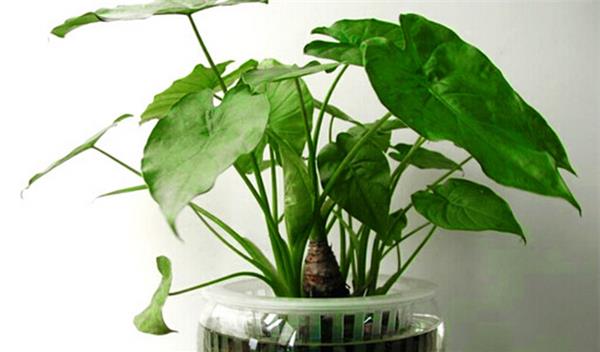
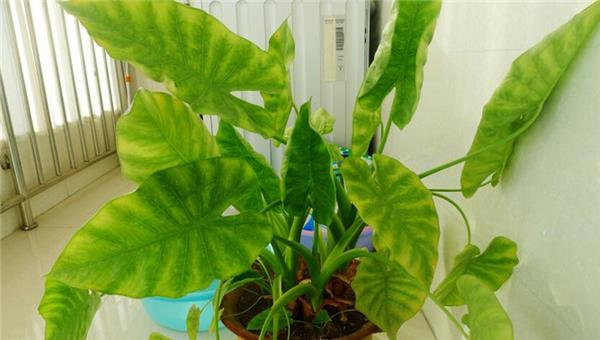
1. Light exposure. Keeping Alocasia in a living room, bedroom or other spot with no light for a long time will, due to insufficient light, affect the plant's photosynthesis and thus its life activities. When light is insufficient or absent, it affects plant growth and morphogenesis: under such conditions, the internodes become unusually long, the leaves are underdeveloped and small, and they lack chlorophyll, appearing yellow.
2. Improper watering. Alocasia has a fairly high water demand; during the growing season, keep it on the moist side rather than dry, while during the winter dormant period you should restrict watering as much as possible. Pay attention to your watering method, as improper watering easily causes yellow leaves. One wrong way to water is "half watering," meaning watering not thoroughly enough, so that no water seeps out from the bottom of the Alocasia pot. This kind of watering fails to meet the plant's water needs and easily causes the root tips to be deprived of water for a long time, leading to yellow leaves. Another watering mistake is having no regular schedule, watering whenever you happen to think of it, which causes the potting soil to stay overly wet or overly dry for long periods and is bad for the plant's growth.
3. Unsuitable soil conditions. If the soil used for growing Alocasia is too alkaline or has not been changed for a long time, the soil will lack nutrients, affecting the plant's growth and leading to drooping, yellowing and sagging leaves.
4. Weather factors. Alocasia is a tropical plant and is prone to cold damage when temperatures drop in winter. If the growing environment's temperature is not adjusted in time, the roots can be frostbitten and the leaves turn yellow. In addition, after overwintering, Alocasia is eager to be moved outdoors and placed in a warm spot to sunbathe, but it cannot adapt to the sudden climate change all at once, which also causes yellow leaves.
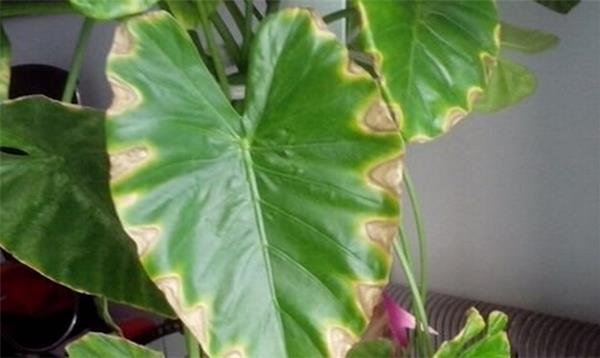
5. Ventilation environment. If Alocasia is kept in a poorly ventilated environment for a long time, it will suffer from "breathing difficulty," which causes the leaves to turn yellow.
6. Cleaning the leaf surface. Leaves are the main site of photosynthesis. If the leaf surface is not misted and cleaned for a long time, dust accumulates and blocks photosynthesis, so the plant gets insufficient nutrients and the leaves turn yellow.
7. Disease and pest effects. The main culprit behind yellow leaves is the red spider mite, which likes to suck sap on the undersides of leaves. After being damaged, the leaves turn yellow and develop many small white spots, soon withering, yellowing and dropping off. They often breed in hot, low-humidity environments. Be sure to control them.
8. Human damage. Artificial damage to the plant's leaves or stems will damage the plant's transport system, so nutrients cannot reach the leaves and they turn yellow.
To prevent and treat yellowing leaves on Alocasia, start from the cause and treat the root of the problem.
1. Give Alocasia reasonable light conditions. Alocasia likes semi-shaded environments, so pay attention to shading when caring for it, but remember never to leave it in a dark environment for long periods. Also pay attention to ventilation and keep the air flowing.
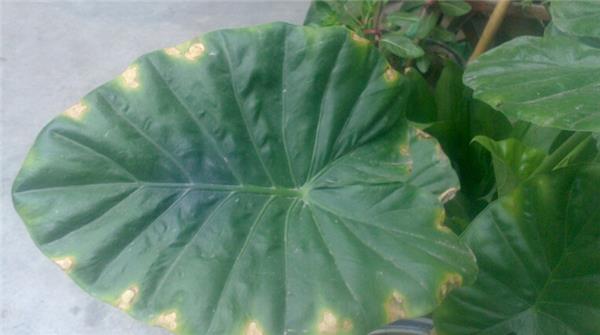
2. Alocasia has a high water demand; water whenever the soil dries, watering thoroughly each time until water flows out of the bottom of the pot. Water regularly, and do not let the potting soil stay too dry or too wet for long periods. While watering, use a spray bottle to clean the leaves as well, keeping them clean, and you can also enjoy watching the water roll off the leaves.
3. Alocasia is not fussy about soil, but you must ensure the potting medium is fertile; choose sandy loam or humus loam containing organic matter, and change the soil in time to add nutrients. To increase the plant's own resistance, do not use only nitrogen and phosphorus fertilizers; alternate them with organic fertilizer, and applying a little ferrous sulfate will make the leaves larger and greener.
4. Keep Alocasia's living environment warm and humid. When the weather turns cold in winter, move it indoors promptly; gradually change Alocasia's living environment so it adapts to temperature changes, and remember that you must not place Alocasia in an environment where the temperature fluctuates between high and low.
5. Prevent human damage to Alocasia. The sap of Alocasia is toxic, so try to avoid contact with its body. When red spider mites appear on the plant, spray with 40% dimethoate emulsion at 1000 times dilution or 80% dichlorvos at 1000-1500 times dilution.
Alocasia actually has fairly low soil requirements; it grows best in well-drained sandy loam or humus loam containing organic matter. It likes warm, humid and semi-shaded environments and is not cold-tolerant, so under normal circumstances, when growing Alocasia you must keep the potting soil moist. So, is Alocasia toxic?
Alocasia (Dripping Guanyin) belongs to the Araceae family. Both its corm and leaves have medicinal value, and its sap is toxic: contact with the skin causes redness and itching, and ingesting it causes throat pain and so on. In fact, many plants grown in homes are somewhat toxic, so when growing toxic ornamental plants, keep an appropriate distance, do not play with or stroke them casually, and certainly do not put their branches, leaves or fruits in your mouth.
Alocasia (Dripping Guanyin) represents like-mindedness, sincerity, interest and inner elegance, and is one of the most common houseplants. In warm, humid conditions with sufficient soil moisture, water drips down from the leaf tips or leaf edges; and its flowers resemble Guanyin, hence the name Dripping Guanyin. Alocasia is loved for its graceful form and also purifies the air. So what exactly are the uses of Alocasia?
1. Uses of Alocasia: ornamental value
Alocasia is unanimously recommended by designers as the "king of the large living room" and is the best partner for culturally rich East Asian style and luxurious, grand American resort style. So placing some green plants in a room symbolizes the vitality of marriage, produces fresh oxygen, and is greatly beneficial to health.
2. Uses of Alocasia: air purification
The green leaves of Alocasia can absorb carbon dioxide from the air; under the combined action of sunlight and chlorophyll, it reacts with the water absorbed by the plant to form glucose while releasing oxygen, and then glucose molecules form starch.
Alocasia is effective at removing dust from the air. But note that the white sap in the stem of Alocasia is toxic, and the water that drips from it is toxic too; accidentally touching or ingesting the sap causes discomfort in the throat and mouth and a burning pain in the stomach. Special care should be taken to prevent young children from ingesting it. However, Alocasia is not a carcinogenic plant.
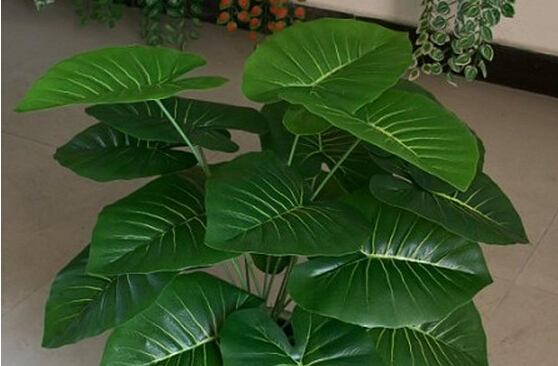
3. Uses of Alocasia: medicinal value
Nature and flavor: pungent; cold in nature; toxic.
Meridians entered: heart meridian; liver meridian; gallbladder meridian; large intestine meridian.
Functions: clearing heat and detoxifying; promoting qi and relieving pain; dissipating nodules and reducing swelling.
Alocasia can also treat malarial fevers, acute vomiting and diarrhea, intestinal typhoid, rheumatic pain, hernia, red and white leukorrhea, carbuncles and swellings, atrophic rhinitis, scrofula, boils, scabies, and snake and dog bites.
4. Uses of Alocasia: feng shui role
In home feng shui, great care must be taken when placing green plants: you should not place plants with pointed leaves, because from a feng shui perspective they easily lead to loss of wealth, and according to feng shui masters, if you want to place such plants you need to tie them with a red ribbon, which can offset the wealth-losing feng shui effect. But this is only a minority view; for most people, plants placed at home are better with round leaves, and the larger and thicker the leaves the better, so Alocasia is quite suitable for home placement. In the direction of the home that is currently prosperous, placing some thick-leaved or large-leaved evergreen plants can achieve the effect of "generating prosperity," and since Alocasia is a plant that does not leak wealth, placing it in the wealth position will have a very good wealth-attracting effect.
The above is the information the editor has shared about Alocasia, and we hope it helps everyone better understand Alocasia.
Alocasia (Dripping Guanyin) belongs to the Araceae family. Both its corm and leaves have medicinal value, and its sap is toxic: contact with the skin causes redness and itching, and ingesting it causes throat pain and so on. In fact, many plants grown in homes are somewhat toxic, so when growing toxic ornamental plants, keep an appropriate distance, do not play with or stroke them casually, and certainly do not put their branches, leaves or fruits in your mouth.
Alocasia (Dripping Guanyin) represents like-mindedness, sincerity, interest and inner elegance, and is one of the most common houseplants. In warm, humid conditions with sufficient soil moisture, water drips down from the leaf tips or leaf edges; and its flowers resemble Guanyin, hence the name Dripping Guanyin. Alocasia is loved for its graceful form and also purifies the air. So what exactly are the uses of Alocasia?
1. Uses of Alocasia: ornamental value
Alocasia is unanimously recommended by designers as the "king of the large living room" and is the best partner for culturally rich East Asian style and luxurious, grand American resort style. So placing some green plants in a room symbolizes the vitality of marriage, produces fresh oxygen, and is greatly beneficial to health.
2. Uses of Alocasia: air purification
The green leaves of Alocasia can absorb carbon dioxide from the air; under the combined action of sunlight and chlorophyll, it reacts with the water absorbed by the plant to form glucose while releasing oxygen, and then glucose molecules form starch.
Alocasia is effective at removing dust from the air. But note that the white sap in the stem of Alocasia is toxic, and the water that drips from it is toxic too; accidentally touching or ingesting the sap causes discomfort in the throat and mouth and a burning pain in the stomach. Special care should be taken to prevent young children from ingesting it. However, Alocasia is not a carcinogenic plant.
3. Uses of Alocasia: medicinal value
Nature and flavor: pungent; cold in nature; toxic.
Meridians entered: heart meridian; liver meridian; gallbladder meridian; large intestine meridian.
Functions: clearing heat and detoxifying; promoting qi and relieving pain; dissipating nodules and reducing swelling.
Alocasia can also treat malarial fevers, acute vomiting and diarrhea, intestinal typhoid, rheumatic pain, hernia, red and white leukorrhea, carbuncles and swellings, atrophic rhinitis, scrofula, boils, scabies, and snake and dog bites.
4. Uses of Alocasia: feng shui role
In home feng shui, great care must be taken when placing green plants: you should not place plants with pointed leaves, because from a feng shui perspective they easily lead to loss of wealth, and according to feng shui masters, if you want to place such plants you need to tie them with a red ribbon, which can offset the wealth-losing feng shui effect. But this is only a minority view; for most people, plants placed at home are better with round leaves, and the larger and thicker the leaves the better, so Alocasia is quite suitable for home placement. In the direction of the home that is currently prosperous, placing some thick-leaved or large-leaved evergreen plants can achieve the effect of "generating prosperity," and since Alocasia is a plant that does not leak wealth, placing it in the wealth position will have a very good wealth-attracting effect.
The above is the information the editor has shared about Alocasia, and we hope it helps everyone better understand Alocasia.