What to Do When a Money Tree's Leaves Turn Yellow? Growing Secrets to Help You Solve It
The money tree (Pachira aquatica) has an auspicious meaning and is quite common in home plant growing. Moreover, during cultivation, the money tree very easily develops yellowing leaves. Today, the editor will introduce to you the reasons for yellowing leaves on the money tree as well as some money tree care methods.
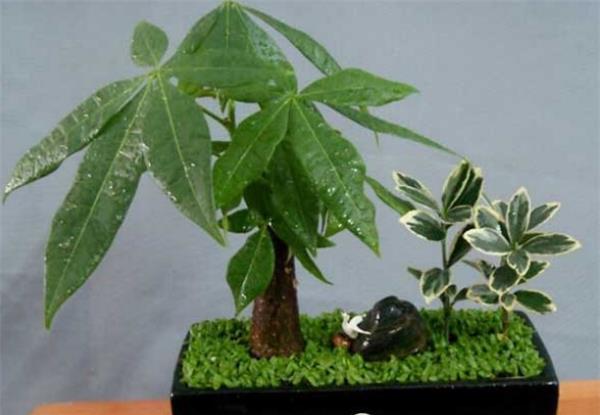
Generally speaking, the reasons for yellowing leaves on the money tree can be summarized as the following 10 causes:
1. Improper watering: The money tree likes a warm and humid climate environment, and the potting soil is best kept moist, but when grown indoors, generally do not water until the potting soil is dry, and when you water, water thoroughly. Because if you do not water thoroughly and only wet the top while the bottom stays dry, it will affect nutrient absorption, causing the leaf color to become dull and lusterless and gradually wither and yellow from the bottom upward and fall off. In this situation, you need to water a small amount and spray water frequently, so that it gradually recovers and then returns to normal watering.
2. Unsuitable light: The money tree likes light, but it is not tolerant of strong direct light; semi-shade or scattered light is best, and only in winter does it need better light conditions to grow well. Starting in late April, you can choose a clear, warm midday, move the pot outdoors or onto a balcony, expose it to direct sunlight for 1-2 hours, and gradually extend the time; this will produce very good growing results. Being in shade or a dimly lit place for a long time will cause leaves to turn yellow and drop, and in severe cases the plant may even die.
3. Pest and disease control: Leaf spot disease is a common ailment of the money tree. Its symptoms are that a few spots appear first, then the spots gradually expand and extend over the entire leaf, and the leaves drop. Garlic juice can be sprayed to sterilize. As for insect pests, the main ones are red spider mites and scale insects. Red spider mites are small, with a body length of less than 1 mm, and can be effectively controlled with acaricides such as mancozeb? no, use "mite clean", "kelmite", dicofol, etc. Scale insects vary in individual size depending on the species, and their colors also differ greatly, but they share one common feature: they are round or oval, generally do not move, and cling tightly to the plant's stems or leaf stalks and other places to suck sap. When there are few, they can be wiped clean with a cloth strip, because scale insects die as soon as they leave the plant. When there are many, you can spray a 0.2% solution of essential balm or laundry detergent for control.
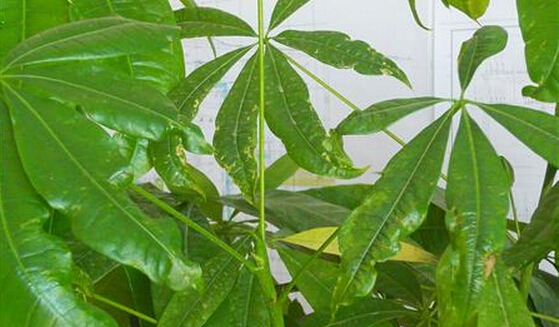
4. Too much fertilizer: Generally, during the period of suitable growing temperature for the money tree, fertilizer should be applied regularly to ensure vigorous growth of the plant. Usually, a light fertilizer is applied once about every 20 days, and when repotting, decomposed base fertilizer should be added. However, applying too much fertilizer, or applying fertilizer that has not been decomposed, will cause the money tree's roots to burn, resulting in yellowing and dropping leaves.
5. Dust on the leaf surface: If dust on the leaf surface is too thick, it not only affects appearance but also affects the plant's respiration and photosynthesis, thereby causing the leaves to turn yellow. The dust should be wiped clean in time.
6. Incorrect soil-changing operation: When changing the soil, incorrect operation can also cause yellowing leaves on the money tree. When changing the soil for the money tree, try to damage the roots as little as possible. The medium added should be sterile, breathable, fertile, and slightly acidic. Also, the potting soil should be filled firmly, without leaving gaps. If there are gaps, no matter how much water is poured, the plant will still experience water shortage, thus causing yellowing leaves.
7. Low environmental temperature: The money tree likes a warm and humid environment. Its suitable growing temperature is 20-30°C. When the temperature is below 18°C, the money tree stops growing. It can also adapt to temperatures as low as 10°C, but the temperature must not be lower than 5°C, otherwise frost damage will occur: in mild cases the leaves turn yellow and scatter and fall, and in severe cases the plant dies.
8. Hot high temperatures: For the money tree, which likes a warm and humid environment, if it is placed under high temperatures for exposure to strong sun, the plant's transpiration will be excessive, and the roots will not be able to supply water and nutrients in time, very easily causing scorched leaf tips or yellowing and dropping leaves. It needs to be moved promptly to a well-ventilated, shady place.
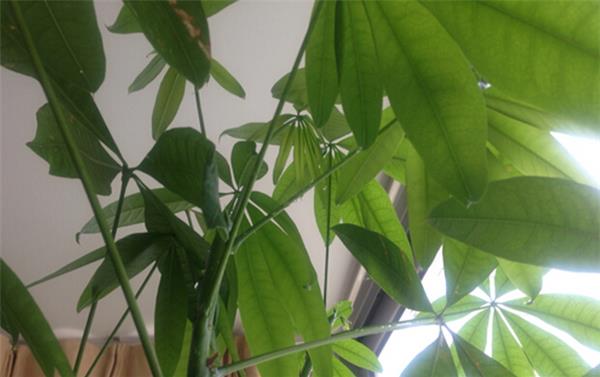
9. Too dense and not ventilated: If the money tree's branches and leaves grow too luxuriantly and have not been pruned for a long time, the inner branches and leaves will lack light, very easily causing leaves to turn yellow and drop. Pruning should be strengthened in time to allow ventilation and light penetration.
10. Soil and water tending alkaline: In most areas of the north, the soil and water contain more salt and alkali, and are not very suitable for planting the acid-loving money tree. Because the soil lacks iron elements that it can absorb, the money tree's leaves will gradually turn yellow. Therefore, when planting, pay attention to choosing acidic soil, and during the growing period, frequently water with alum fertilizer water.
The money tree is a kind of tree. From its name, it is not hard to understand how closely it is connected with feng shui. If you want a deeper understanding, the editor below will introduce the feng shui role of the money tree.
1. Placing a pot of money tree in the southeast direction helps attract wealth and treasure. Clear away the clutter piled in the southeast direction, then move away metal-element items that? no metal-element items that? no, metal-element items that? no, metal-element items that? no, metal-element items that? no, metal-element items that? no, metal-element items that? no, metal-element items that? no, metal-element items that? no, metal-element items that? no, metal-element items that? no, metal-element items that? no, metal-element items that? no, metal-element items that? no, metal-element items that? no, metal-element items that? no, metal-element items that destroy wood-element energy, and then you can begin planning the wealth-attracting feng shui of the southeast direction. Colors that strengthen the energy of the southeast direction include deep blue, which belongs to water, and green, which belongs to wood. The money tree is the best choice.
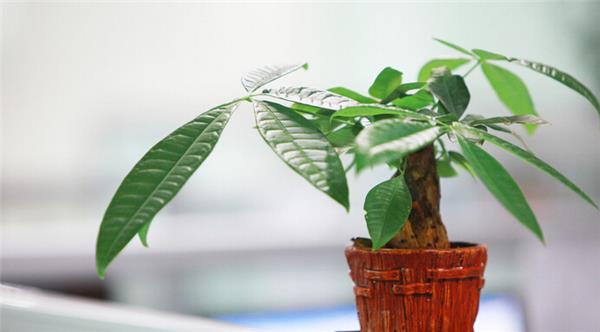
2. Placing a money tree in a feng shui position will make the whole family more spirited. Feng shui positions are very suitable for placing bonsai to enhance wood-element energy. The bonsai should be kept healthy and luxuriant; avoid using dried flowers, because they accumulate yin energy. The money tree is the most popular choice.
3. The meaning of the name is self-evident: get rich. Because the money tree's thick leaves are rich in water, it needs a lot of sunlight and very little water. In winter, the money tree enters a dormant state and needs even less water. Any potassium-rich fertilizer is suitable for the money tree. If you are lucky, the money tree will bloom in December or July, and at this time unexpected wealth is very likely to arrive.
4. Pressing a large-denomination banknote under the money tree will have the effect of using money to nurture money. The money tree is already an ornamental item with great symbolic meaning, and adding money placed underneath it is even more conducive to gathering wealth.
I do not need to say much about the money tree's influence on feng shui. The eyes of the masses are sharp; just seeing how many people choose to place a money tree at home makes it clear. So, what are the living habits of the money tree?
1. The money tree is a perennial evergreen shrub. It likes warm, humid, sunny or slightly shaded environments, and its suitable growing temperature is 20°C to 30°C. The high-temperature and high-humidity season in summer is very favorable for the growth of the money tree and is its fastest growing period, so at this stage fertilizer and water management should be strengthened to make it grow robustly. In winter, the temperature must not be lower than 5°C, and it is best to maintain 18°C to 20°C. It fears cold and dampness; in a humid environment, the leaves very easily develop ulcer-like frost spots, which harms their ornamental value.
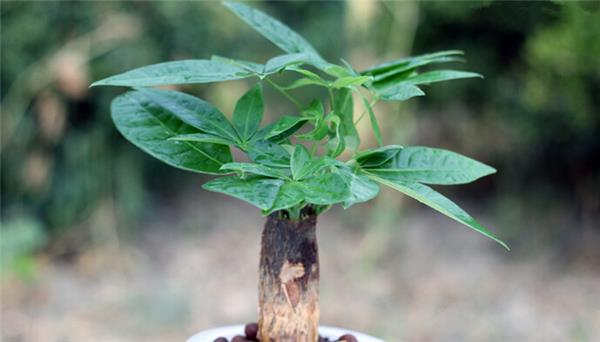
2. The money tree likes high temperatures, humidity, and sunlight, and cannot be shaded for a long time. During care and management, it should be placed in a sunny spot indoors, and when placed, the leaf surface must face the sunlight.
3. The money tree is a flowering plant that likes fertilizer, and its demand for fertilizer is greater than that of other common flowering plants. When repotting each year, the proportion of fertilized soil can account for 1/3, or even more. Fertilized soil has a wide range of sources; you can collect leaf mold from the fallen leaves of broadleaf trees, add a little garden soil, mixed bone meal, and bean cake residue, and mix them together.
The money tree has relatively high requirements for temperature and humidity. If the temperature is low or humidity is lacking, leaf drop often occurs, and in severe cases the branches become bare, which not only harms the ornamental value but also very easily causes the plant to die. Therefore, attention should be paid to maintaining a temperature above 15°C and frequently spraying water on the branches and leaves to increase the necessary humidity. In late autumn and winter, attention should be paid to doing a good job of overwintering cold protection and freeze protection management.
The above is the editor's introduction to related information about the money tree. I hope it can help everyone.
2. Placing a money tree in a feng shui position will make the whole family more spirited. Feng shui positions are very suitable for placing bonsai to enhance wood-element energy. The bonsai should be kept healthy and luxuriant; avoid using dried flowers, because they accumulate yin energy. The money tree is the most popular choice.
3. The meaning of the name is self-evident: get rich. Because the money tree's thick leaves are rich in water, it needs a lot of sunlight and very little water. In winter, the money tree enters a dormant state and needs even less water. Any potassium-rich fertilizer is suitable for the money tree. If you are lucky, the money tree will bloom in December or July, and at this time unexpected wealth is very likely to arrive.
4. Pressing a large-denomination banknote under the money tree will have the effect of using money to nurture money. The money tree is already an ornamental item with great symbolic meaning, and adding money placed underneath it is even more conducive to gathering wealth.
I do not need to say much about the money tree's influence on feng shui. The eyes of the masses are sharp; just seeing how many people choose to place a money tree at home makes it clear. So, what are the living habits of the money tree?
1. The money tree is a perennial evergreen shrub. It likes warm, humid, sunny or slightly shaded environments, and its suitable growing temperature is 20°C to 30°C. The high-temperature and high-humidity season in summer is very favorable for the growth of the money tree and is its fastest growing period, so at this stage fertilizer and water management should be strengthened to make it grow robustly. In winter, the temperature must not be lower than 5°C, and it is best to maintain 18°C to 20°C. It fears cold and dampness; in a humid environment, the leaves very easily develop ulcer-like frost spots, which harms their ornamental value.
2. The money tree likes high temperatures, humidity, and sunlight, and cannot be shaded for a long time. During care and management, it should be placed in a sunny spot indoors, and when placed, the leaf surface must face the sunlight.
3. The money tree is a flowering plant that likes fertilizer, and its demand for fertilizer is greater than that of other common flowering plants. When repotting each year, the proportion of fertilized soil can account for 1/3, or even more. Fertilized soil has a wide range of sources; you can collect leaf mold from the fallen leaves of broadleaf trees, add a little garden soil, mixed bone meal, and bean cake residue, and mix them together.
The money tree has relatively high requirements for temperature and humidity. If the temperature is low or humidity is lacking, leaf drop often occurs, and in severe cases the branches become bare, which not only harms the ornamental value but also very easily causes the plant to die. Therefore, attention should be paid to maintaining a temperature above 15°C and frequently spraying water on the branches and leaves to increase the necessary humidity. In late autumn and winter, attention should be paid to doing a good job of overwintering cold protection and freeze protection management.
The above is the editor's introduction to related information about the money tree. I hope it can help everyone.