How to Grow Mimosa pudica? A Detailed Guide to Care Methods and Uses
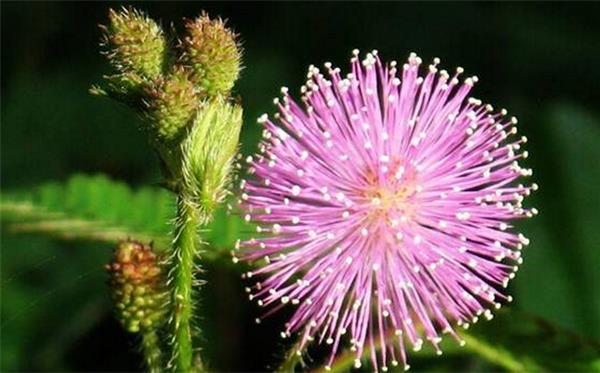
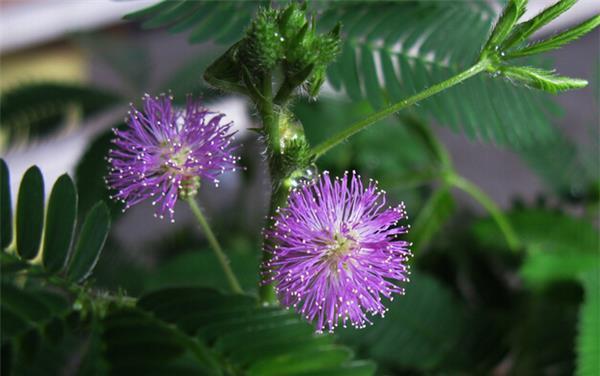
The leaves of Mimosa pudica react to heat and light, and close immediately when touched by an external force, which is how it got the name "shy grass" (mimosa). The flowers of Mimosa pudica are pink and shaped like fuzzy balls, very appealing. Mimosa pudica not only has good ornamental value but is also relatively easy to keep alive, making it suitable as a potted flower for balconies and indoors. So how do you grow Mimosa pudica?
1. Soil. It can be grown in ordinary soil, but fertile, loose sandy loam is best; the soil should be deep, fertile and moist.
2. Fertilizing. It does not need much fertilizer during the growing season; applying diluted liquid fertilizer 2 to 3 times is enough. Do not over-fertilize; as long as the leaves are green and the plant grows robustly, that is sufficient. Do not let it grow leggy, because Mimosa pudica is mainly a novelty foliage plant and is best kept small.
3. Watering. Mimosa pudica likes moisture and needs frequent watering; during the summer growing season, water once a day. Mimosa pudica is originally a tropical plant and likes a moist environment, so keep the potting soil moist at all times. In summer, water according to the condition of the potting soil, roughly once a day. Do not let the soil dry out, and you can mist the plant frequently. In winter, reduce watering to prevent cold damage.
4. Light. Ensure plenty of sunlight; Mimosa pudica likes sunlight, so it is best placed on a sunny balcony or by a window. Full exposure to sunlight is good for the growth of Mimosa pudica; if there is too little sunlight, it may hinder its growth.
5. Pest and disease prevention. Mimosa pudica generally has few pests and diseases. The most common pest is the slug. If found, sprinkle some lime powder to control them. If the plant is not growing well, check whether there is insufficient light or not enough water.
Have you ever had this experience: you reach out and touch a leaf of Mimosa pudica, and it immediately folds up until your finger moves away. Sometimes you find it so interesting that you touch it a few more times. That is why Mimosa pudica is often called a "shy little thing," like a bashful little girl. Why does Mimosa pudica act shy? Actually, this is not shyness, but a natural physiological response of the plant after being stimulated by vibration, and it is determined by the characteristics of Mimosa pudica. So what are the characteristics of Mimosa pudica?
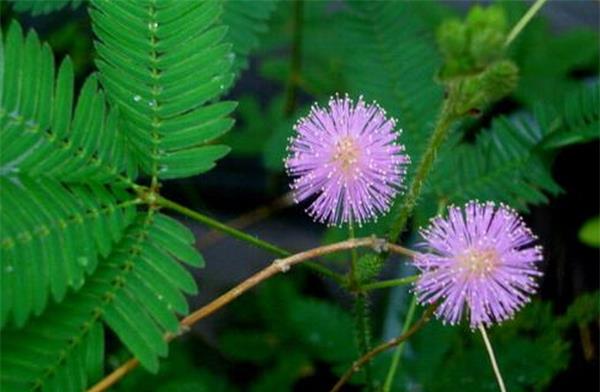
The most obvious characteristic of Mimosa pudica is that when it receives an external stimulus (such as a touch), its leaf surface immediately contracts and folds together. If the stimulus is stronger, it quickly spreads to neighboring leaflets and even to the leaflets of the entire compound leaf, causing the petiole to droop. Mimosa pudica also responds very quickly to stimuli, usually starting to react after 0.1s and completing the response within a few seconds.
The second characteristic of Mimosa pudica is that at night it also folds its leaflets together and droops its petiole; during the day, when some leaflets receive vibration, they also fold together in pairs.
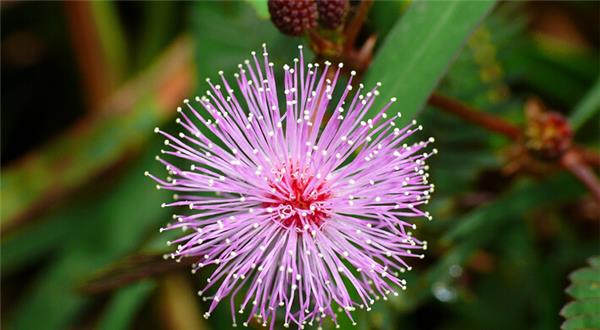
The third characteristic of Mimosa pudica is that because it has strong vitality and grows rather messily, many places classify it as a grass. In fact, it also blooms. Just look at the pictures of Mimosa pudica below. Its flowers are pink, with round spherical flower heads shaped like pom-poms. After flowering, it also produces pods, and the fruit is flat and round.
Mimosa pudica is native to the tropical regions of the Americas and is a perennial herbaceous plant of the genus Mimosa in the Fabaceae family. Because of its unique physiological habits, it has many aliases, such as "shy grass, shame-aware grass, laugh-triggering grass, husband-and-wife grass," and so on. So, is Mimosa pudica poisonous?
Poisonous.
Mimosa pudica is native to the tropical regions of South America. It likes warmth and moisture and is not picky about soil. It likes light but can also tolerate partial shade, so it can be grown indoors as a potted ornamental flower. The leaflets of Mimosa pudica are very small and arranged in a feather-like pattern. Touch a leaflet with your hand, and after receiving the stimulus, the leaflet folds up. If the vibration is strong, the stimulus can spread to the whole leaf, and then the main petiole also droops, and it can even spread to adjacent leaves and make their petioles droop, as if a shy girl were lowering her powdered face. But the lovely and delicate Mimosa pudica is actually poisonous, so we must never underestimate it!
The grass of Mimosa pudica contains a substance called mimosine, and this substance is somewhat harmful to the human body. If you often come into contact with Mimosa pudica, it can cause tingling of the eyebrows, yellowing of the hair, and even hair loss. Mimosa pudica generally does not harm the human body during the day, but at night, because it cannot carry out photosynthesis, it releases toxic substances. In other words, Mimosa pudica is actually poisonous.
The whole plant of Mimosa pudica is mildly toxic, but it does not have a major impact on people. The whole plant of Mimosa pudica is used as medicine and has the effects of calming the nerves, stopping bleeding and astringing, and dispersing blood stasis to relieve pain.
Therefore, it is best not to take Mimosa pudica internally. Do not come into contact with it for long periods. Short-term contact is not very harmful as long as you do not eat it.
Among plants, there are no eternal advantages and no eternal disadvantages, only eternal adaptation. Mimosa pudica has ornamental, medicinal and other convenient values, so what other uses does Mimosa pudica have?
1. Mimosa pudica can forecast the weather.
Mimosa pudica is a wonderful plant that can foretell changes between sunny and rainy weather. If you touch it with your hand and its leaves close very quickly but open very slowly, this indicates that the weather will turn clear. If, when you touch Mimosa pudica, its leaves contract slowly and droop slowly, or even close slightly and then reopen, this indicates that the weather will turn from clear to overcast or that it is about to rain.
2. It can also predict earthquakes.
Mimosa pudica can predict earthquakes. According to Turkish seismologist Erjan, several hours before a strong earthquake occurs, the leaves of Mimosa pudica, which are sensitive to external touch, suddenly wither and then dry up. In earthquake-prone Japan, scientists have found through research that under normal conditions, the leaves of Mimosa pudica open during the day and close at night. If the leaves of Mimosa pudica show the abnormal phenomenon of closing during the day and opening at night, it is a precursor to an earthquake. For example: at 7 a.m. on January 11, 1938, Mimosa pudica began to open, but by 10 a.m., the leaves suddenly all closed, and indeed a strong earthquake occurred on the 13th. In 1976, members of the Japan Earthquake Club observed the abnormal closing phenomenon of Mimosa pudica leaves many times, and earthquakes occurred afterward each time.

The above is the editor's introduction to growing Mimosa pudica. If you still need more, you can search online for other related information so that you can better grow Mimosa pudica. Here the editor wishes everyone a happy time growing plants and a joyful life.
1. Mimosa pudica can forecast the weather.
Mimosa pudica is a wonderful plant that can foretell changes between sunny and rainy weather. If you touch it with your hand and its leaves close very quickly but open very slowly, this indicates that the weather will turn clear. If, when you touch Mimosa pudica, its leaves contract slowly and droop slowly, or even close slightly and then reopen, this indicates that the weather will turn from clear to overcast or that it is about to rain.
2. It can also predict earthquakes.
Mimosa pudica can predict earthquakes. According to Turkish seismologist Erjan, several hours before a strong earthquake occurs, the leaves of Mimosa pudica, which are sensitive to external touch, suddenly wither and then dry up. In earthquake-prone Japan, scientists have found through research that under normal conditions, the leaves of Mimosa pudica open during the day and close at night. If the leaves of Mimosa pudica show the abnormal phenomenon of closing during the day and opening at night, it is a precursor to an earthquake. For example: at 7 a.m. on January 11, 1938, Mimosa pudica began to open, but by 10 a.m., the leaves suddenly all closed, and indeed a strong earthquake occurred on the 13th. In 1976, members of the Japan Earthquake Club observed the abnormal closing phenomenon of Mimosa pudica leaves many times, and earthquakes occurred afterward each time.
The above is the editor's introduction to growing Mimosa pudica. If you still need more, you can search online for other related information so that you can better grow Mimosa pudica. Here the editor wishes everyone a happy time growing plants and a joyful life.