How to Grow Pothos? The Complete Guide to Growing Healthy, Beautiful Pothos
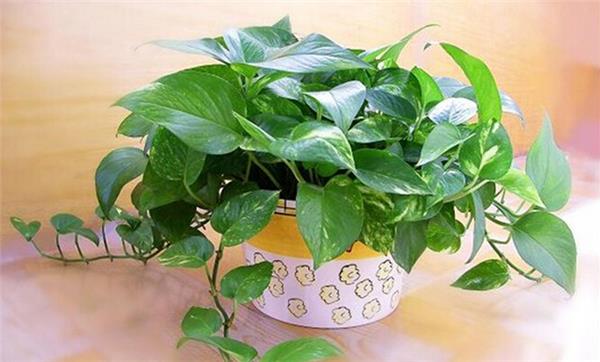
Pothos, also known as golden pothos, has strong twining stems and well-developed aerial roots. You can let it climb a cylinder made of palm fiber and place it in an entrance hall or hotel, or train it into a trailing form and place it in a study or on a windowsill; it is a flowering plant quite well suited to indoor placement. Pothos is a shade-loving plant that dislikes direct sunlight and prefers shade. So what are the growing methods for pothos?
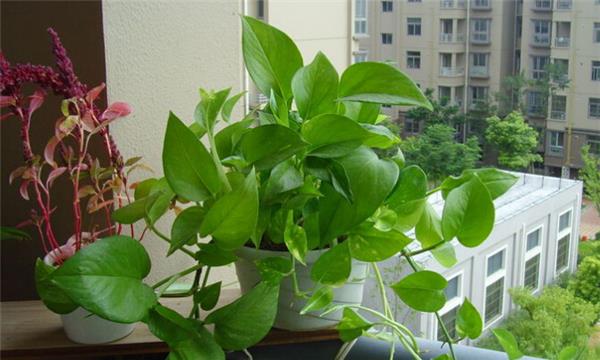
1. Light. Pothos is a shade-loving plant that dislikes direct sunlight and prefers shade. When grown indoors it can be placed beside a window, but direct sunlight must be avoided. Too much sun will scorch the leaves of pothos, while too much shade will make the beautiful markings on the leaf surface disappear. Generally, receiving four hours of diffused light gives pothos the best growth and development. Place pothos in the brightest spot indoors, or move it to a sealed balcony at noon to catch some sun. At the same time, when temperatures are low, open windows as little as possible, because leaves can be frostbitten in a very short time.
2. Temperature. In the north, pothos can safely overwinter at a room temperature above 10°C, and can grow normally at a room temperature above 20°C. An ordinary home can generally reach this temperature without much trouble; note that you should avoid excessive temperature differences, and also make sure the leaves are not close to heating equipment.
3. Humidity. Keep an appropriate amount of water in the flowerpot saucer and increase the local humidity around the plant through its evaporation; gently wipe the leaf surface with a cold damp towel or toilet paper, or lightly apply it to the leaf surface for a short time (1-2 hours per day); cover the plant with a transparent plastic film to create a mini-greenhouse effect, supplementing the plant's moisture through evaporation of water vapor from the soil, for no more than 2 hours a day, since too long will affect the plant's aeration and photosynthesis.
4. Watering. In autumn and winter, the amount of watering should be strictly controlled according to room temperature. Before heating begins, temperatures are lower, the soil of the plant evaporates more slowly, and watering should be reduced, with the amount controlled at between 1/4-1/2 of the original. Even after heating begins, watering should not be too frequent; when watering, pour less into the pot and let water seep through the palm fiber. In addition, you should also spray water on the places where aerial roots grow on the palm column, to reduce insufficient water uptake by the roots caused by overly rapid evaporation. For winter watering, water that has been left to stand for a day is better; water that is too cold easily damages the roots.
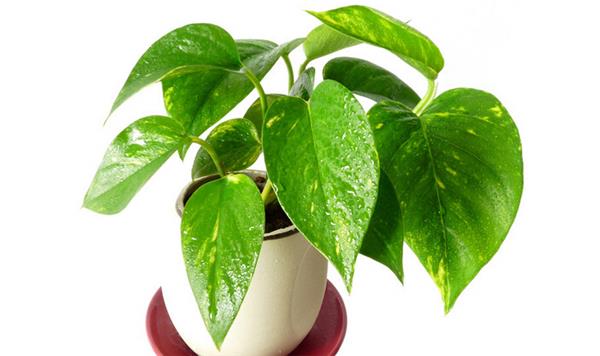
5. Fertilizing. In the autumn and winter in the north, most plants grow slowly or even stop growing, so fertilizing should be reduced. Before winter arrives, mainly apply liquid inorganic fertilizer by watering or spraying, about once every 15 days. After winter arrives, fertilizing should mainly be foliar spraying, applied mainly through the stomata on the leaf surface; fertilizer is absorbed through the stomata on the leaf surface, and the fertilizer effect can act directly on the leaf surface. Foliar fertilizer should be a dedicated fertilizer; ordinary inorganic fertilizer is not easily absorbed by the leaf surface. Beida Huhuashen series and Japan-made Hua Yifan, among others, can all be used as foliar fertilizer.
6. Pest and disease control. Root rot control method: 3% carbofuran granules can be used. For leaf spot disease, 80% amobam at 500 times dilution, or 50% carbendazim wettable powder at 1000 times dilution, etc., can be sprayed for control. For pothos anthracnose, mancozeb, carbendazim, thiophanate, tanteling, etc. all have a certain control effect.
Growing pothos mainly requires paying attention to the following aspects:
1. Provide the light pothos needs to grow
When growing pothos, place it in a bright spot indoors, or move it to a balcony at noon to catch some sun. Although pothos is not strongly heliotropic, in winter you should increase its light exposure so that it can carry out normal photosynthesis.
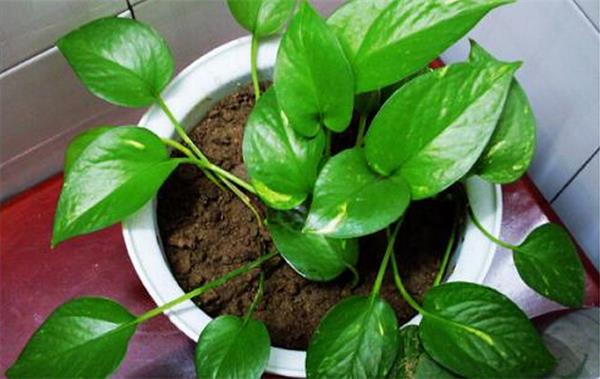
2. Control the temperature for pothos growth
When growing pothos in winter, the temperature is best kept above 10°C, and you should avoid excessive temperature differences; especially when temperatures are low, a careless mistake in growing pothos may cause its leaves to be frostbitten.
3. Humidity requirements for pothos growth
When growing pothos, pay attention to the humidity of the environment; increasing humidity is beneficial to pothos growth. You can use a humidifier or spray water to supplement humidity for pothos. But it should be in moderation, so as not to affect the respiration and photosynthesis of pothos.
4. Moisture control for pothos growth
In autumn and winter, the amount of watering for pothos should be strictly controlled according to room temperature. When winter temperatures are lower, watering should be reduced, and the amount can be controlled at between 1/4-1/2 of the original.
5. Fertilizer management for pothos
Before winter arrives, you can fertilize pothos appropriately. Fertilizing should mainly be foliar feeding, and the fertilizer should mainly be liquid inorganic fertilizer, applied about once every 15 days.
As an evergreen, green and healthy plant, pothos is increasingly loved by people. People also like to grow one or two pots of pothos at home, in the office and other places, but many growers are not very clear about what pothos does. Below, the editor will introduce the effects of pothos for everyone.
The effects of pothos:
The effects of pothos: 1. Decorative and ornamental
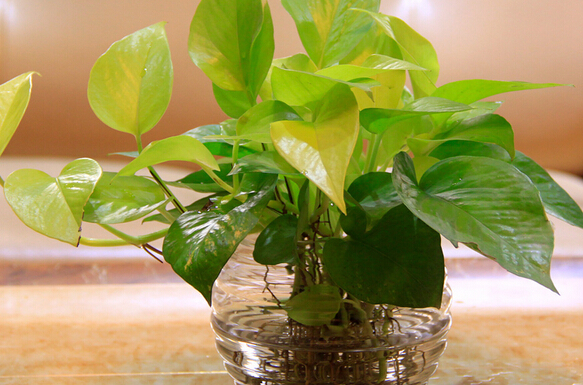
It has strong twining stems and well-developed aerial roots. You can let it climb a cylinder made of palm fiber and place it in an entrance hall or hotel, or train it into a trailing form and place it in a study or on a windowsill; it is a flowering plant quite well suited to indoor placement. In this way it not only makes full use of space and purifies the air, but also adds a lively-lined, bright-colored green decoration to a dull cabinet surface, full of vitality and adding a warm touch of charm to the room. Its flower meaning, "watching over happiness," also increases its ornamental appeal.
The effects of pothos: 2. Purifying the air
Pothos is a large evergreen vine plant. Like spider plant and ivy, it has a strong ability to purify the air. Pothos can absorb benzene, trichloroethylene, formaldehyde, etc. from the air, making it the perfect choice to place in a newly renovated home. According to research by environmental scientists, one pot of pothos in a room of 8-10 sq m is equivalent to an air purifier. It can be seen that pothos has a fairly strong air-purifying ability.
The effects of pothos: 3. Absorbing odors
Pothos has the effect of absorbing kitchen odors. Placing pothos in the kitchen can effectively absorb some of the cooking-oil fumes produced by stir-frying and cooking, and remove some other kitchen odors, keeping our kitchen air fresh.
The effects of pothos: 4. Medicinal value
Pothos can be used for traumatic injuries, promoting blood circulation and dispersing blood stasis. Pothos flowers can lower blood sugar and blood lipids, and mainly have a good auxiliary therapeutic effect on diabetes, fatty liver, coronary heart disease, obesity, high blood lipids and various vascular inflammations. In addition, they have a good health-care effect on the eyes and liver.
Pothos is a plant with very strong twining ability that likes to climb on other places, and its air-purifying effect is relatively obvious. The effects of pothos are introduced here, and we hope this is helpful to everyone.
It has strong twining stems and well-developed aerial roots. You can let it climb a cylinder made of palm fiber and place it in an entrance hall or hotel, or train it into a trailing form and place it in a study or on a windowsill; it is a flowering plant quite well suited to indoor placement. In this way it not only makes full use of space and purifies the air, but also adds a lively-lined, bright-colored green decoration to a dull cabinet surface, full of vitality and adding a warm touch of charm to the room. Its flower meaning, "watching over happiness," also increases its ornamental appeal.
The effects of pothos: 2. Purifying the air
Pothos is a large evergreen vine plant. Like spider plant and ivy, it has a strong ability to purify the air. Pothos can absorb benzene, trichloroethylene, formaldehyde, etc. from the air, making it the perfect choice to place in a newly renovated home. According to research by environmental scientists, one pot of pothos in a room of 8-10 sq m is equivalent to an air purifier. It can be seen that pothos has a fairly strong air-purifying ability.
The effects of pothos: 3. Absorbing odors
Pothos has the effect of absorbing kitchen odors. Placing pothos in the kitchen can effectively absorb some of the cooking-oil fumes produced by stir-frying and cooking, and remove some other kitchen odors, keeping our kitchen air fresh.
The effects of pothos: 4. Medicinal value
Pothos can be used for traumatic injuries, promoting blood circulation and dispersing blood stasis. Pothos flowers can lower blood sugar and blood lipids, and mainly have a good auxiliary therapeutic effect on diabetes, fatty liver, coronary heart disease, obesity, high blood lipids and various vascular inflammations. In addition, they have a good health-care effect on the eyes and liver.
Pothos is a plant with very strong twining ability that likes to climb on other places, and its air-purifying effect is relatively obvious. The effects of pothos are introduced here, and we hope this is helpful to everyone.