What is the flower language of the silk tree flower? A detailed explanation of the silk tree flower's flower language and symbolism
The silk tree flower has pink filaments and a bloom shaped like a small fan. It is a street tree and ornamental tree in many cities, and one we see often. Next, let us take a look at the flower language of the silk tree flower!
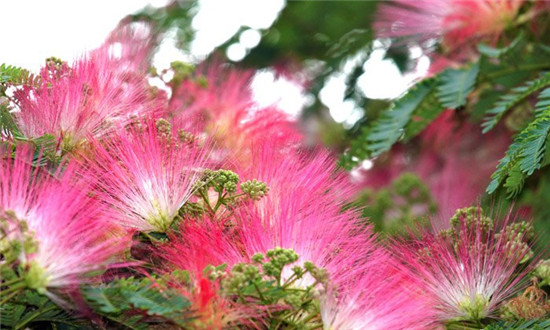
Legend has it that Yu Shun died while on a southern inspection tour at Cangwu, and his consorts Ehuang and Nüying searched all along the Xiang River but never found him. The two consorts wept bitterly day after day, until their tears ran dry and turned to blood, and when the blood was gone they died, becoming spirits. Later, people discovered that their spirits and Yu Shun's spirit "merged into one" and became the silk tree. The leaves of the silk tree open by day and close by night, loving each other dearly. Ever since, people have often used the silk tree to represent faithful and unchanging love.
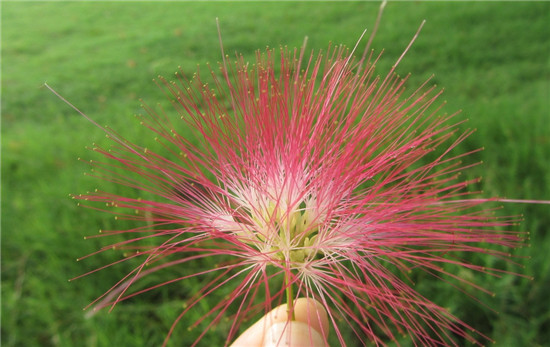
The silk tree flower is like a pink folding fan, its ribs sharply defined and crisscrossing in loose disorder above the leaf stalk, with strand after strand of pink silk slipping down from the ribs. When the ribs are folded together, every strand of silk nestles softly and obediently against them, or droops downward as if too delicate to bear the slightest breeze.
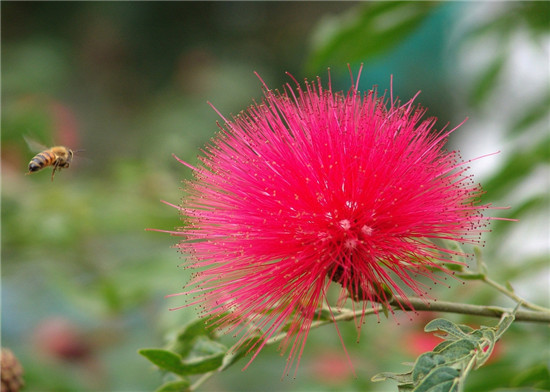
When I toy with it in my hand, those fine, delicate strands of silk brush gently across my face. It has no scent; it merely has tiny golden threads inlaid along the edge of the fan. Gold and pink set each other off, truly delightful to everyone who sees it. It has both the liveliness, playfulness and gentleness of a young girl and a sumptuous, precious golden hue; the two combine into something exquisite.
As it falls, it changes from the pale pink full of girlish sentiment into a rich, mature vivid red.
In ancient times, the silk tree flower was called the bitter-love flower, and it did not bloom. The transformation of the bitter-love flower into the silk tree when it bloomed begins with a scholar. The scholar had studied diligently for ten years and was preparing to go to the capital for the imperial examination to seek official rank. As he set out, his wife Fenshan pointed to the bitter-love tree before the window and said to him: "On this journey, my husband, you will surely pass the examination with high honors, but the capital is full of flowers that dazzle the eye. Do not forget the road home!" The scholar agreed and left. Yet from then on there was no news of him at all. Fenshan waited and waited at home, hoped and hoped, her black hair turned white, and still she did not wait for her husband's figure to return.
When the end of her life was near, Fenshan, dragging her sick and weakened body, struggled to the bitter-love tree that had witnessed the vow between her and her husband, and with her life made a solemn oath: "If my husband proves unfaithful, then from now on let this bitter-love tree bloom. Let him be the leaves and me the flower. May the flower never grow old and the leaves never fall, of one heart for a lifetime, and joined in joy life after life!" Having spoken, she breathed her last. The flower language of the silk tree flower: eternal conjugal love, facing each other pair by pair, a symbol of harmony between husband and wife.
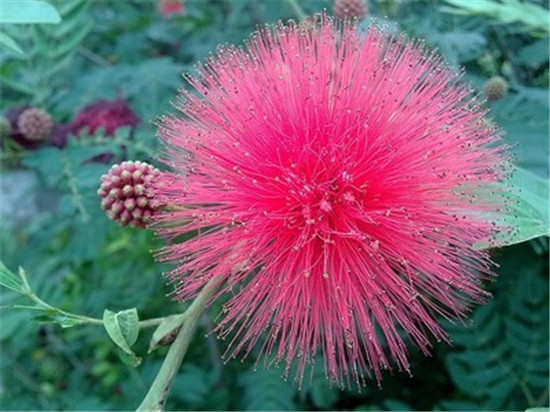
The next year, all the bitter-love trees indeed bloomed, soft and pink, like little fans hanging all over the branches, and carrying a faint fragrance, except that the flowering period was very short, only one day. Moreover, from that time on, all the leaves also opened in the morning and closed in the evening as the flowers bloomed and faded. To commemorate Fenshan's devoted love, people renamed the bitter-love tree the silk tree.
The above is the full content of my summary of what the flower language of the silk tree flower is. I hope this article can help everyone. Please also continue to follow us.