Unlocking the Care Methods for Phalaenopsis Orchids to Create Radiant Phalaenopsis Orchids
Phalaenopsis belongs to the genus Phalaenopsis in the orchid family (Orchidaceae), a perennial evergreen epiphytic herbaceous flower. Because its flowers resemble butterflies and have butterfly-like beauty, it is named Phalaenopsis (moth orchid). Phalaenopsis has many varieties, with highly variable flower shapes and colors and very beautiful flower posture, and is deeply loved by people. Therefore, it is the most widely cultivated tropical orchid in the world. So, how should Phalaenopsis be cared for?
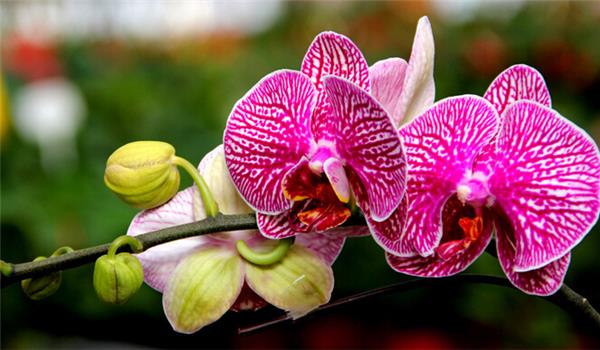
1. Light
Although Phalaenopsis prefers shade, the plant still needs to receive some light, especially before and after the flowering period. Appropriate light can promote flowering and make the blooms more vivid and longer lasting. Generally, it should be placed in a spot indoors with diffused light, and should not be exposed to direct sunlight; if placed on an indoor windowsill, use a window screen to block part of the sunlight.
2. Soil
Materials such as pine needles, peanut shells, bark fibers, and clay balls can be chosen as the growing medium for Phalaenopsis. Phalaenopsis has high requirements for soil and needs a medium that is breathable, rot-resistant, slightly acidic, and well-draining. If you cannot prepare these materials yourself, you can go directly to a flower market to buy special orchid soil for Phalaenopsis. (PS: For the pot for planting Phalaenopsis, you can choose a plastic pot or a ceramic pot. Considering that Phalaenopsis likes a breathable growing environment, it is recommended to choose a porous shallow pot, and the best is one whose height is less than its diameter.)
3. Temperature
The cultivation temperature for indoor Phalaenopsis is particular. The daytime temperature is best kept between 25-28 degrees, and the nighttime temperature needs to be kept at 18-20 degrees. When the summer temperature is above 32 degrees, Phalaenopsis will directly enter a semi-dormant state, so high temperatures must be prevented. When the temperature is lower, the growth of Phalaenopsis will be inhibited. When the temperature is 15 degrees, the growth of Phalaenopsis directly stagnates. When it is below 15 degrees, the root system stops absorbing water, which will cause black spots on the leaves.
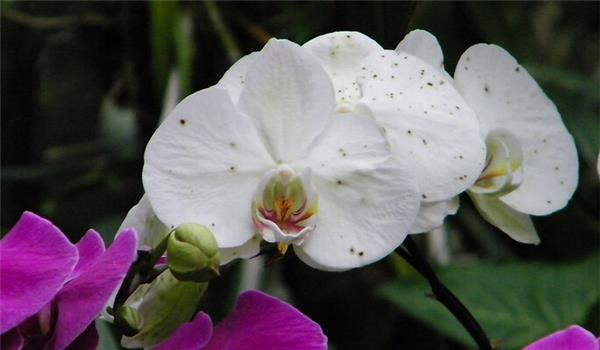
Phalaenopsis is delicate, and choosing a ventilated environment will be more conducive to its growth. A stuffy, hot environment is also not suitable for cultivating Phalaenopsis. Especially in the summer in the south, care should be taken to shade Phalaenopsis. Phalaenopsis is an epiphytic orchid and likes semi-shade. In winter, when the temperature is low, use the midday time to ventilate it, but do not let the draft blow directly on the orchid plant. In spring and autumn, be careful to protect the orchid from light.
4. Watering
High humidity is what Phalaenopsis loves most, but waterlogging is absolutely not. Avoid letting Phalaenopsis be in a state of water shortage, especially during its growing period. Once water shortage occurs frequently, it will cause the leaves to turn yellow, and it is very difficult to recover. Usually, Phalaenopsis can be watered with a spray bottle, watering until water flows out from the bottom of the pot, but avoid watering too much. Because Phalaenopsis likes a high-humidity environment, you can often sprinkle water where the orchid is placed to maintain the humidity around the orchid. But be very careful not to let water accumulate in the heart of the orchid leaves, and in winter do not sprinkle water on the leaves.
Watering principle: water when dry, withhold when wet. When the surface of the growing medium becomes dry, water thoroughly again. Generally, watering should be done on a clear, sunny morning, and the water temperature should be close to room temperature. When the indoor air is dry, you can use a sprayer to mist the leaf surface directly. But note that during the flowering period, do not spray water mist onto the flowers.
5. Fertilizing
The principle of fertilizing should be to apply less fertilizer and mild fertilizer. This is because it grows relatively fast and its growth period is also relatively long.
Fertilizing month notes: Phalaenopsis that has been grown for one year or many years will be repotted in late spring and early summer each year (May). A Phalaenopsis that has just been repotted is in a recovery period, and no fertilizer should be applied to the orchid plant. After a month of recovery, the orchid plant begins normal growth. That is, from June to September, the orchid plant enters its growing period, and the orchid plant needs to be fertilized once a week.
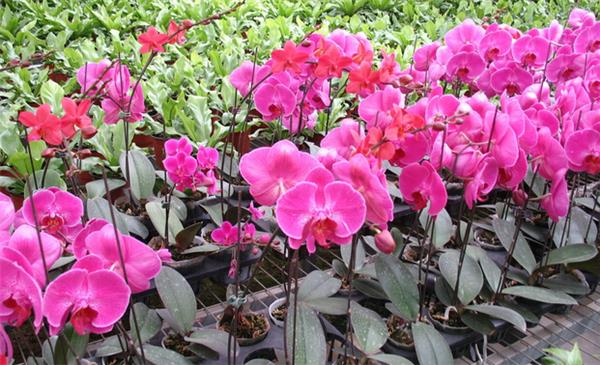
Fertilizers suitable for Phalaenopsis: foliar fertilizer, monopotassium phosphate, farmyard manure after fermentation with water, special orchid fertilizer, etc. During the growing period, foliar fertilizer and monopotassium phosphate can be used alternately to fertilize Phalaenopsis. If these two fertilizers are not available, you can choose farmyard manure fermented with water to water with fertilizer solution. If you have special orchid fertilizer at home, directly apply the special orchid fertilizer.
Spring and summer fertilizing notes: In summer, when the temperature is relatively high, stop fertilizing the orchid plant. In autumn, the growth rate of Phalaenopsis begins to slow down, so the frequency of fertilizing should also be reduced. At this time, if the orchid plant is fertilized frequently, it will affect the formation of flower buds, making it difficult to bloom.
Besides the Five Elements attributes, Phalaenopsis also has many feng shui functions. So, what exactly are the specific feng shui functions?
1. Phalaenopsis is a fire-natured plant, suitable for people whose Five Elements belong to fire to grow. Different plants are further divided by Five Elements attributes because when people use feng shui adjustment items such as yin-yang and the Five Elements, they have various different needs and may be restricted by many aspects such as setting, time limits, customs, and economic conditions. Yang-natured plants are often those suitable for surviving in environments such as outdoors, dry, and sunny; and plants whose appearance gives people a sense of masculinity and uprightness; plants with roots, broad leaves, straight, upward and ardent characteristics; on the contrary, yang-natured plants; that is, those suitable for moist, low-temperature, indoor cultivation; and plants whose appearance gives people a sense of delicacy, slenderness, and coldness all belong to yin-natured plants. Therefore, people whose Five Elements belong to fire can place a pot of Phalaenopsis at home, which will benefit their development in all aspects.
2. Phalaenopsis has many wonderful flower languages and meanings, and from the perspective of feng shui, it has a certain promoting effect.
1. White-flowered Phalaenopsis foretells pure love and precious friendship. A newly married family placing one at home foretells a beautiful marriage, and people living with friends placing one at home foretells harmonious coexistence.
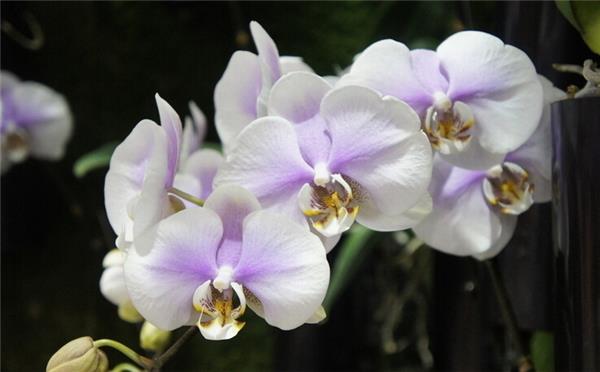
2. Red Phalaenopsis means a smooth career and complete happiness. This is believed to be the wish of all young couples. Plant a red Phalaenopsis to add a touch of color to your marriage and career!
3. Striped Phalaenopsis means that everything goes smoothly and all wishes come true, so striped Phalaenopsis is suitable for every family and people of every age to plant and use as home decoration.
5. Yellow Phalaenopsis implies a flourishing career and prosperous business. People in business should plant one at home; even if things do not improve, at least they will not get worse. In addition, mini Phalaenopsis represents a happy angel and the prime of youth.
Without delay, buy a noble Phalaenopsis to take home and improve your home's feng shui.
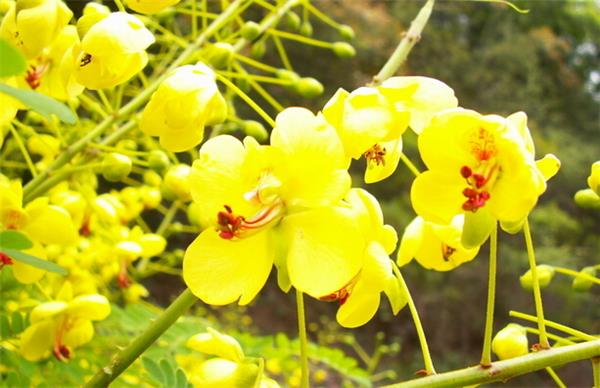
The above is the introduction to the care methods for Phalaenopsis brought to you by the editor. I hope it can help everyone better cultivate Phalaenopsis.
They are often those suitable for surviving in environments such as outdoors, dry, and sunny; and plants whose appearance gives people a sense of masculinity and uprightness; plants with roots, broad leaves, straight, upward and ardent characteristics; on the contrary, yang-natured plants; that is, those suitable for moist, low-temperature, indoor cultivation; and plants whose appearance gives people a sense of delicacy, slenderness, and coldness all belong to yin-natured plants. Therefore, people whose Five Elements belong to fire can place a pot of Phalaenopsis at home, which will benefit their development in all aspects.2. Phalaenopsis has many wonderful flower languages and meanings, and from the perspective of feng shui, it has a certain promoting effect.
1. White-flowered Phalaenopsis foretells pure love and precious friendship. A newly married family placing one at home foretells a beautiful marriage, and people living with friends placing one at home foretells harmonious coexistence.
2. Red Phalaenopsis means a smooth career and complete happiness. This is believed to be the wish of all young couples. Plant a red Phalaenopsis to add a touch of color to your marriage and career!
3. Striped Phalaenopsis means that everything goes smoothly and all wishes come true, so striped Phalaenopsis is suitable for every family and people of every age to plant and use as home decoration.
5. Yellow Phalaenopsis implies a flourishing career and prosperous business. People in business should plant one at home; even if things do not improve, at least they will not get worse. In addition, mini Phalaenopsis represents a happy angel and the prime of youth.
Without delay, buy a noble Phalaenopsis to take home and improve your home's feng shui.
The above is the introduction to the care methods for Phalaenopsis brought to you by the editor. I hope it can help everyone better cultivate Phalaenopsis.