There are tricks to watering a Clivia correctly, and this way of caring for it keeps it healthier
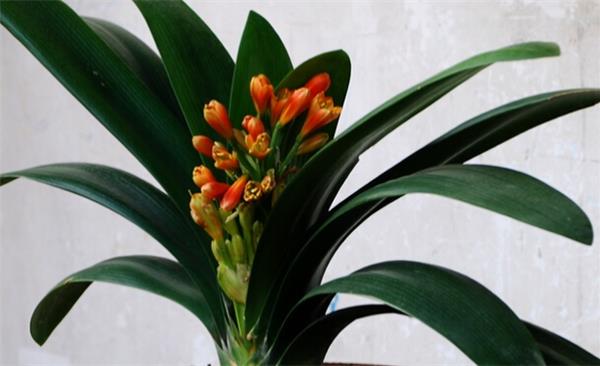
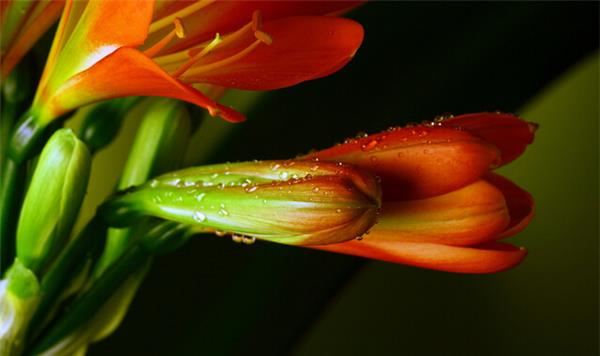
The Clivia is a perennial herbaceous plant of the genus Clivia in the Amaryllidaceae family. Its flowering period runs from New Year's Day to the Spring Festival. The Clivia has high ornamental value, with the grace of a gentleman and delicate, beautiful flowers. The Clivia originates from southern Africa, where it mostly grows beneath large trees. The interval between waterings should not be fixed at just one value. The length of the interval should be considered according to changes in the environment. To judge whether it is time to water, here are a few little tricks first:
1. Tap
Lightly tap the pot at the 1/2 to 1/3 point; if the sound is crisp, it means the soil moisture is already insufficient and it is time to water. If the sound is dull, it means there is plenty of moisture and no watering is needed.
2. Weigh
Before watering, lift the pot to feel its weight. Water it. After watering, lift the pot again to feel the weight. Over time, once you have gained some experience, you will know whether it is time to water just by weighing the pot.
3. Probe
Probing is the most direct method. Insert a finger about 1/3 of the way into the potting soil to feel the moisture. If it is moist, no watering is needed. If it is damp, get ready to water. If there is only a slight trace of moisture, it is time to water.
When watering a Clivia, water it thoroughly. At home, the best way to water a Clivia is the "sit-in-pot" method. That is, place the Clivia's pot in a basin and water it, and keep the water that flows out of the pot to water the flowers next time. This way the potting soil is easy to soak thoroughly, and the nutrients flowing out of the pot will not be lost and wasted with the water. When watering, everyone should also be careful not to let water get into the leaf core; if water accidentally gets into the leaf core, immediately use highly absorbent paper or cotton to draw the water out. So, what are the bases for watering a Clivia?
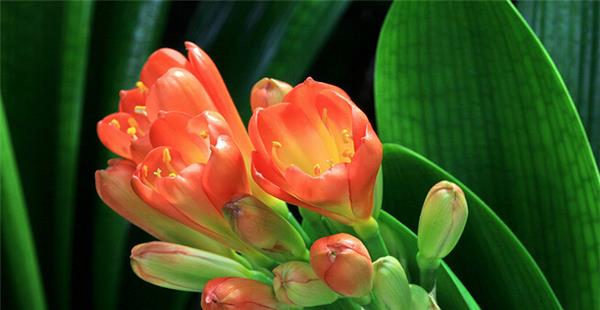
You should base it on various natural factors that affect the transpiration of the orchid plant, such as humidity, temperature, light, wind, season and weather, so as to make different water management measures.
1. Look at humidity
If the air humidity is low and transpiration is strong, water more; conversely, if the air humidity is high or even saturated and transpiration almost stops, water less or even do not water at all.
2. Look at temperature
When the temperature is high, transpiration speeds up, water demand is great, and the watering frequency increases accordingly; conversely, when the temperature is low, water molecules move slowly and diffusion is weak, so less water is needed.
3. Look at light
Strong light speeds up transpiration and accelerates the diffusion of water molecules, so more water is needed; conversely, less water is needed. Therefore, with different light and different degrees of shading, the management of water
4. Look at wind
Strong wind makes water evaporate quickly; weak wind makes water evaporate slowly; dry southwest winds strengthen evaporation, while on the contrary moist southeast winds cause transpiration to weaken relatively; orchid pots placed in a drafty spot receive more wind and evaporate water quickly, while orchid pots in sheltered spots receive less wind and evaporate water slowly.
5. Look at the season
Different seasons have different temperatures, humidity and light, and the transpiration of the orchid plant also differs greatly. In the hot, dry summer, water more; in the plum rain season, water less or not at all; in the cold, overcast winter, do not water; in the early spring when the temperature is relatively low, water less; in the mild late spring, which is the sprouting period, water more; in the dry autumn, water more.
6. Look at the weather
Weather in nature is changeable, and different weather brings different light, temperature and humidity, so the transpiration of the orchid plant also varies greatly. The basic practice is: water more on sunny days, water less on cloudy days, no need to water much when rain is coming, and do not water on rainy (or snowy) days.
Clivia cultivation is relatively simple. First, choose good potting soil, and it can be placed indoors near a window, with fertilizer and water controlled according to the temperature characteristics of each place. So, how do you grow a Clivia?
How to grow a Clivia 1. Shade from sunlight
In summer, the Clivia should be placed in a well-ventilated environment without direct strong light. The Clivia is a medium-light flower, suitable for the soft light of spring and autumn, and not suited to blazing sun exposure. In summer, it is best to place the potted plant under a shade shed, with sunlight coming through the gaps in the shed so that the plant receives weaker light. If it is placed where the direct sunlight can be blocked at noon while sunlight can still be seen in the morning and evening, that is most ideal. Generally, summer shading should reach 60%-70% or more.
How to grow a Clivia 2. Lower the temperature and raise the humidity
In summer, place the Clivia in a ventilated spot. If the ambient temperature is above 35°C, water in the soil evaporates too quickly, which will make the Clivia's water and nutrients fall short of demand. Therefore, it is best to place the Clivia pot on a water pool or water basin (propped up with a wooden board), and frequently spray water around the plant and on the leaf surface to improve the Clivia's temperature and humidity environment, so that it can grow in a small environment below 25°C with humidity reaching 60%-70%, helping it pass the summer safely and promoting the Clivia's summer growth.
How to grow a Clivia 3. Water appropriately
The Clivia originates from the primitive forests of South Africa, which has given it special characteristics in form and physiological function. The Clivia has broad leaves with a tender texture, requiring relatively high soil water content and relatively high air humidity. In the hot summer, the Clivia grows slowly and its roots absorb little water, but the amount of water evaporated from the leaf surface is very large. Therefore, the Clivia must not lack water, otherwise the fleshy roots shrink, the leaves become thin and weak, and lose their luster. When watering, adhere to the principle of watering as soon as it is half dry, and watering thoroughly when you do water. But you also cannot water as soon as you see the surface soil is dry. Otherwise, if the potting soil remains damp for a long time, it is very easy for the roots to rot and the leaves to turn yellow. When watering, be very careful not to let water run into the leaf core, to avoid root rot of the heart and cause "beheading".
How to grow a Clivia 4. Control fertilizing
Summer temperatures are high, and the Clivia is in a semi-dormant or dormant state, so fertilizing should be controlled, and as little or no fertilizer as possible should be applied. This is because during this period its root absorption capacity is weak; if fertilizer is applied, or slightly too much is applied, the fertilizer accumulates around the root system for a long time, easily causing root rot and stem rot. However, during this period, if the temperature of the Clivia's growing environment is lowered below 25°C, then some dilute liquid fertilizer can be applied appropriately to promote its growth and shorten its dormant period; if the temperature drops below 20°C and the humidity also meets the requirements, then fertilizer can be applied as usual.
The above is the basic experience related to watering accumulated by predecessors in the orchid world during the practice of cultivating orchids, and it is very worth learning from. However, there has never been a fixed "established method" for watering orchids; only through personal practice and gradually accumulating experience can one achieve mastery and apply it freely. I hope the editor's article can help everyone.
and frequently spray water around the plant and on the leaf surface to improve the Clivia's temperature and humidity environment, so that it can grow in a small environment below 25°C with humidity reaching 60%-70%, helping it pass the summer safely and promoting the Clivia's summer growth.How to grow a Clivia 3. Water appropriately
The Clivia originates from the primitive forests of South Africa, which has given it special characteristics in form and physiological function. The Clivia has broad leaves with a tender texture, requiring relatively high soil water content and relatively high air humidity. In the hot summer, the Clivia grows slowly and its roots absorb little water, but the amount of water evaporated from the leaf surface is very large. Therefore, the Clivia must not lack water, otherwise the fleshy roots shrink, the leaves become thin and weak, and lose their luster. When watering, adhere to the principle of watering as soon as it is half dry, and watering thoroughly when you do water. But you also cannot water as soon as you see the surface soil is dry. Otherwise, if the potting soil remains damp for a long time, it is very easy for the roots to rot and the leaves to turn yellow. When watering, be very careful not to let water run into the leaf core, to avoid root rot of the heart and cause "beheading".
How to grow a Clivia 4. Control fertilizing
Summer temperatures are high, and the Clivia is in a semi-dormant or dormant state, so fertilizing should be controlled, and as little or no fertilizer as possible should be applied. This is because during this period its root absorption capacity is weak; if fertilizer is applied, or slightly too much is applied, the fertilizer accumulates around the root system for a long time, easily causing root rot and stem rot. However, during this period, if the temperature of the Clivia's growing environment is lowered below 25°C, then some dilute liquid fertilizer can be applied appropriately to promote its growth and shorten its dormant period; if the temperature drops below 20°C and the humidity also meets the requirements, then fertilizer can be applied as usual.
The above is the basic experience related to watering accumulated by predecessors in the orchid world during the practice of cultivating orchids, and it is very worth learning from. However, there has never been a fixed "established method" for watering orchids; only through personal practice and gradually accumulating experience can one achieve mastery and apply it freely. I hope the editor's article can help everyone.