What are the steps for growing Agave americana var. marginata and what are its uses?
Agave americana var. marginata can be used as a medicinal herb: the fresh sap of the original species Agave americana (which flows out naturally when the bud scales are cut off at flowering) has a mild laxative and diuretic effect. It has some therapeutic effect on experimental nephritis in dogs. The leaves contain a pungent volatile oil and can be used as a local stimulant. Extracts of the related plant Agave schottii have an inhibitory effect on Walker carcinosarcoma-256, and its active ingredient is a saponin (the aglycone being gitogenin). Agave americana var. marginata has the medicinal effects of moistening the lungs, resolving phlegm and relieving cough in humans. It is used for consumptive cough, vomiting of blood and asthma. Since agave has such great uses, how should we grow it?
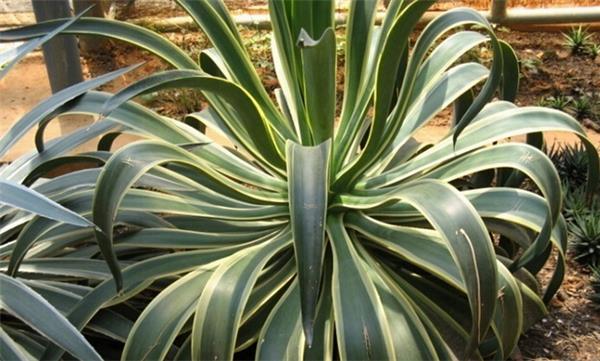
How to grow agave:
1. Soil: Agave is not very demanding about soil, but a loose, fertile loam with good drainage is best; for potted plants, leaf mold mixed with coarse sand is usually used.
2. Watering: Agave is very robust by nature and is not strict about water, but during its growing period it must be given sufficient water to grow well. In addition, during the winter dormant period, agave should not be watered too much, otherwise the roots are prone to rot.
3. Sunlight: Agave prefers light and should often be placed outside to receive sunlight, but variegated varieties need appropriate shading in summer to keep their colors fresh and tender. In winter, if the light in its location is dim, it should be kept at low temperature, without watering, and kept dry, otherwise it will rot. In spring, light should be restored immediately.
4. Temperature: The suitable growing temperature for agave is 15-25°C, and it grows best at 10-16°C at night. Cool, dry conditions in winter are most favorable for its growth, and the overwintering temperature should be kept above 5°C.
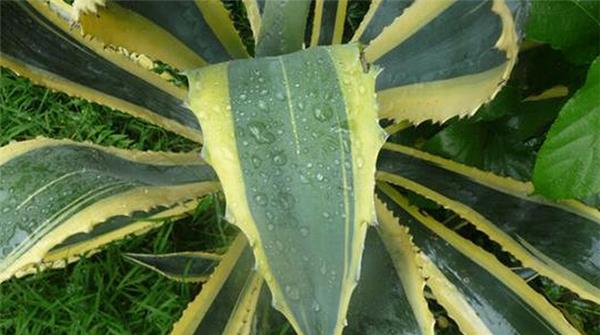
5. Fertilizing: Agave has a very strong ability to adapt to the environment; even growing in fairly poor soil will not affect the plant's development. However, fertile medium will still make agave grow better. Fertilizing once a year is appropriate; do not spray fertilizer frequently, otherwise fertilizer damage is likely.
6. Pests and diseases: Agave often suffers from leaf spot, anthracnose and gray mold, which can be sprayed with a 1000-fold dilution of 50% thiophanate wettable powder. When harmed by scale insects, spray with a 1000-fold dilution of 80% dichlorvos emulsifiable concentrate to kill them.
Agave is a fairly common foliage plant and also a fairly common plant variety among home greenery. That is all for the introduction to how to grow agave; you can see that growing agave is fairly simple, and I believe everyone can grow vigorous agave to decorate their homes. There are many varieties of agave, and below I will introduce a few common varieties.
There are about 300 or more species in the same genus, distributed in the drier regions of the Americas; there are many species and their body sizes differ greatly. Commonly cultivated ones include:
1. Agave americana, also called agave palm and sisal hemp. Its difference from Agave americana var. marginata is that both the front and back of the leaves are grayish green, with no yellow edge along the leaf margin. Among the mainly cultivated ones there is also Agave americana 'Mediopicta', also called Huayan. The center of the leaf is pale yellow.
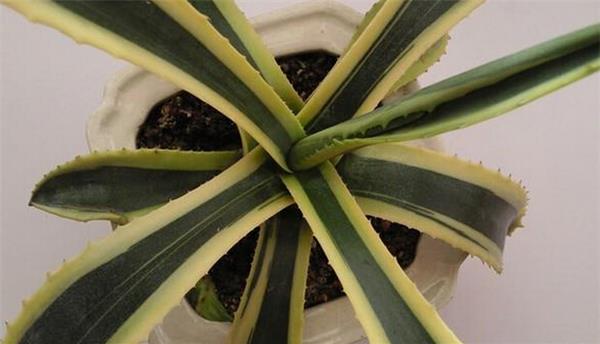
2. Agave angustifolia, also called pineapple hemp. The stem is short, the leaves grow densely in a rosette, sword-shaped, fleshy, grayish green, with small spiny serrations along the leaf margin. Among the mainly cultivated ones there is Agave angustifolia 'Marginata', also called white-edged agave and silver-edged pineapple hemp. Both sides of the leaf are white or slightly reddish.
3. Agave atrovirens has long ovate leaves, tapering at both ends, with no spines on the leaf margin, slightly wavy and curled, and the leaf color is emerald green covered with white powder. Among the mainly cultivated ones are yellow-edged emerald agave and emerald agave.
4. Agave xylonacantha, also called halberd-leaf agave and snow dragon, has single leaves spirally arranged on a shortened stem, long rhombic or obovate, with obvious reddish-brown sharp long spines on the leaf margin, the spine at the tip being the longest, and the leaves are grayish green covered with white powder. Among the mainly cultivated ones is Snow Deity.
5. Agave victoriae-reginae, also called Queen Victoria agave, has leaves densely growing in a rosette on a short stem, dark green, long triangular, thick and fleshy, with irregular slightly raised white line markings on the leaf surface, mostly concentrated along the edges. The leaf tips are hard and sharp.
Agave americana var. marginata is also called golden-edged lotus. You may know that Agave americana var. marginata is a very good potted plant and is a perennial herbaceous plant. But you may not know exactly what uses Agave americana var. marginata has. Below I will introduce what uses Agave americana var. marginata has.
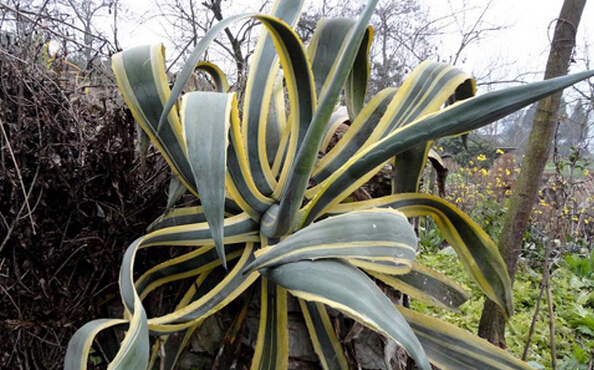
The uses of Agave americana var. marginata
Agave americana var. marginata can be used as a medicinal herb: the fresh sap of the original species Agave americana (which flows out naturally when the bud scales are cut off at flowering) has a mild laxative and diuretic effect. It has some therapeutic effect on experimental nephritis in dogs. The leaves contain a pungent volatile oil and can be used as a local stimulant. Extracts of the related plant Agave schottii have an inhibitory effect on Walker carcinosarcoma-256, and its active ingredient is a saponin (the aglycone being gitogenin). Agave americana var. marginata has the medicinal effects of moistening the lungs, resolving phlegm and relieving cough in humans. It is used for consumptive cough, vomiting of blood and asthma.
Agave can also purify indoor air: agave has the effect of purifying indoor air at night, mainly because, like cactus-family plants, it has the special function of absorbing carbon dioxide and releasing oxygen at night.
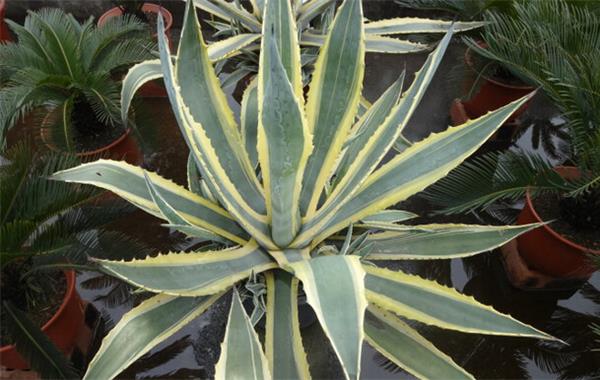
Summary: The above is what this article introduces to you about whether Agave americana var. marginata is toxic, and the uses of Agave americana var. marginata. In summary, Agave americana var. marginata is toxic, but its toxicity is not strong; even so, it should still be planted with caution. And besides having medicinal value, Agave americana var. marginata can also purify the air, which makes it well loved by everyone. Planting a pot of Agave americana var. marginata on a balcony or windowsill makes a very good indoor and outdoor plant.
It has some therapeutic effect on experimental nephritis in dogs. The leaves contain a pungent volatile oil and can be used as a local stimulant. Extracts of the related plant Agave schottii have an inhibitory effect on Walker carcinosarcoma-256, and its active ingredient is a saponin (the aglycone being gitogenin). Agave americana var. marginata has the medicinal effects of moistening the lungs, resolving phlegm and relieving cough in humans. It is used for consumptive cough, vomiting of blood and asthma.Agave can also purify indoor air: agave has the effect of purifying indoor air at night, mainly because, like cactus-family plants, it has the special function of absorbing carbon dioxide and releasing oxygen at night.
Summary: The above is what this article introduces to you about whether Agave americana var. marginata is toxic, and the uses of Agave americana var. marginata. In summary, Agave americana var. marginata is toxic, but its toxicity is not strong; even so, it should still be planted with caution. And besides having medicinal value, Agave americana var. marginata can also purify the air, which makes it well loved by everyone. Planting a pot of Agave americana var. marginata on a balcony or windowsill makes a very good indoor and outdoor plant.