Step-by-Step Guide to Growing Honeysuckle in Pots and Its Benefits and Effects
When honeysuckle is grown as a Chinese medicinal herb, it is usually planted on a large scale in fields. In fact, this plant has many other uses, and it also holds an important place in landscaping. It can be used as a hedge, flower corridor, and flower trellis in gardens and scenic areas for three-dimensional greening. Most importantly, honeysuckle can be made into potted plants for people to admire, making it a distinctive flower particularly suitable for placing at home. Below is a detailed introduction to potted honeysuckle growing techniques. Friends who like honeysuckle can learn from it.
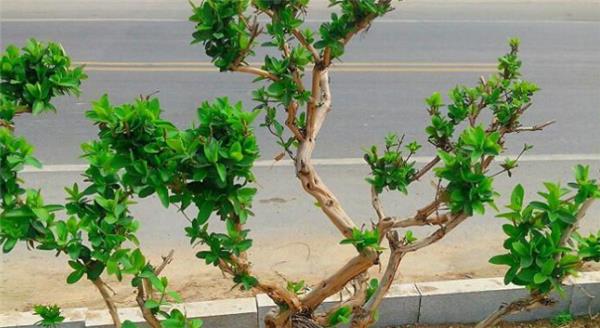
Potted Honeysuckle Growing Techniques
1. Control the vines when growing honeysuckle in pots
When growing honeysuckle in flower pots, pay attention to controlling the growth of its vines. First, control the tree shape to increase the number of flowers; second, promote the maturation of the stems and vines. This can noticeably improve its ornamental value. There are many ways to control vine growth, such as reducing watering and applying less nitrogen fertilizer, both of which are good choices.
2. Repot in time
Potted honeysuckle needs to be repotted regularly. The ideal repotting time is once every one to two years. If it is a large honeysuckle bonsai, it can be repotted once every three to four years. If it is not repotted in time, the absorption capacity of the honeysuckle root system will decrease, accelerating the aging of the plant and causing slow growth.
3. Ensure sunlight
Potted honeysuckle is a distinctive plant with relatively high light requirements. When growing it at home, place it in a sunny environment as much as possible. If it is kept in a poorly lit and damp, shady environment, honeysuckle will develop symptoms such as thin and weak branches, leaf drop, and few flowers. In addition, when the new shoots of potted honeysuckle grow to about 5 cm, spray paclobutrazol in time to prevent excessive growth.
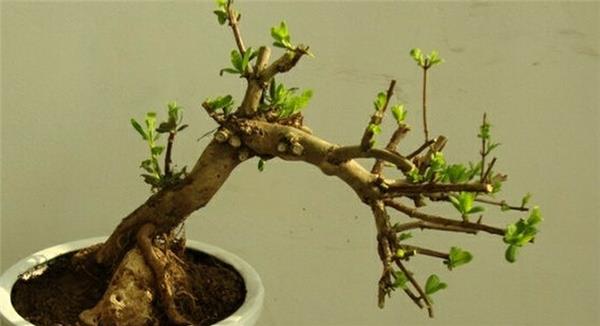
Although honeysuckle has all kinds of trunks in nature, not many are suitable for making bonsai, so try to choose tree stumps with well-developed roots, thick and sturdy trunks, vigorous and rustic character, curved variation, a short and compact tree shape, thick and short dense internodes, and natural tapering.
To cultivate honeysuckle bonsai, you can also plant small honeysuckle seedlings with short internodes that bloom easily in a place with deep soil, loose and fertile soil, and rapid growth for directional training. When the ideal thickness is reached, they can be potted for cultivation. In this way, you can usually enjoy the flowers and pick the flowers, and also obtain relatively ideal honeysuckle stumps, achieving multiple goals at once. So, what issues should be noted when growing honeysuckle bonsai?
1. Growing medium: Although honeysuckle is not strict about soil requirements, using a mix of 60%-70% peat, 20%-30% vermiculite, and 10% perlite as the growing soil will help the plant grow better.
2. Water and fertilizer management: In March before flowering, apply fertilizer mainly based on phosphorus and potassium 1-2 times. After the flowers fade in late May, still apply a light fertilizer 1-2 times, and properly pinch the new shoot tips to promote the sprouting of the second batch of flower buds. At the same time, keep the soil moist and avoid excessive dryness, otherwise the basal leaves are prone to turning yellow and falling off and flowering will be affected. In high-temperature seasons, avoid direct strong sunlight to prevent scorching the tender leaves.
3. Shaping and pruning: Prune once during its dormant period, remove thin branches, weak branches, and crossing branches, and shorten the current year's branches to help promote new branches and more flowers the following year.
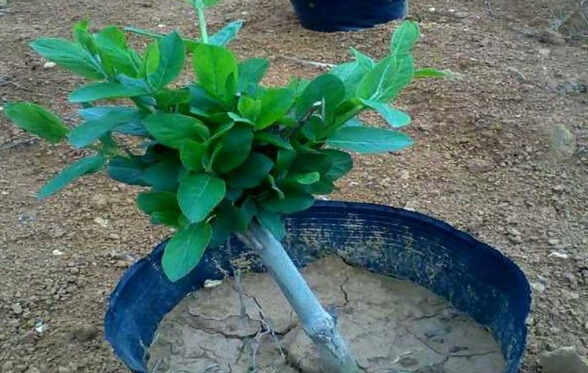
4. Pest and disease control: Honeysuckle has relatively few pests and diseases. Occasionally aphids attack, damaging new leaves and tender shoots, causing leaves to curl and affecting growth. It only needs to be controlled with a 1000-fold solution of "Yashibi" or other insecticides.
Besides being planted in the ground, honeysuckle is also a rare good material for flower-viewing and trunk-viewing bonsai. Because its branches are relatively large, although the trunk form is vigorous and rustic, the branches are extremely brittle and easy to break and rot. For larger branches, do not easily change their shape and angle, and even less should you twist the shape and angle of the trunk and main branches as you would when making other miscellaneous wood bonsai.
Honeysuckle not only has high ornamental value but also high economic value, and it is often cultivated as a nectar source and medicinal plant. Its flowers, stems, and leaves have strong resistance to many kinds of bacteria and influenza viruses. So, what are the benefits and effects of honeysuckle?
The Benefits and Effects of Honeysuckle
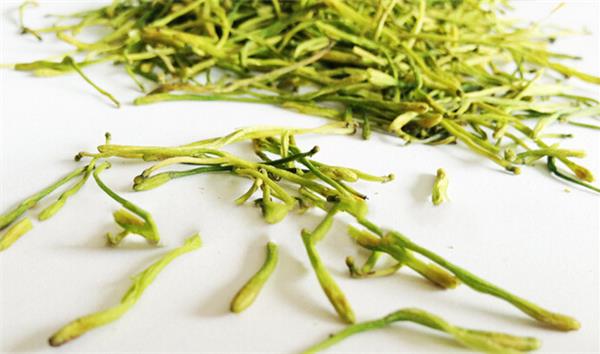
Honeysuckle, also known as Japanese honeysuckle, silver flower, and double flower, has been praised since ancient times as a good medicine for clearing heat and detoxifying. It is sweet in nature, cold in property, aromatic, and sweet-cold to clear heat without harming the stomach; its aroma penetrates and can also dispel pathogenic factors. Honeysuckle can both disperse wind-heat and is also good at clearing and resolving blood toxins. It is used for various febrile diseases, such as body heat, rash, macules, heat-toxin sores and carbuncles, and sore throat, with significant effects.
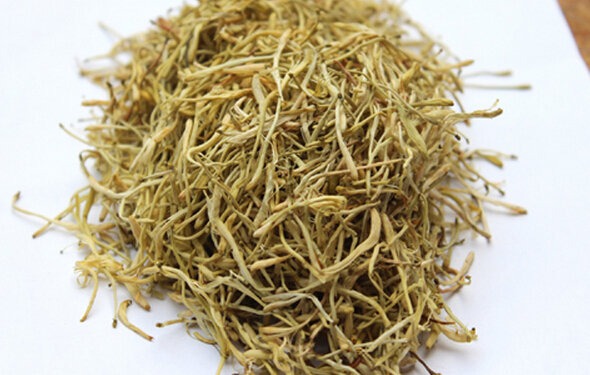
It clears heat and detoxifies, and cools and disperses wind-heat. It is used for carbuncle swelling and boils, throat obstruction, erysipelas, bloody dysentery due to heat toxin, wind-heat common cold, and warm disease with fever.
Its benefits and effects are mainly summarized as follows:
1. Antibacterial and antiviral. That is, it has a clear inhibitory effect on Staphylococcus aureus, hemolytic streptococcus, dysentery, typhoid, meningococcus, pneumococcus, Pseudomonas aeruginosa, and influenza viruses.
2. Enhancing immune function. Honeysuckle can promote lymphocyte transformation and enhance the phagocytic function of white blood cells.
3. Anti-inflammatory and antipyretic. Honeysuckle can promote the release of adrenal cortex hormones and has a clear inhibitory effect on inflammation.
Summary: I hope that after reading this article, everyone can fully understand the benefits and effects of honeysuckle as well as its side effects. The knowledge in the article about potted honeysuckle growing techniques is fairly detailed and can help everyone truly grow honeysuckle well, filling the room with fragrance.
It clears heat and detoxifies, and cools and disperses wind-heat. It is used for carbuncle swelling and boils, throat obstruction, erysipelas, bloody dysentery due to heat toxin, wind-heat common cold, and warm disease with fever.
Its benefits and effects are mainly summarized as follows:
1. Antibacterial and antiviral. That is, it has a clear inhibitory effect on Staphylococcus aureus, hemolytic streptococcus, dysentery, typhoid, meningococcus, pneumococcus, Pseudomonas aeruginosa, and influenza viruses.
2. Enhancing immune function. Honeysuckle can promote lymphocyte transformation and enhance the phagocytic function of white blood cells.
3. Anti-inflammatory and antipyretic. Honeysuckle can promote the release of adrenal cortex hormones and has a clear inhibitory effect on inflammation.
Summary: I hope that after reading this article, everyone can fully understand the benefits and effects of honeysuckle as well as its side effects. The knowledge in the article about potted honeysuckle growing techniques is fairly detailed and can help everyone truly grow honeysuckle well, filling the room with fragrance.