Is Mimosa Pudica Toxic? Uncovering the Reason It Shies Away
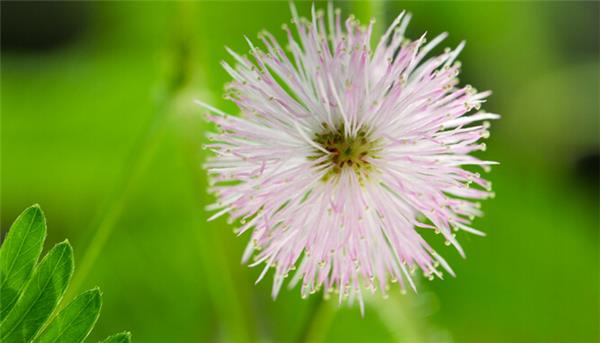
As for the question of whether Mimosa pudica is toxic, let us first take a look at a basic introduction to the plant. Mimosa pudica is also known as the shy plant, the touch-me-not, and the bashful plant. It is a perennial herbaceous plant in the Fabaceae family. Its place of origin is the tropical regions of South America, and it likes to grow in warm, humid places, while having no high demands regarding soil fertility, which makes it easy to keep alive. Its flowers are pink and shaped like pom-poms, very cute indeed. After flowering it produces fruit, and the fruit is flat and round. Mimosa pudica is suitable for placement on balconies or indoors as a potted plant. So then, everyone asks, is Mimosa pudica toxic?

Is Mimosa pudica toxic?
Yes, it is toxic.
Mimosa pudica originates from the tropical regions of South America; it likes warmth and humidity, has no strict requirements for soil, and enjoys light, yet it can also tolerate partial shade, so it can be kept indoors as a potted flowering plant for enjoyment. The leaflets of Mimosa pudica are tiny and arranged in a feather-like pattern. When you touch a leaflet with your hand, after the leaflet receives the stimulus it will fold up; if the vibration is strong, the stimulus can travel to the entire leaf, and then the main leaf stalk will droop as well, and it can even be passed to adjacent leaves and cause their stalks to droop, as if a shy girl were lowering her powdered face. But the delicate and lovely Mimosa pudica is actually toxic, and we must absolutely not underestimate it!
The plant contains a substance called mimosine, which is harmful to the human body to a certain degree. If you come into frequent contact with Mimosa pudica, it can cause a tingling numbness in the eyebrows and yellowing or even loss of hair. During the day, Mimosa pudica generally does not cause toxic harm to the human body, but at night, since it cannot carry out photosynthesis, it releases toxic substances. In other words, Mimosa pudica is in fact toxic.
The whole plant of Mimosa pudica is mildly toxic, but it does not pose much of an effect on people. The whole plant of Mimosa pudica is mildly toxic, but it does not pose much of an effect on people; the entire plant can be used as medicine, with effects of calming the nerves and sedating, stopping bleeding and astringing, and dispersing blood stasis and relieving pain.
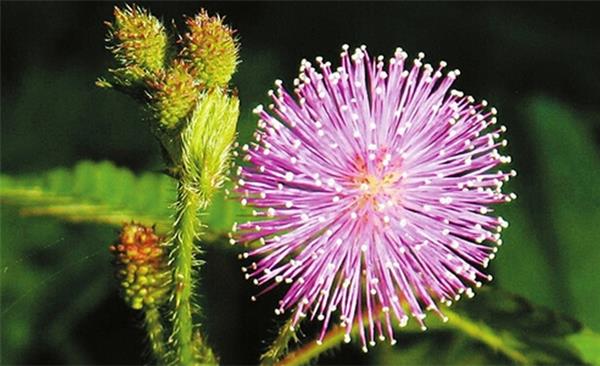
Therefore, it is best not to take Mimosa pudica orally. Do not come into contact with it over the long term; with short-term contact, as long as you do not eat it, the toxic harm is not great.
In nature, there is a plant called Mimosa pudica. If you gently touch it once, its open, feather-like leaves will immediately close up, and right after that the whole leaf droops down, showing a very "shy" appearance. Do you know why Mimosa pudica shies away?
Why Mimosa pudica shies away
In fact, this phenomenon of Mimosa pudica retracting its leaf stalk and lowering its head is not because of shyness, but rather a response of the plant after receiving a stimulus or vibration. In biology, this response is called a nastic movement, and it is the result of changes in cell turgor in Mimosa pudica after receiving an external stimulus.
The ancestral home of Mimosa pudica is Brazil in tropical South America, where there are often strong winds and heavy rains. Whenever the first drop of rain strikes a leaf, it immediately closes its leaflets and droops its leaf stalk to reduce the harm done to it by the violent storm. This is one method by which it adapts to changes in external environmental conditions. In addition, this response of Mimosa pudica can also be regarded as a form of self-defense: as soon as an animal touches it, it folds its leaves, and the animal no longer dares to eat it.
The reason Mimosa pudica shies away is closely related to its native environment. Mimosa pudica originates from tropical South America, where the climate is harsh and violent storms and rains often rage. In order to protect itself well, when the first drop of rainwater falls on a Mimosa pudica leaf, it will promptly and effectively close its leaflets quickly and droop its leaf stalk, avoiding harm from the storm; this is precisely the self-adjusting nature of the biological world.
At the base of the leaf stalk and at the base of the leaflets of the compound leaf, there is a relatively swollen part called the pulvinus. When the vibration travels to the pulvinus, the cell sap in the thin-walled cells of the upper half of the pulvinus is expelled into the intercellular spaces, reducing the turgor pressure of the cells in the upper half of the pulvinus, while the intercellular spaces of the thin-walled cells in the lower half still maintain their original turgor pressure. As a result, the leaflets stand upright and the two leaflets fold together, and the entire leaf may even droop down.
Someone has done research showing that within 0.088 seconds after Mimosa pudica receives a stimulus, its leaves will close; after a short while, the leaflets unfold again and the leaf stalk stands upright again. The recovery time is generally 5 to 10 minutes. However, if we keep teasing it and stimulate its leaves again and again without pause, it will develop a feeling of "annoyance" and no longer produce any response. This is because the continuous stimulation causes the cell sap that controls opening and closing in the pulvinus cells to be lost, and it cannot be replenished in time. Very interesting, isn't it! Mimosa pudica has a graceful plant form and gives people a lovely, cheerful feeling, making it very suitable for use in home decoration. What are the uses of Mimosa pudica?
Uses of Mimosa pudica: 1. Ornamental
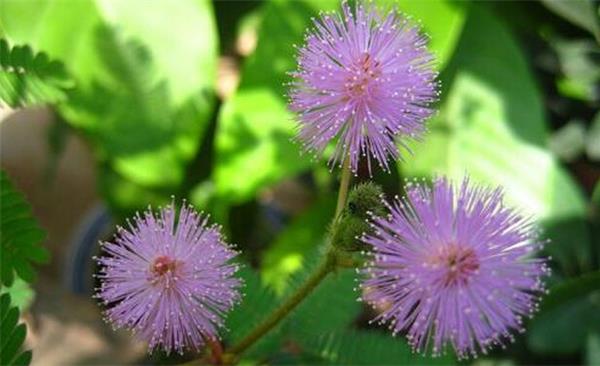
Mimosa pudica has a loose, spreading plant form, and its feathery leaves are slender and elegant; its leaves close as soon as they are touched. Mimosa pudica bears many flowers and is delicate and pretty, charming and moving, giving people an impression of dainty elegance. It can be planted in the ground at the corner of a courtyard wall, or grown in a pot on a windowsill or desk. When giving it as a gift, gently cover the potted plant with pink gauze and tie on a pink ribbon flower knot. If you can further adorn it with pink mohair pom-poms, it will be even more interesting.
Uses of Mimosa pudica: 2. Weather forecasting
Mimosa pudica is a wondrous plant that can foretell changes between sunny and rainy weather. If you touch it with your hand and its leaves close very quickly, while opening very slowly, this indicates that the weather will clear up; if when you touch Mimosa pudica its leaves contract slowly and droop slowly, or even close slightly and then open again, this indicates that the weather will turn from sunny to overcast or that it is about to rain.
Uses of Mimosa pudica: 3. Earthquake prediction
According to Turkish seismologist Ercan, several hours before a strong earthquake occurs, the leaves of Mimosa pudica, which are sensitive to external touch, will suddenly shrivel and then wither. In earthquake-prone Japan, scientists have found through research that under normal conditions, the leaves of Mimosa pudica open during the day and close at night. If the leaves of Mimosa pudica show the abnormal phenomenon of closing during the day and opening at night, this is a precursor to an earthquake.
Uses of Mimosa pudica: 4. Medicinal use
It has effects such as clearing heat and promoting urination, resolving phlegm and relieving cough, calming the nerves and relieving pain, detoxifying, dispersing blood stasis, stopping bleeding, and astringing. It is used for colds, high fever in children, acute conjunctivitis, bronchitis, gastritis, enteritis, urinary stones, malaria, and neurasthenia; for external use it treats traumatic swelling and pain, sores and ulcers with swelling and toxicity, hemoptysis, and herpes zoster.

Mimosa pudica has ornamental and medicinal uses, and it also possesses the unique functions of forecasting weather and predicting earthquakes. If you like Mimosa pudica, you might as well grow a few pots and place them in your home. The above is what the editor has introduced regarding whether Mimosa pudica is toxic and other information about Mimosa pudica; I hope it can help everyone.
It can be planted in the ground at the corner of a courtyard wall, or grown in a pot on a windowsill or desk. When giving it as a gift, gently cover the potted plant with pink gauze and tie on a pink ribbon flower knot. If you can further adorn it with pink mohair pom-poms, it will be even more interesting.
Uses of Mimosa pudica: 2. Weather forecasting
Mimosa pudica is a wondrous plant that can foretell changes between sunny and rainy weather. If you touch it with your hand and its leaves close very quickly, while opening very slowly, this indicates that the weather will clear up; if when you touch Mimosa pudica its leaves contract slowly and droop slowly, or even close slightly and then open again, this indicates that the weather will turn from sunny to overcast or that it is about to rain.
Uses of Mimosa pudica: 3. Earthquake prediction
According to Turkish seismologist Ercan, several hours before a strong earthquake occurs, the leaves of Mimosa pudica, which are sensitive to external touch, will suddenly shrivel and then wither. In earthquake-prone Japan, scientists have found through research that under normal conditions, the leaves of Mimosa pudica open during the day and close at night. If the leaves of Mimosa pudica show the abnormal phenomenon of closing during the day and opening at night, this is a precursor to an earthquake.
Uses of Mimosa pudica: 4. Medicinal use
It has effects such as clearing heat and promoting urination, resolving phlegm and relieving cough, calming the nerves and relieving pain, detoxifying, dispersing blood stasis, stopping bleeding, and astringing. It is used for colds, high fever in children, acute conjunctivitis, bronchitis, gastritis, enteritis, urinary stones, malaria, and neurasthenia; for external use it treats traumatic swelling and pain, sores and ulcers with swelling and toxicity, hemoptysis, and herpes zoster.
Mimosa pudica has ornamental and medicinal uses, and it also possesses the unique functions of forecasting weather and predicting earthquakes. If you like Mimosa pudica, you might as well grow a few pots and place them in your home. The above is what the editor has introduced regarding whether Mimosa pudica is toxic and other information about Mimosa pudica; I hope it can help everyone.