Winter Jasmine Blooming Time and Flower Color Explained in Detail
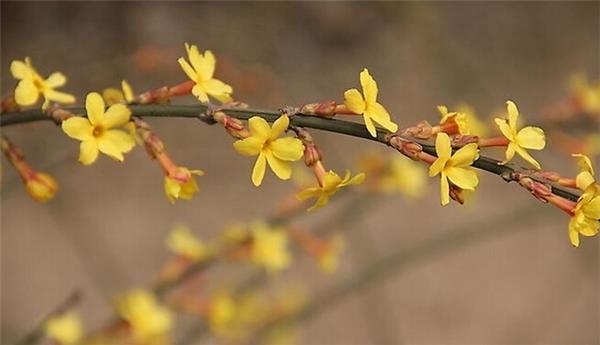
Flowers and trees announce the seasons, while insects and birds tell of farming times. In nature, the earliest messengers of spring are the winter jasmine and the duck in the water. Below is a detailed explanation of when winter jasmine blooms, so that flower lovers can enjoy the blossoms.
Winter Jasmine Blooming Time
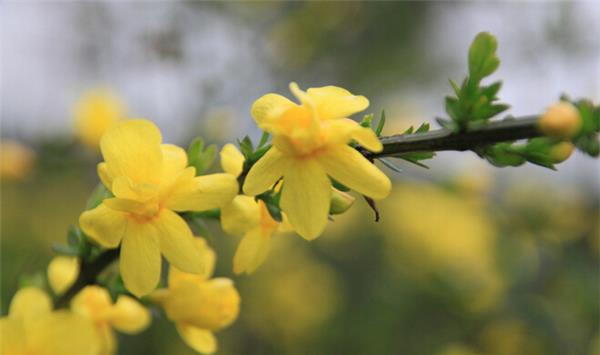
Winter jasmine: it blooms from February to March each year, flowers appearing before the leaves, and the blooming period lasts about 40 to 50 days.
Wild winter jasmine: its blooming period is usually in early April, about one month later than winter jasmine, and noticeably later than plum blossoms.
Winter jasmine gets its name because it welcomes spring after it blooms, and it is known as one of the "Four Friends in the Snow," ranking alongside plum blossom, narcissus and camellia. It is often used as a garden plant, so what are the cultivation methods for winter jasmine?
Cultivation Methods for Winter Jasmine
1. Soil: cultivating winter jasmine has certain soil requirements; it needs loose, fertile, well-drained sandy soil. It grows vigorously in acidic soil, but grows poorly in alkaline soil.
2. Temperature: in summer, when the sun is scorching and high temperatures occur, winter jasmine should be moved to a semi-shaded spot, which is more favorable for its growth. Around the Spring Festival, move it, pot and all, into a greenhouse or plastic tunnel, keeping the room temperature at about 15°C, and flowers can be seen in about 15 days.
3. Watering: winter jasmine likes moisture. From before flowering to the flowering period, water 1-3 times depending on how dry or wet the soil is. Before the rainy season arrives, water frequently. Do not apply additional fertilizer during the growing season, and do not water after the Start of Autumn, to prevent the branches from growing too long and too tender to survive the winter safely.
Propagation Methods for Winter Jasmine
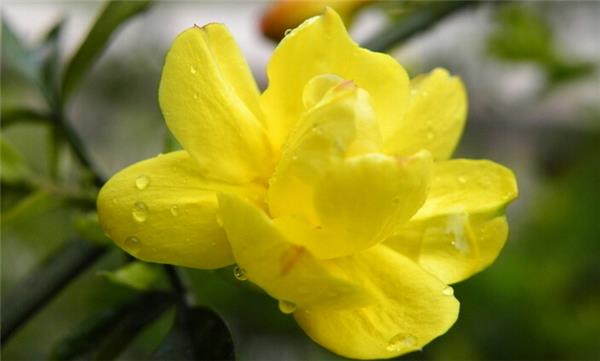
Winter jasmine is mostly propagated by cuttings. Choose 1-year-old branches, cut them into 15 cm lengths, water the prepared seedbed thoroughly, and insert the cuttings once the water has drained. After the winter jasmine roots, divide and replant; it can also be propagated by division or layering.
How to Grow Winter Jasmine
Winter jasmine is mainly propagated by cuttings, but layering and division can also be used. For cuttings, this can be done in spring, summer and autumn; cut semi-lignified branches 12-15 cm long, insert them into sandy soil, keep them moist, and they will root in about 15 days. For layering, bury longer branches shallowly in sandy soil without wounding them; they will root after 40-50 days, and can be separated from the mother plant and transplanted the following spring. For division, it can be done in spring when the buds begin to swell. When transplanting in spring, cut off part of the above-ground branches and stems, and keep some of the original soil. During growth, be careful that the soil neither waterlogs nor dries out excessively, and apply fertilizer appropriately 2-3 times before and after flowering. In autumn and winter, prune and shape the plant to keep it fresh with many flowers. For pests and diseases, leaf spot and twig blight often occur, and can be sprayed with a 1500-fold dilution of 50% Tuzet wettable powder. Insect pests include aphids and bagworms, which can be killed by spraying a 1000-fold dilution of 50% phoxim emulsifiable concentrate.
What issues should be noted when cultivating winter jasmine?
1. Growing environment: for newly planted or newly repotted winter jasmine, water thoroughly and place it in shade for 10 days, then move it to a semi-sunny spot for a week of care, then place it in a spot with sufficient sunlight, good ventilation and moist air. In winter, move it indoors to overwinter. If you cannot wait and want to see the winter jasmine bloom early, you can move it in good time to a sunny room with a higher temperature. After flowering, you can place the flowers in a relatively low-temperature environment to slow metabolism and extend the blooming period.
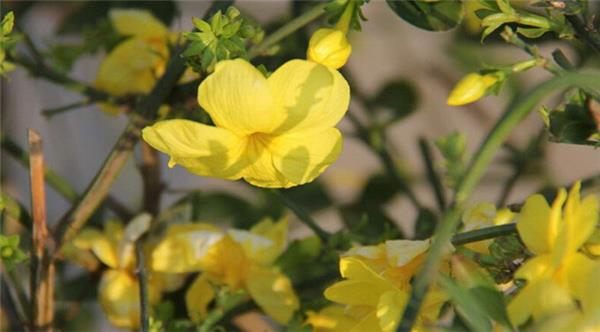
2. Water frequently: winter jasmine likes moisture, especially in hot summer, because it loses water quickly, so it should be watered appropriately every morning and afternoon, and water can also be sprinkled on the ground to keep the environment moist; in winter, do the opposite. Winter jasmine fears water accumulating in the pot, so during the plum rain season, when rain continues for days, the potted plant should be moved to a sheltered place.
3. Fertilizing: during the growing period of winter jasmine, apply 1-2 times a month of decomposed, diluted liquid fertilizer. July to August is the flower bud differentiation period for winter jasmine, so apply liquid fertilizer containing more phosphorus to help the formation of flower buds. Before flowering, apply once a decomposed, diluted organic liquid fertilizer, which can make the flower color more brilliant and extend the blooming period.
4. Shaping: winter jasmine has strong sprouting ability, so during the growing period it should be pinched back frequently, and some branches should be cut off or shortened to maintain the tree shape. After the flowers fade, the branches should be cut short, generally leaving only 2-3 buds, while the main branches can be left somewhat longer.
5. Pest and disease prevention: winter jasmine has very few pests and diseases, with occasional red spider mite infestations, which should be removed promptly.
Forsythia is also a valuable flowering plant. It blooms in early spring, and its yellow flowers are very brilliant, but it looks quite similar to winter jasmine, and many people cannot tell them apart. Below, the editor introduces five little tricks to distinguish them:
Six Points to Tell Forsythia and Winter Jasmine Apart
Differences between forsythia and winter jasmine: 1. Attributes
Forsythia and winter jasmine are essentially of different attributes. Although both are in the Oleaceae family, winter jasmine is in the Jasminum genus, with the scientific name Jasminum nudiflorum, while forsythia is in the Forsythia genus, with the scientific name Forsythia suspensa (Thunb.) Vahl.
Differences between forsythia and winter jasmine: 2. Petals
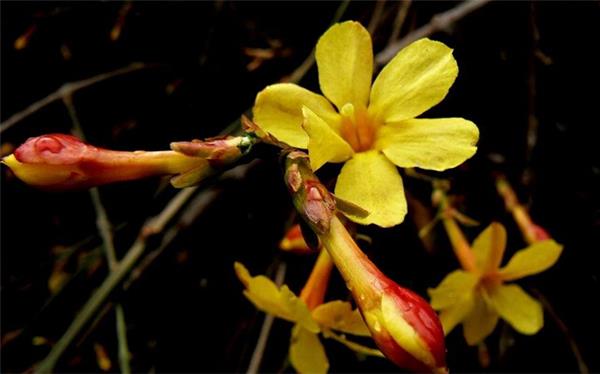
The simplest way is to look at the petals of the two. Winter jasmine has six petals, while forsythia has only four petals. When flowering, it is relatively easy to tell them apart just by the petals.
Differences between forsythia and winter jasmine: 3. Leaves
Winter jasmine leaves all grow in a cross-shaped symmetrical arrangement, with smaller leaves that are ovate-elliptic, entire-margined, and narrow with a sudden pointed tip; forsythia leaves are ovate, broadly ovate or elliptic-ovate, with larger leaves, and the margins have neat coarse serrations except at the base. In addition, winter jasmine has three small compound leaves, while forsythia has single leaves or three leaves opposite each other, which can also be observed from how the leaves grow.
Differences between forsythia and winter jasmine: 4. Branches
The small branches of winter jasmine are green, while those of forsythia are darker in color, generally light brown. Looking at the color of the small branches is also a way to distinguish them. In addition, winter jasmine branches are solid, while forsythia branches are hollow without pith.
Differences between forsythia and winter jasmine: 5. Fruit
Forsythia is also a medicinal material, so it generally bears fruit. Forsythia flowers set fruit, while winter jasmine rarely sets fruit.
Differences between forsythia and winter jasmine: 6. Tree shape
Winter jasmine is in the Oleaceae family, Jasminum genus, and the plant has a bushy, shrubby appearance, relatively short, with branches that arch and droop easily; forsythia is in the Oleaceae family, Forsythia genus, with a shrub or tree-like appearance, relatively tall, and branches that do not droop easily, so the tree shape can also be used to distinguish them.
Forsythia and winter jasmine bloom at similar times and have similar flower colors, so many people hope to correctly distinguish the two. The editor has summarized the six major differences between forsythia and winter jasmine, and believes this will be helpful to everyone.
The above is the editor's introduction to relevant information about winter jasmine, and I hope it can help everyone better understand winter jasmine.
But winter jasmine is in the Jasminum genus, with the scientific name Jasminum nudiflorum, while forsythia is in the Forsythia genus, with the scientific name Forsythia suspensa (Thunb.) Vahl.Differences between forsythia and winter jasmine: 2. Petals
The simplest way is to look at the petals of the two. Winter jasmine has six petals, while forsythia has only four petals. When flowering, it is relatively easy to tell them apart just by the petals.
Differences between forsythia and winter jasmine: 3. Leaves
Winter jasmine leaves all grow in a cross-shaped symmetrical arrangement, with smaller leaves that are ovate-elliptic, entire-margined, and narrow with a sudden pointed tip; forsythia leaves are ovate, broadly ovate or elliptic-ovate, with larger leaves, and the margins have neat coarse serrations except at the base. In addition, winter jasmine has three small compound leaves, while forsythia has single leaves or three leaves opposite each other, which can also be observed from how the leaves grow.
Differences between forsythia and winter jasmine: 4. Branches
The small branches of winter jasmine are green, while those of forsythia are darker in color, generally light brown. Looking at the color of the small branches is also a way to distinguish them. In addition, winter jasmine branches are solid, while forsythia branches are hollow without pith.
Differences between forsythia and winter jasmine: 5. Fruit
Forsythia is also a medicinal material, so it generally bears fruit. Forsythia flowers set fruit, while winter jasmine rarely sets fruit.
Differences between forsythia and winter jasmine: 6. Tree shape
Winter jasmine is in the Oleaceae family, Jasminum genus, and the plant has a bushy, shrubby appearance, relatively short, with branches that arch and droop easily; forsythia is in the Oleaceae family, Forsythia genus, with a shrub or tree-like appearance, relatively tall, and branches that do not droop easily, so the tree shape can also be used to distinguish them.
Forsythia and winter jasmine bloom at similar times and have similar flower colors, so many people hope to correctly distinguish the two. The editor has summarized the six major differences between forsythia and winter jasmine, and believes this will be helpful to everyone.
The above is the editor's introduction to relevant information about winter jasmine, and I hope it can help everyone better understand winter jasmine.