Is Mimosa pudica toxic? What you must know before growing it in a pot
Mimosa pudica (sensitive plant) originates from Central and South America, and is also known as zhixiucao and huhecao. Is Mimosa pudica toxic? This is probably a question many people have. Next, I will answer this question for you.
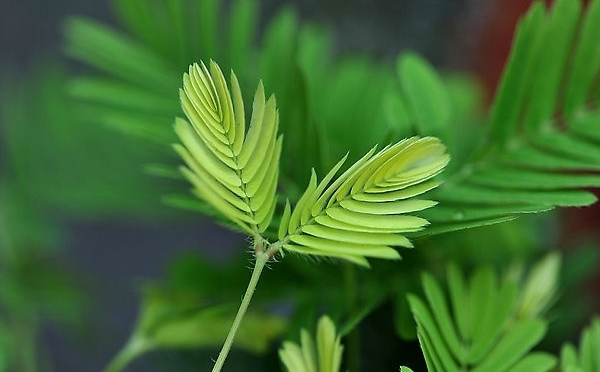
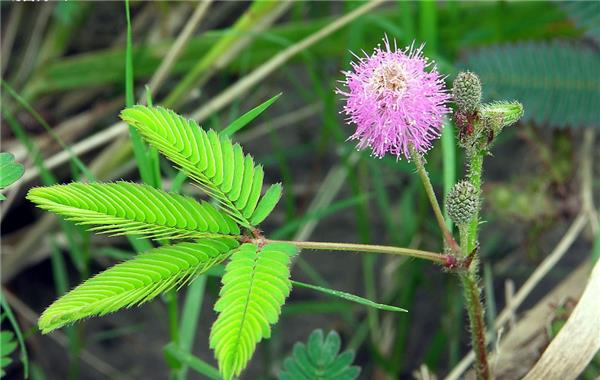
Mimosa pudica is also known as haixiucao, zhixiucao and paichoucao. It is a perennial herbaceous plant of the Fabaceae family. Its place of origin is the tropical regions of South America, and it likes to grow in warm, humid places, while it has no high requirements for soil fertility, so it is easy to keep alive. Its flowers are pink and shaped like pom-poms, very cute. After flowering it produces fruit, and the fruit is flat and round. Mimosa pudica is suitable for placing on balconies or indoors as a potted plant.
Mimosa pudica's "shyness" is not actually because it has perception and consciousness like humans, so it is not truly shy. The shyness of Mimosa pudica comes from its leaves being very sensitive to light and heat, so it reacts to light and heat, and after being touched by an external force it immediately closes, which is what people call being shy.
Mimosa pudica is regarded as an invasive species in Tanzania, South Asia, Southeast Asia, the United States and many Pacific islands. In parts of Australia (such as the Northern Territory and Western Australia) it is regarded as a declared plant. In Queensland, Australia it is regarded as a proposed declared plant. In Nigeria, Seychelles, Mauritius and East Asia and other places it is distributed but is not regarded as an invasive species.
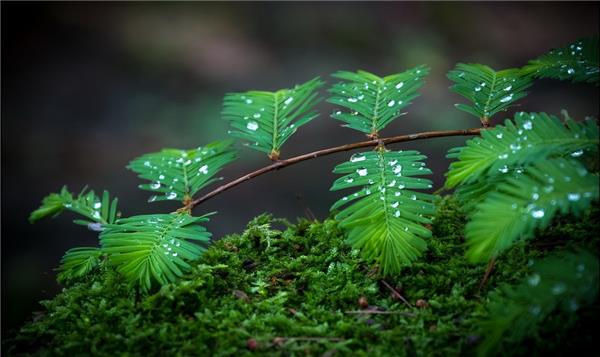
Mimosa pudica can predict earthquakes. According to Turkish seismologist Erjiang, a few hours before a strong earthquake occurs, the leaves of Mimosa pudica, which are sensitive to external touch, suddenly shrivel and then wither. In earthquake-prone Japan, scientists have found through research that under normal circumstances, the leaves of Mimosa pudica open during the day and close at night. If the leaves of Mimosa pudica show the abnormal phenomenon of closing during the day and opening at night, it is a precursor to an earthquake. For example: at 7 a.m. on January 11, 1938, Mimosa pudica began to open, but by 10 a.m. the leaves suddenly all closed, and indeed a strong earthquake occurred on the 13th. In 1976, members of the Japan Earthquake Club observed the abnormal closing phenomenon of Mimosa pudica leaves many times, and earthquakes occurred afterwards each time.
Is Mimosa pudica toxic?
Mimosa pudica originates from the tropical regions of South America. It likes warmth and humidity, has no strict requirements for soil, and likes light, but can also tolerate partial shade, so it can be grown indoors as a potted flower for enjoyment. The leaflets of Mimosa pudica are tiny and arranged in a pinnate pattern. When you touch the leaflets with your hand, after the leaflets receive the stimulus they immediately fold together; if the vibration is strong, the stimulus can spread to the whole leaf, and then the main leaf stalk will also droop, and it can even be transmitted to adjacent leaves and make their leaf stalks droop, as if a girl were shy and lowering her powdered face. But the delicate and lovely Mimosa pudica is actually toxic, and we must never underestimate it!
The herb of Mimosa pudica contains a substance called mimosine, and this substance is harmful to the human body to a certain extent. If you often come into contact with Mimosa pudica, it will cause numbness of the eyebrows, yellowing of the hair and even hair loss. Mimosa pudica generally does not cause toxic harm to the human body during the day, but at night, because it cannot carry out photosynthesis, it releases toxic substances. In other words, Mimosa pudica is actually toxic.
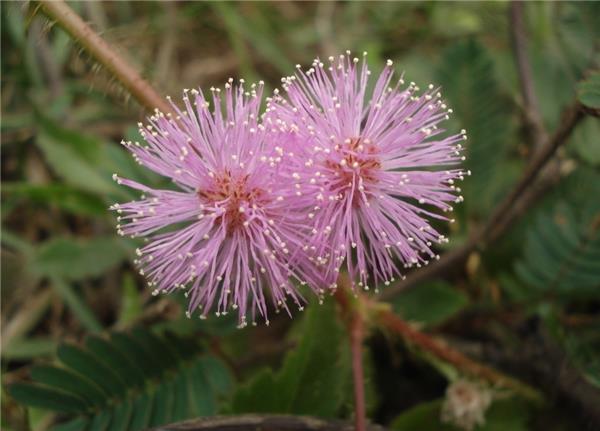
The whole plant of Mimosa pudica is mildly toxic, but it does not have too great an effect on people. The whole plant of Mimosa pudica is mildly toxic, but it does not have too great an effect on people. The whole plant of Mimosa pudica is used as medicine, and has the effects of calming the nerves and sedating, stopping bleeding and astringing, and dispersing blood stasis and relieving pain.
So it is best not to take Mimosa pudica. Do not come into contact with it for a long time. With short-term contact, as long as it is not eaten, the toxic harm is not great.
The above is all the content I have summarized for you on whether the potted plant Mimosa pudica is toxic. I hope this article can help you. Please also continue to follow us.