What are the cultivation precautions for magnolia trees?
The magnolia tree is a tree species we are very familiar with; both its graceful tree shape and its large, beautiful flowers are extremely attractive to us. So how much do you know about the precautions for growing magnolia trees? Let's take a look!
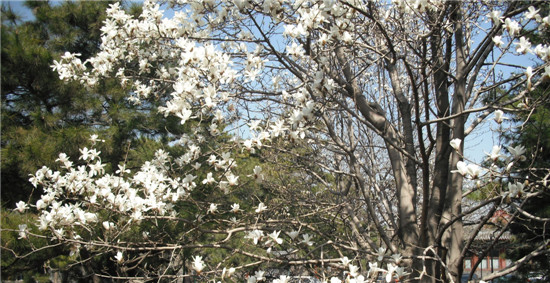
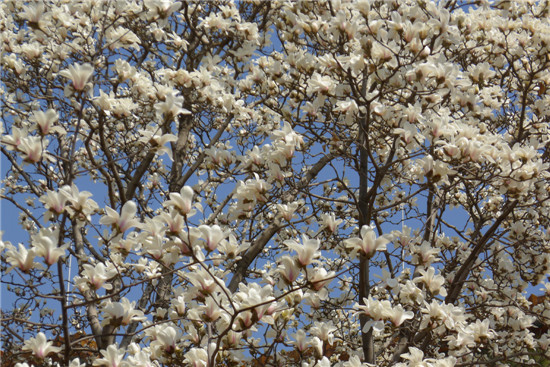
The magnolia tree is a deciduous tree, and the trunk can reach a height of about 25 m. Its crown is narrowly ovate when young, and by the time it matures the crown becomes broadly ovate or a loose, wide ovate shape. The magnolia tree's trunk is relatively small, but its flowers cluster thickly and are enchantingly beautiful, very quaint and elegant. Magnolia trees are often used as ornamental trees in tourist scenic areas to display a rugged, quaint style.
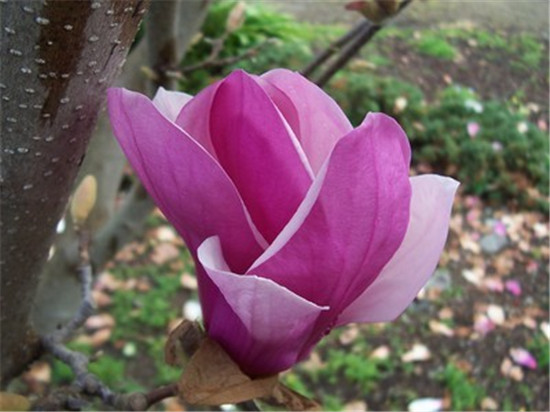
As a deciduous tree, the magnolia tree also has its own unique aspects. For example, when young its trunk is smooth with few cracks and is grayish-white, and after maturity the trunk becomes rough and cracked, turning dark gray or dark brown; in addition, the magnolia tree's trunk is very distinct and its crown is very regular, and after flowering, the mixed leaf-and-flower buds extend in double forks or multiple branches behind the fruit cluster, developing laterally; the magnolia tree's flowers are elegant and dignified, with a fragrance like an orchid and a lovely flower shape, and they have high value, being able to be used as medicine and also eaten.
The magnolia tree's flower shape is very lovely and beautiful, so when exactly does such a beautiful magnolia flower bloom? In fact, the magnolia tree's flowering period is from May to July every year, and the flowering period is relatively long; in a year, magnolia flowers in full bloom can be seen for nearly three months. Such a long flowering period is probably one of the reasons the magnolia tree is used as a horticultural ornamental plant.
Pest and disease control and pruning and shaping of magnolia trees
Magnolia is a tree species with relatively strong resistance. Its main diseases include black spot disease, chlorosis, and leaf scorch. Black spot disease is caused by infection with fungi imperfecti; if it occurs, broad-spectrum fungicides such as 70% mancozeb 500-fold solution and 75% chlorothalonil 800-fold solution can be sprayed on the leaves for control. During routine care, attention should also be paid to ventilation and light transmission, and water and fertilizer management should be strengthened to increase the plant's disease resistance; chlorosis is a physiological disease, mainly caused by overly alkaline soil. For this disease, ferrous sulfate (0.2% solution) can be used to adjust the pH, and more farmyard manure should be used; leaf scorch disease has many causative factors, mainly poor site conditions (such as a large hardened surface area, a small green area, etc.), prolonged high temperature and drought, soil alkalization, or an excessive number of flowers, etc. Measures such as increasing the number of waterings, applying more fertilizer, and whitewashing the trunk can be adopted for comprehensive control. In North China, magnolia is occasionally harmed by pests such as the large bagworm moth and the frost moth; if they occur, 20% diflubenzuron 8000-fold solution or 50% zinc phoxim 1000-fold solution can be sprayed for killing.
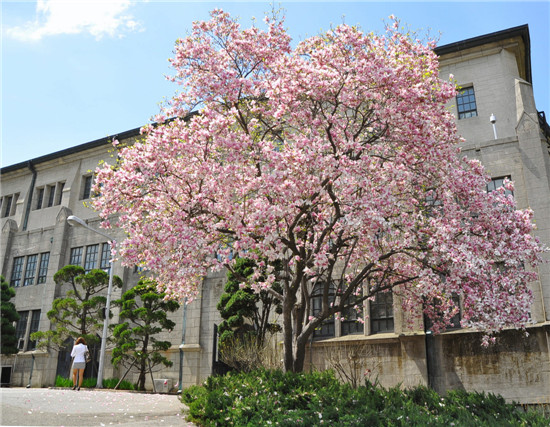
Because magnolia's branches and trunk have relatively poor wound-healing ability, under circumstances where it is not absolutely necessary, pruning is generally not done. If the tree shape is unattractive or relatively messy, the diseased and insect-damaged branches, dead branches, drooping branches, and water sprouts, overly dense branches, and useless branches can be thinned out according to the actual situation, so as to facilitate ventilation and light transmission and give the plant a beautiful tree shape. The pruning time is in early spring before leaf expansion. Magnolia is generally not shortened to avoid destroying flower buds.
What should be done when magnolia tree leaves turn brown?
Also known as spot disease, it is a common disease of magnolia. The symptom is that the pathogen mainly infects the leaves. At first, pale brown or yellow small spots appear on the surface of the diseased leaves, and once they expand they become circular or irregular lesions, 5-12 mm in diameter, with dark brown edges and grayish-white centers, on which many small black dots grow. The lesions can merge with each other into irregular large necrotic damage.
Control methods:
1. Magnolia should be planted in a place with fertile soil and sufficient sunlight. On poor soil, fertilizer should be appropriately increased to strengthen the tree's vigor and improve disease resistance.
2. Whether in a courtyard or a street green belt, diseased fallen leaves must be promptly removed and destroyed in a centralized manner. For nursery stock, sanitation management should be paid even more attention, and diseased leaves should be picked off as early as possible to reduce sources of infection.
3. In early summer each year, at the initial stage of the disease, a 1:1:100 Bordeaux mixture can be sprayed for protection. Afterward, 50% thiophanate-methyl wettable powder 800-fold solution, or 75% chlorothalonil wettable powder 800-1000-fold solution, can be sprayed to control the spread of the disease.
The above is all the content I have summarized for everyone on the cultivation precautions for magnolia trees. I hope this article can help everyone. Please also continue to follow us.
I hope this article can help everyone. Please also continue to follow us.