What are the characteristics and uses of the sensitive plant (Mimosa pudica)?
The sensitive plant, also known as the shy plant, has very sensitive leaves, and this reaction makes many people find it interesting and think about growing one. Next, let us take a look at the characteristics and uses of the sensitive plant.
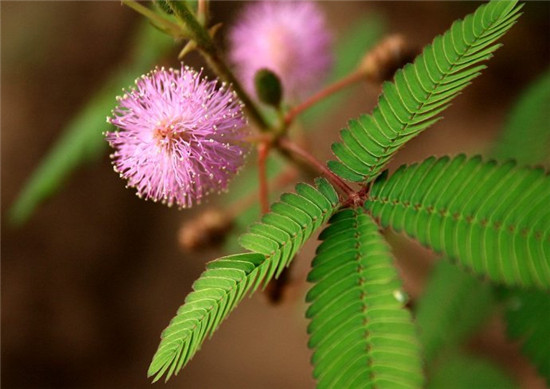
The sensitive plant is a perennial herb or subshrub of the Fabaceae family. Because its leaves respond to heat and light and close immediately when touched by an external force, it is named the sensitive plant. Its shape resembles a pom-pom. After flowering it produces pods, and the fruit is flat and round. The leaves are pinnate compound leaves arranged alternately, in a palmate arrangement. It usually blooms after midsummer, with oblong capitula, 2-3 growing in the leaf axils. The flowers are white or pink, the calyx is bell-shaped with 8 tiny calyx teeth, and the petals are split into four. These are the simple characteristics of the sensitive plant.
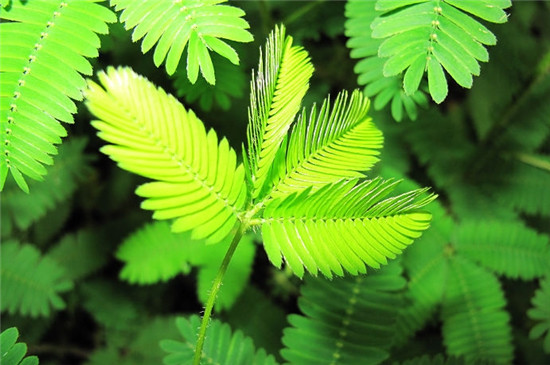
The leaves of the sensitive plant have fairly long petioles, and the front end of the petiole splits into four rachises, each rachis bearing two rows of oblong leaflets. The overall stalk is very long, and its base swells into a pulvinus. That is, at the base of the sensitive plant's leaflets, rachises and petioles, there is a swollen part called the pulvinus.
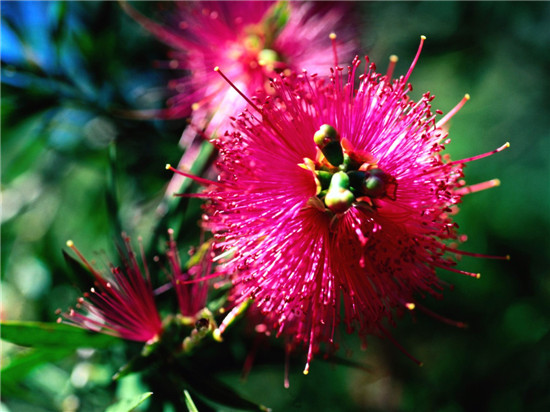
The leaves are bipinnate compound leaves, with 2-4 pinnae in a palmate arrangement, and 14-48 leaflets, oblong, 0.6-1.1 cm long and 1.5-2 mm wide, with bristles on the edges and veins. It usually blooms after midsummer, with oblong capitula, 2-3 growing in the leaf axils. The flowers are pale red, the calyx is bell-shaped with 8 tiny calyx teeth, the petals are split into four, there are four stamens, and the ovary is hairless.
The pod is flat, 1.2-2 cm long and about 0.4 cm wide, with bristles on the edges, 3-4 pod segments, each pod segment containing 1 seed, and the segments fall off when mature. The flowering period is September.
Besides the characteristics of the sensitive plant described above, it is also used in medicine. The whole plant (sensitive plant) is sweet, astringent and cool. It calms the mind and soothes the nerves, clears heat and detoxifies. It is used for vomiting and diarrhea, insomnia, malnutrition in children, red swollen painful eyes, deep abscesses and shingles. The root (sensitive plant root): astringent, slightly bitter. Toxic. It relieves cough and resolves phlegm, drains dampness and unblocks the collaterals, harmonizes the stomach and reduces food stagnation. It is used for cough with phlegm and wheezing, rheumatic joint pain and indigestion in children. The sensitive plant can also be given to friends as a gift: gently cover the potted plant with pink gauze and tie it with a pink ribbon bow. If you can add pink mohair pom-poms as decoration, it will be even more interesting.
Uses of the sensitive plant
1. The sensitive plant can forecast the weather.
The sensitive plant is a wonderful plant that can foretell changes between sunny and rainy weather. If you touch it with your hand and its leaves close very quickly but open very slowly, this indicates that the weather will turn sunny; if when you touch the sensitive plant its leaves contract slowly and droop slowly, or even close slightly and then open again, this indicates that the weather will turn from sunny to overcast or that it is about to rain.
2. It can also predict earthquakes.
The sensitive plant can predict earthquakes. According to Turkish seismologist Ercan, several hours before a strong earthquake occurs, the leaves of the sensitive plant, which are sensitive to external touch, suddenly shrivel and then wither. In earthquake-prone Japan, scientists have found through research that under normal conditions, the leaves of the sensitive plant open during the day and close at night. If the leaves of the sensitive plant show the abnormal phenomenon of closing during the day and opening at night, this is a precursor to an earthquake. For example: at 7 a.m. on January 11, 1938, the sensitive plant began to open, but by 10 a.m. the leaves suddenly all closed, and indeed a strong earthquake occurred on the 13th. In 1976, members of the Japan Earthquake Club observed the abnormal closing phenomenon of sensitive plant leaves many times, and earthquakes occurred afterward each time.
3. It has a special ornamental value.
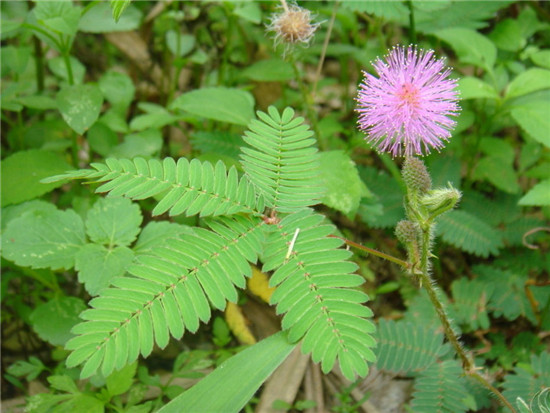
The sensitive plant has a loose plant shape, and its feathery leaves are slender and beautiful; its leaves close as soon as they are touched. The sensitive plant has many elegant flowers, delicate and charming, giving people an impression of fragility and refinement. It can be planted in the ground at the corner of a courtyard, or grown in a pot on a windowsill or desk. When giving it as a gift, gently cover the potted plant with pink gauze and tie it with a pink ribbon bow. If you can add pink mohair pom-poms as decoration, it will be even more interesting.
4. The medicinal value of the sensitive plant is also considerable.
The sensitive plant is also a medicine. It is collected in summer and autumn; remove the weeds, wash it clean, cut it into sections, and dry it in the sun or use it fresh. Soaking the root of the sensitive plant in liquor and taking it, or decocting it together with liquor, can treat rheumatic pain, neurasthenia, insomnia, etc.; stewing it with lean pork and eating it can treat hot swollen painful eyes, hepatitis and nephritis; the fresh leaves can be pounded into a paste and applied to treat swelling and pain, shingles, etc., and have quite good pain-relieving and swelling-reducing effects. It clears heat and promotes urination, resolves phlegm and relieves cough, calms the nerves and relieves pain, and has effects such as detoxification, dissipating blood stasis, stopping bleeding and astringing. It is used for colds, high fever in children, acute conjunctivitis, bronchitis, gastritis, enteritis, urinary stones, malaria and neurasthenia; for external use it treats bruising, swelling and pain, sores and swellings, hemoptysis and shingles.
The above is all the content of the characteristics and uses of the sensitive plant that I have summarized for everyone. I hope this article can help everyone. Please also continue to follow us.
Effects such as calming the nerves and relieving pain, detoxification, dissipating blood stasis, stopping bleeding and astringing. It is used for colds, high fever in children, acute conjunctivitis, bronchitis, gastritis, enteritis, urinary stones, malaria and neurasthenia; for external use it treats bruising, swelling and pain, sores and swellings, hemoptysis and shingles.The above is all the content of the characteristics and uses of the sensitive plant that I have summarized for everyone. I hope this article can help everyone. Please also continue to follow us.