How to Grow a Peace Lily: A Guide to Raising Healthy, Beautiful Plants
The peace lily (Spathiphyllum), also known as white flag, gets its name because its leaves resemble those of the arrowroot plant and its flowers look like a crane holding its head high, standing gracefully and spotlessly white, giving people a sense of "purity, calm, peace and well-being," and it is regarded as the "flower of innocence." The peace lily is a perennial evergreen herbaceous foliage plant. It generally grows 40-60 cm tall, has short rhizomes, and mostly grows in clumps. So, do you know how to grow a peace lily?
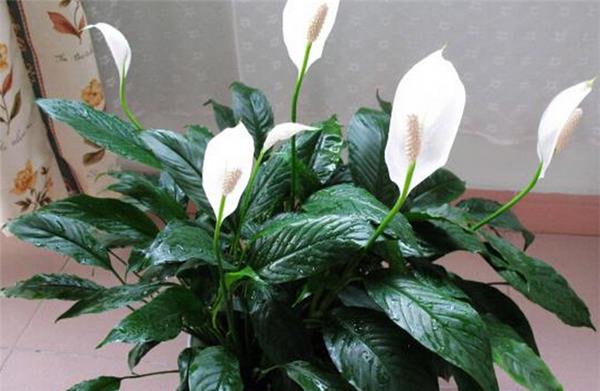
How to Grow a Peace Lily
1. Watering: The peace lily has a relatively high demand for water, and the potting soil must be kept moist at all times; however, overwatering must also be avoided. Once overwatered, a large amount of water accumulates in the pot, which easily causes root rot and yellowing and withering of the plant; in addition, note that in summer and during droughts, water should often be sprayed on the leaves and the ground to increase air humidity, as this helps its growth.
2. Light: The peace lily is relatively shade-tolerant, so it is suitable for growing in a semi-shaded environment, and direct sunlight must be strictly avoided. According to experiments, about 60% scattered light is enough to meet the growth needs of the peace lily, so it can be grown year-round indoors in a spot with bright scattered light. If it is placed under strong light, the leaves will turn yellow and may even be directly sunburned.
3. Temperature: The peace lily likes high temperatures and is especially afraid of cold. Its most suitable growing temperature is 20-28°C. Once winter arrives, it must be brought indoors. The lowest temperature it can tolerate is 10°C, so attention must be paid in winter. Relatively speaking, growing conditions in the north are too poor; if the peace lily is kept at low temperatures for a long time, it will cause root rot, leaf drop or scorched yellow leaves, and in serious cases may even lead to death.
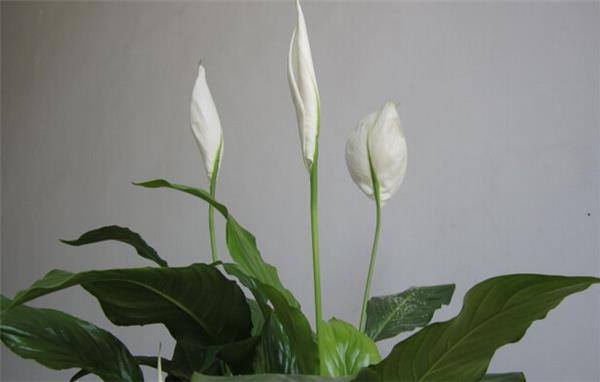
4. Potting soil: Potting soil is the foundation of cultivation. During the growing period, the peace lily should be kept with moist potting soil, but water accumulation in the pot must be avoided. Long-term water accumulation in the potting soil will cause root rot and yellowing and withering of the plant. If this happens, take the plant out of the pot, dry it, and then put it back in.
How to Handle Common Problems During Cultivation
1. Improper light: The peace lily needs relatively good light in winter and early spring. When the light is strong, grow it under semi-shade or scattered light. In winter, it is best to provide sufficient light, which not only helps the leaves stay dark green but also helps it overwinter.
2. Humidity: The peace lily needs relatively high growing humidity. If the air is too dry, the leaves will wilt.
3. Improper fertilizing: Fertilizer should be applied lightly, not as a concentrated or raw fertilizer, and after applying solid fertilizer, water once with clear water. It is best to use dilute fertilizer water instead of clear water for watering, as this generally will not cause fertilizer burn, and the plant will grow vigorously.
4. Unsuitable temperature: This mostly occurs when the temperature is below 5°C or above 35°C.
5. Pests: If harmful mites cause damage, the leaves will show adverse symptoms such as wilting, faded gloss and yellow withering. Mite-specific pesticides can be sprayed for control, such as dicofol, hexythiazox, pyridaben, etc.
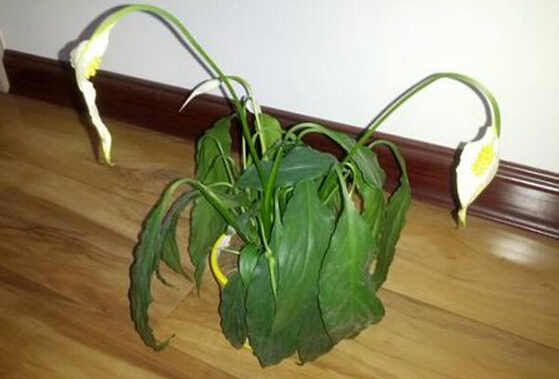
Because people traditionally feel that the peace lily carries an auspicious meaning, it was specially given the elegant name "peace lily" based on the appearance of its flowers. The peace lily is beautiful in both flower and leaf, light and graceful, and is deeply favored by people, often used for indoor beautification and decoration. So what benefits does the peace lily have for us?
First, the peace lily can filter benzene, trichloroethylene and formaldehyde from the air, which is of great help to human health, especially for newly renovated homes.
Second, the peace lily can suppress waste gases exhaled by the human body, prevent dryness of the nasal mucosa, and greatly reduce the possibility of illness. This help to people's bodies can be said to be direct and also very great, which is also an important reason why many people choose to grow it.
Hydroponic plants are not only clean and hygienic, but the transparent growing containers also increase the ornamental value of the plants. In terms of water and light, the peace lily is like most plants. We know that many plants must grow in sunlight and receive photosynthesis. The peace lily is a shade-tolerant and high-temperature-tolerant plant, with the characteristics of liking high temperatures and high humidity and tolerating shade; its water requirements are very delicate, and the amount of water, the number of days between water changes and the water temperature all have rules. So although it is just a small plant, growing it well is not a very simple matter. So, do you know how the peace lily is propagated?
Propagation Methods for the Peace Lily
First, division method
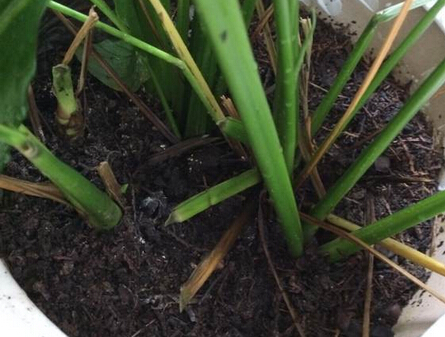
Generally speaking, the peace lily will not sprout before it is absolutely mature, so the growing point is often artificially damaged. Each plant can produce 3-5 buds. When the new buds grow to about 15 cm, cut them apart, then insert them into coarse sand and wait for them to take root. Note here that when cutting, part of the stem must be included, then apply wood ash to the wound to prevent rot.
Second, seed sowing method
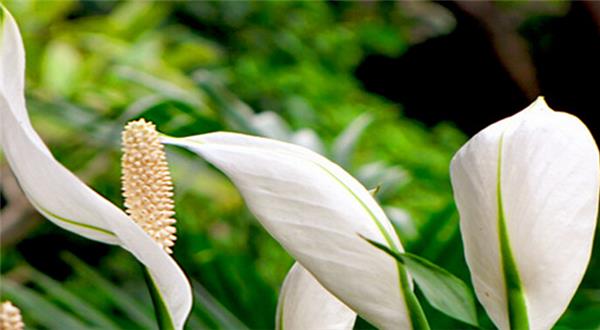
This is a method often used at cultivation bases, but it has a difficulty: it requires artificial pollination, and many people have problems here, so special explanation is needed: the white thin sheet-like object is not the flower; the protruding object in the middle is the flower, so the flower is relatively small. When the flower has pollen, use a clean brush to smear it on the flower to complete pollination.
There is also another one: tissue culture method
Although the tissue culture method has many advantages, up to now, the tissue culture method has not been widely used domestically and is only used in experiments. Generally, in the tissue culture method, plants are first grown in plastic pots, and after they grow 4-5 leaves, they are divided and transplanted, then after 3-4 rounds of repotting and transplanting, when the seedlings are 30 cm tall, they are planted according to conventional methods.
After reading these detailed descriptions of growing methods, why not hurry and check whether your peace lily is healthy and whether it has been grown according to the requirements? I hope the editor's introduction can help everyone better understand how to grow a peace lily.
First, division method
Generally speaking, the peace lily will not sprout before it is absolutely mature, so the growing point is often artificially damaged. Each plant can produce 3-5 buds. When the new buds grow to about 15 cm, cut them apart, then insert them into coarse sand and wait for them to take root. Note here that when cutting, part of the stem must be included, then apply wood ash to the wound to prevent rot.
Second, seed sowing method
This is a method often used at cultivation bases, but it has a difficulty: it requires artificial pollination, and many people have problems here, so special explanation is needed: the white thin sheet-like object is not the flower; the protruding object in the middle is the flower, so the flower is relatively small. When the flower has pollen, use a clean brush to smear it on the flower to complete pollination.
There is also another one: tissue culture method
Although the tissue culture method has many advantages, up to now, the tissue culture method has not been widely used domestically and is only used in experiments. Generally, in the tissue culture method, plants are first grown in plastic pots, and after they grow 4-5 leaves, they are divided and transplanted, then after 3-4 rounds of repotting and transplanting, when the seedlings are 30 cm tall, they are planted according to conventional methods.
After reading these detailed descriptions of growing methods, why not hurry and check whether your peace lily is healthy and whether it has been grown according to the requirements? I hope the editor's introduction can help everyone better understand how to grow a peace lily.