Is hyacinth poisonous? What are the cultivation methods for hyacinth?
Hyacinths come in rich colors, including red, blue, white and many others. Their flower language is: sorrowful love, eternal remembrance, and so on. They are loved by many people, but the claim that hyacinths are poisonous makes some of their admirers hesitate. So, is hyacinth poisonous?
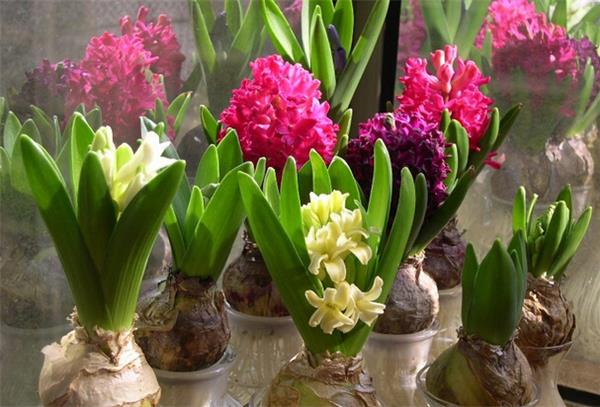
Poisonous.
Many people like hyacinths not only for their gorgeous appearance, but even more for their captivating fragrance. Hyacinths originate from the eastern Mediterranean coast of southern Europe and the region of the Anatolian Peninsula, and are the most fragrant variety among all the flowering plants discovered so far. The fragrance of hyacinth is fresh and elegant, not heavy or showy, and very refreshing!
The hyacinth bulb is toxic. If swallowed by mistake, it can cause symptoms such as dizziness, stomach cramps and diarrhea, so children and animals must be strictly kept from eating it by mistake. In addition, it is advisable not to grow them in the bedroom, because the fragrance of hyacinth flowers may cause insomnia. Although the fragrance of hyacinth flowers is not toxic, placing them in a room is not very good for the human body, because the fragrance of plants is generally made up of aromatic chemical substances such as ketones or phenols. In small amounts taken into the body, the circulatory system can metabolize them out of the body, but if taken in over the long term, it will increase the burden on the internal organs and is not good for the human body. However, as long as you pay a little attention in daily life, there is no danger, so there is no need to keep hyacinths at a distance.
From the flower language of the hyacinth, one can see how much people adore it. The flower language and symbolic meaning of the hyacinth: as long as you ignite the fire of life, you can share a rich life. These words exactly express the beauty and inner meaning of the hyacinth. Even if the hyacinth is poisonous, you can still grow a beautiful hyacinth and let life burn!
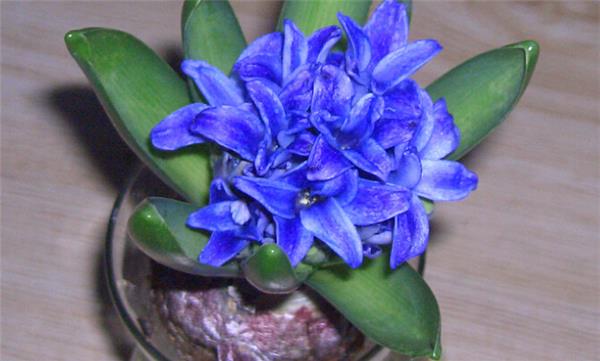
Hyacinth is a perennial herbaceous plant in the genus Hyacinthus of the family Hyacinthaceae, with a bulb. It originally belonged to the Liliaceae family, but has now been elevated to the type genus of the new family Hyacinthaceae, and the hyacinth has also been moved from the order Liliales to the newly established order Asparagales. So, what are the cultivation methods for hyacinth?
Cultivation methods for hyacinth:
Hyacinth is sun-loving and cold-tolerant by nature, and is suited to growing in a cool, moist environment and in loose, fertile sandy soil; it dislikes waterlogging. Normally it should be kept slightly moist, and excessive moisture or waterlogging should be avoided; in this way, by March of the following year it will generally bloom. The potting method is basically the same as for planting in the ground: use loose soil, put 1-4 bulbs per pot, apply enough base fertilizer, and place it in a sunny spot outdoors.
Bulb selection: the nutrients needed for the hyacinth to bloom are primarily supplied by the nutrients stored in the scales and leaves of the bulb. Only by choosing bulbs that have undamaged skins, fleshy scales that are not excessively shriveled, and that are fairly firm, very heavy and plump, will they produce full and splendid flowers.
Open-field cultivation: it is best carried out from October to November. Choose well-drained soil and apply enough base fertilizer before planting. For field cultivation, continuous cropping should be avoided. Generally no other management is needed before flowering. After flowering, if you do not intend to collect seeds, the flower stem should be cut off to promote bulb development, and the cut should be made as high up on the flower stem as possible. In early June the bulbs can be dug out, spread out, graded and stored in a cold store; in summer the temperature should not exceed 28°C.
Pot cultivation: in late autumn, select well-grown hyacinth bulbs from the market and plant them in loose potting soil. Use a mixture of loam, leaf mold and fine sand as the growing medium.
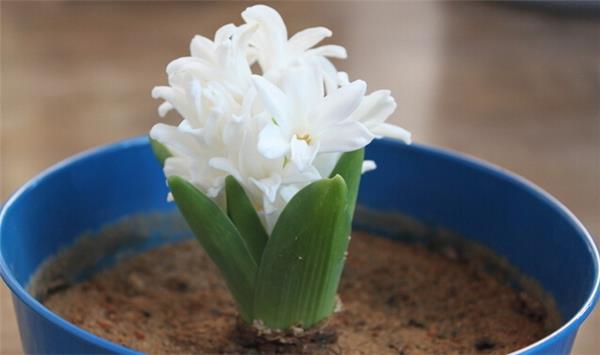
When planting, note: the upper end of the bulb should be left exposed above the potting soil. After planting, it should be placed in a sunny spot, and the potting soil should be kept moist. The temperature required for forcing blooms is 5-10°C.
Water cultivation: you can choose a glass vessel whose mouth is slightly smaller than the bulb, place the bulb on the mouth of the vessel, and add water to about 1 cm from the base of the bulb. You can also do it like narcissus, planting several bulbs together in a shallow basin for hydroponic culture.
For water-grown hyacinths, in December you can place the bulbs in a wide-mouthed glass jar with a grid, and add a little charcoal to help prevent decay and sterilize. The bulb only needs to be immersed up to its base. Then place it in a dark place and cover the jar with black cloth. After sprouting in this completely dark environment for about 20 days or more, put it outdoors to receive sunlight, initially for 1-2 hours a day, then gradually increasing to 7-8 hours. In most cases, in good weather, it will bloom by the Spring Festival. After a hyacinth has flowered, if the bulb is stored well, it can still bloom the following year, but the flowers will be smaller and the flower scape will also shrivel; this is mainly because the bulb has already begun to degenerate. Therefore, for hyacinth cultivation it is better to buy new bulbs after one year of planting.
Forcing cultivation: after the middle of the month, treat the bulbs at a low temperature of 8°C for 70-75 days, then pot them in early October and cultivate them in a greenhouse, so that they can be made to bloom at the end of the year. Because the forcing sensitivity of cultivated varieties varies greatly, varieties suitable for forcing should be chosen when carrying out forcing cultivation.
What is the flower language of the hyacinth, is the hyacinth fragrance poisonous, and how long is the hyacinth flowering period? The hyacinth plant is short and neat, with a dignified inflorescence, rich flower colors and beautiful flower form. It is one of the famous bulbous flowers that bloom in early spring, and is also an important type of potted flower. So, what is the flower language of the hyacinth?
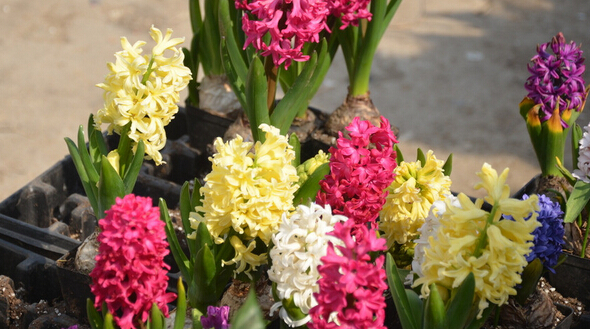
Hyacinth flower language
Purple hyacinth: sad, melancholy love. Apology, regret. (If you receive my love, you will surely be happy)
Light purple hyacinth: gentle temperament, romantic feelings. Sadness.
White hyacinth: secret love. Pure and quiet, or a love one dares not express.
Red hyacinth: thank you, a love that moves people (your love fills my heart).
Peach-red hyacinth: represents passion.
Pink hyacinth: admiration, romance.
Yellow hyacinth: with you I am very happy.
Blue hyacinth: noble and intense, constancy, chastity, as happy as seeing you.
Dark blue hyacinth: somewhat melancholy because of love.
Light green hyacinth: if you want to have no secrets, you must first have a kind heart.
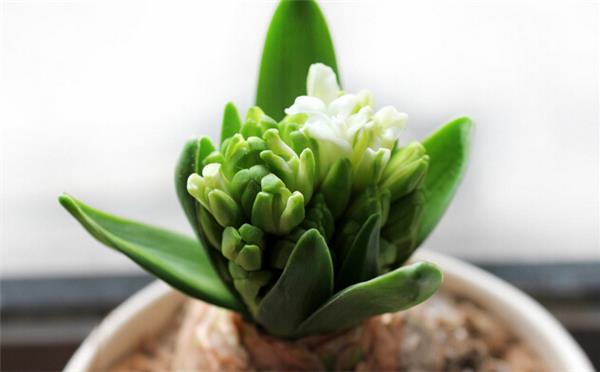
Many flowers common in our daily lives, although they purify the air and beautify the environment, some individual flowers, if grown at home, can become a source of illness. Therefore, before growing flowers we should clearly understand the habits of the flowers, so as not to bring unnecessary harm to family members. The above is the introduction of relevant information about hyacinth that the editor has provided for everyone, and I hope it can help you.
With a dignified inflorescence, rich flower colors and beautiful flower form, it is one of the famous bulbous flowers that bloom in early spring, and is also an important type of potted flower. So, what is the flower language of the hyacinth?
Hyacinth flower language
Purple hyacinth: sad, melancholy love. Apology, regret. (If you receive my love, you will surely be happy)
Light purple hyacinth: gentle temperament, romantic feelings. Sadness.
White hyacinth: secret love. Pure and quiet, or a love one dares not express.
Red hyacinth: thank you, a love that moves people (your love fills my heart).
Peach-red hyacinth: represents passion.
Pink hyacinth: admiration, romance.
Yellow hyacinth: with you I am very happy.
Blue hyacinth: noble and intense, constancy, chastity, as happy as seeing you.
Dark blue hyacinth: somewhat melancholy because of love.
Light green hyacinth: if you want to have no secrets, you must first have a kind heart.
Many flowers common in our daily lives, although they purify the air and beautify the environment, some individual flowers, if grown at home, can become a source of illness. Therefore, before growing flowers we should clearly understand the habits of the flowers, so as not to bring unnecessary harm to family members. The above is the introduction of relevant information about hyacinth that the editor has provided for everyone, and I hope it can help you.