How to grow Epiphyllum oxypetalum? A detailed guide to growing Epiphyllum oxypetalum
In fact, many people who know about it are aware that Epiphyllum oxypetalum has a very high survival rate from cuttings. Let us take a look at how to grow Epiphyllum oxypetalum!
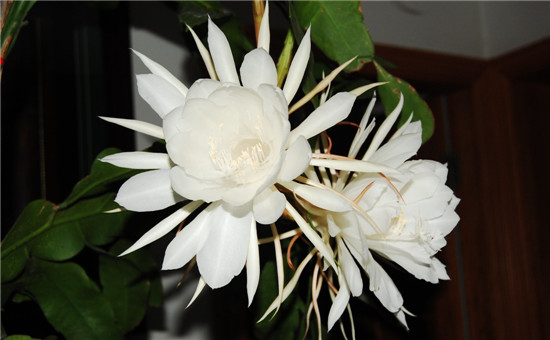
A fleeting Epiphyllum bloom, only for Weituo: there is an ancient story here, and it is about Epiphyllum oxypetalum. Since ancient times, Epiphyllum oxypetalum has been given an almost magical aura. A flower that opens only at night, its blossoms are extremely brilliant and dazzling, but unfortunately people can only see such beautiful flowers in that single moment. For many people, Epiphyllum oxypetalum is beautiful, as distant as an unrealistic dream, and because of this, the flower is all the more splendid and radiant. People like to plant it indoors for ornamental viewing. However, Epiphyllum oxypetalum is not so easy to cultivate.
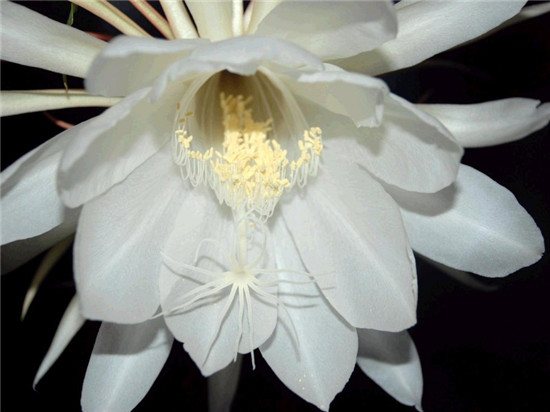
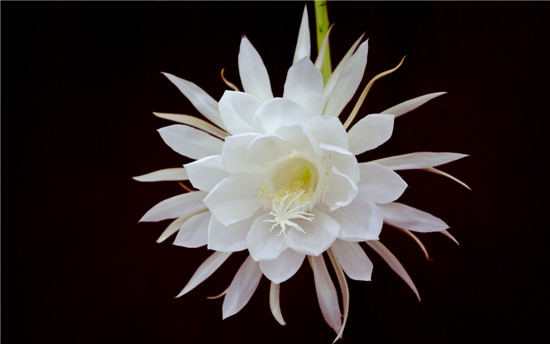
Epiphyllum oxypetalum is also called "Beauty Under the Moon." It is native to Mexico and other places, and is a beautiful ornamental flower. However, its flowering period is especially short, opening only at midnight, and just 4 hours pass from blooming to withering. It is a flower that likes warm, moist soil, prefers a semi-shaded environment, is not drought-tolerant but can tolerate high temperatures. The secrets of growing Epiphyllum oxypetalum are as follows:
1. Planting
Generally, a growing medium made by mixing garden soil and leaf mold, then mixed with a small amount of fine sand, is the most suitable soil for Epiphyllum oxypetalum. Repot every 1 year, preferably in early spring. When repotting, remove decayed roots, remove part of the old soil, and add new nutrient-rich soil.
2. Fertilizing
When fertilizing, generally do it once every ten days to half a month, using diluted fertilizer as the standard. A small amount of rice vinegar can be added to the fertilizer, which will produce even more pleasing growth. During the flowering period, fertilization should be increased, and a 0.2% solution of potassium dihydrogen phosphate can be used for mixing. Fertilize after the flowers fade as well, to prepare for flowering the next year.
3. Watering
"Water when dry, let dry between waterings" is an important principle in growing Epiphyllum oxypetalum, and there must never be standing water in the pot. In dry, hot summer weather, clear water can be sprayed on the leaf surfaces. Too much standing water can cause root rot, but this method ensures there is no standing water while also supplementing air humidity, which benefits growth and flowering the next year.
4. Temperature and light
Because Epiphyllum oxypetalum likes a semi-shaded environment, attention should be paid to sun protection in spring and summer. Keep it indoors and pay attention to light intensity; never expose it to full sun. In addition, Epiphyllum oxypetalum should be placed in a ventilated spot, such as near a window. Room temperature should be kept at around 10°C, and soil moisture should be controlled, neither too dry nor too wet.
5. Propagation
When propagating Epiphyllum oxypetalum, sowing or cuttings are often used. The sowing method grows more slowly and delays the flowering period, so cuttings are often used. The simple and easy cutting method can greatly shorten the time to flowering, but attention must be paid to selecting the cuttings. Generally, full, robust stems and leaves are best; those that are too old or too tender are not suitable. Cut the cuttings into small sections, let them dry in a ventilated place, and after the cut ends have dried, insert them into soil. The soil must be kept loose and moist, with the temperature controlled at 18-25°C. After roots form, move them into pots to grow.
6. Adjusting the flowering period
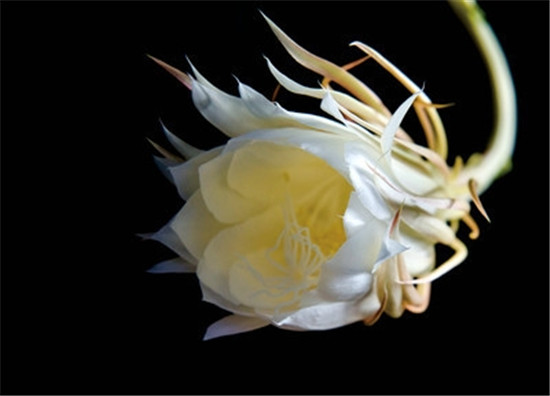
Although Epiphyllum oxypetalum is beautiful, unfortunately it always blooms at night, which is why there is the saying "a fleeting Epiphyllum bloom, only for Weituo." Moreover, Epiphyllum oxypetalum does not open until after 9 p.m. and withers easily. So is there any way to change this situation?
Steps for propagating Epiphyllum oxypetalum by cuttings:
1. Choose a healthy leaf, or select a robust, thick, strong stem 1-2 years old as the cutting, preferably a slightly longer one, and cut it off with scissors.
2. Cut the leaf into several sections as needed, 10-15 cm long.
3. Place it where the sun will not shine directly on it and wait for the cut area (the cut end) to dry, for 2-3 days.
4. After the cut end is dry, insert it into a clay pot filled with vermiculite or plain sandy soil (or find soil that is not too wet), place it in a shaded area, keep it at 18-24°C, and bury the cut end 1-2 cm into the soil.
5. Do not water often; let the soil stay slightly dry. If it gets very dry, water a little. Spray a small amount of water every 3-4 days, and keep the cutting medium semi-moist. After insertion, roots form in about 4 weeks, and it can be moved to a place with weak light. Be careful to spray water. When the roots are 3-4 cm long, pot it up.
6. Wait 2-3 weeks, and it should be able to grow roots.
Note: Winter is the dormant period for Epiphyllum oxypetalum. Watering should be controlled, fertilizing should be stopped, and the potting soil should be kept slightly dry. Sufficient light is the primary condition for promoting abundant flowering in Epiphyllum oxypetalum, so in a greenhouse, light should be sufficient throughout the year; simply avoid direct strong light around midday in summer.
Next, here are some tips to encourage stems to grow as early as possible:
1. Selection of cutting leaves. Personally, I think there is some skill to this. To get stems to emerge early, from my experiments, I think it is better to use old leaves more than 2 years old, preferably leaves whose veins are not obvious and whose growth points have closed (this is relatively important). The leaves should not be chosen too small. When taking cuttings, the part buried in the soil can have a larger wound. On the veins at the base, I will carve a few extra cuts to increase the cutting surface, encourage more roots, and promote more tissue formation.
2. The angle when taking cuttings. If you want stems to emerge early and increase the odds, you can "insert shallowly" and "insert at an angle" when taking cuttings. Try not to insert too deeply. My conclusion is that shallow insertion and angled insertion, combined with score wounds on the veins, work well because when inserted shallowly, the soil temperature is relatively high and more moisture is felt, making it easier for the wound to heal and grow roots and fleshy tissue, and it is very easy for stems to shoot out. Everyone can give it a try.
3. Reasonable use: rooting powder. If conditions allow, soak the branches before taking cuttings, or during the cutting process water with rooting powder mixed in water. The effect is still quite good: roots grow quickly, roots are strong, and tissue forms easily.
4. The last point, the cruelest method. I guess beginners cherish leaves like gold, so please weigh it for yourself. It is said to be cruel, but the effect is quite good. As mentioned earlier, for cuttings it is better to use those old leaves, especially those whose growth points have closed. To put it plainly, the cutting leaves are relatively old, and there are no longer growth points on the leaves from which new buds can emerge. In this situation, with no growth points on the leaves and the root system gradually developing, using the plant's stress resistance, if it wants to send out leaves but cannot, it is bound to shoot out stems and form new growth points. This is the result we want.
The above is all the content I have summarized for everyone on what the ways to grow Epiphyllum oxypetalum are. I hope this article can help everyone. Please also continue to follow us.