What to do when Anthurium leaves turn yellow? Here's how to handle it correctly
Anthurium is a perennial evergreen herbaceous flower, with unique blooms, bright and gorgeous colors, rich in variety, and each flower has a long blooming period, making it very ornamental. Next, let's take a look at how yellowing Anthurium leaves should be handled.
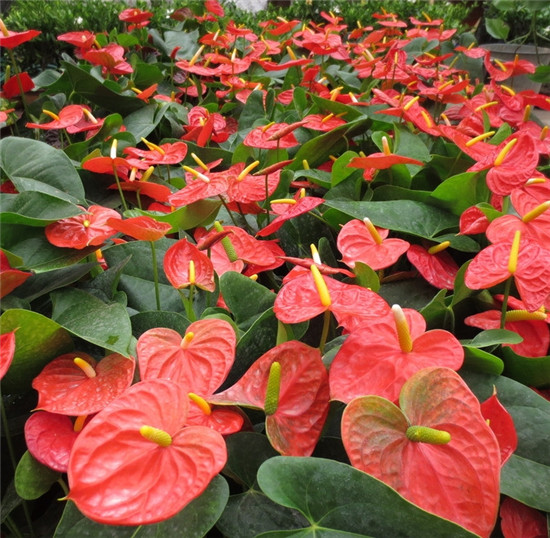
Before understanding what to do when Anthurium leaves turn yellow, let's first introduce Anthurium. Anthurium is a perennial evergreen herbaceous flower. Its plant height is generally 50-80cm, varying by variety. It has fleshy roots and no stem; the leaves emerge from the rhizome, have long petioles, are solitary, heart-shaped, bright green, with sunken veins.
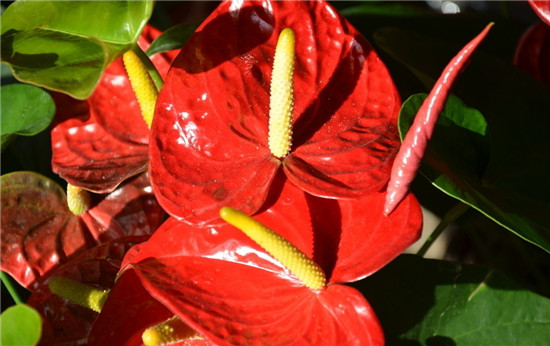
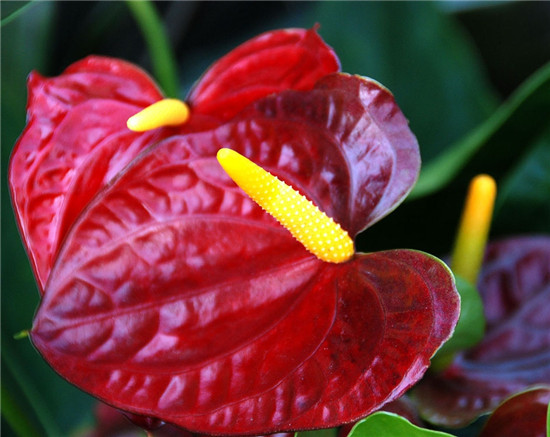
The Anthurium flower is axillary, with a waxy spathe, perfectly round to ovate, bright red, orange-red flesh color, or white, with a spadix, cylindrical, upright, blooming in all four seasons. The leaves and stems have a peculiar shape; the leaves are dark green, heart-shaped, thick and tough, and the spadix is long and pointed, in bright red, white, or green, surrounded by a red, pink, or white spathe, all of which are toxic.
Before understanding what to do when Anthurium leaves turn yellow, you first need to figure out why your Anthurium's leaves are turning yellow. Generally, yellowing Anthurium leaves are caused by the following reasons.
1. Metabolism
If you notice Anthurium leaves turning yellow, pay attention to the condition of the other leaves. If the leaves are bright tender yellow-green while the flowers are growing well, it means new leaves are growing, and yellowing and dropping of old leaves is a normal phenomenon.
2. Unsuitable soil
In most northern regions, the medium and water contain more salt and alkali. Because the medium lacks the soluble iron that the plant needs to absorb, the leaves will gradually lose green and turn yellow. Solution: Treat the medium and watering water with oxalic acid, etc.
3. Overwatering
When the new leaves of Anthurium turn yellow while the old leaves remain normal, this situation is generally caused by watering too much and too frequently, which keeps the medium in the pot overly wet for a long time, or even waterlogged, causing some fibrous roots to rot, hindering normal respiration and nutrient absorption, and causing the leaves to gradually turn yellow and fall off. Solution: Water normally.
4. Dry air
In winter, when the indoor air for growing flowers is too dry, leaf tips often dry up and turn yellow, or leaf margins scorch, or leaves develop scorched spots and curled edges. Solution: According to the growth characteristics of Anthurium, appropriately increase air humidity.
5. Excessive shading
If Anthurium is placed in a shaded area or a place with insufficient light for a long time, its growth will weaken, the leaves will be thin and yellow, and it will not bloom or bloom very little. Solution: According to the growth characteristics of Anthurium, appropriately increase light intensity.
6. Unsuitable temperature
If the indoor temperature is too low in winter, the leaves will turn yellow; if the room temperature is too high, the plant transpires excessively, and the roots cannot supply enough water and nutrients, which will also make the leaves turn yellow. Solution: Keep the greenhouse temperature relatively stable.
7. Uneven fertilizing
Too little fertilizing, or not repotting or changing the soil for a long time, leads to a lack of nitrogen and other nutrients in the soil, causing weak branches and leaves, and thin, yellow leaves. In addition, excessive fertilizing can also cause new leaves to be thick and uneven, while old leaves dry at the tips, scorch yellow, and fall off. At this point, fertilizing should be stopped immediately, watering increased, and some old soil removed and replaced with new potting soil for normal management.
Now that we understand what to do when Anthurium leaves turn yellow, I will finally teach everyone how to pair Anthurium. Anthurium combines the three bright colors of red, green, and yellow in one, rich but not monotonous, colorful but not cluttered. Use the vibrant Anthurium to set off and echo other green plants.
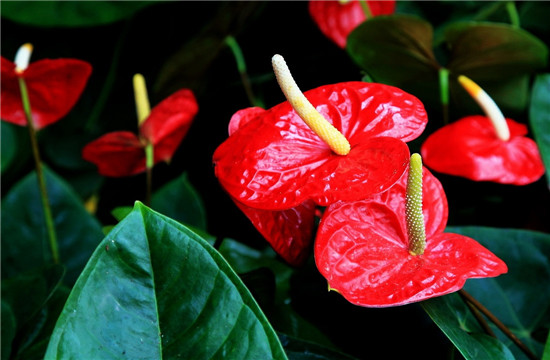
In this way, you can create a tranquil space, letting you comfortably spend a moment of quiet time and feel the various flavors you long for most in life. Indoors alone, simply using friendly wooden furniture, wallpaper, fabric, tableware, and green plants carefully matched together, you can complete a pleasant picture that rivals outdoor pastoral life.
The above is all the content I have summarized for everyone on how yellowing Anthurium leaves should be handled. I hope this article can help everyone. Please also continue to follow us.