When Does the Epiphyllum Bloom? A Detailed Guide to Its Blooming Season and Time
Legend has it that the epiphyllum blooms only once a year, but in real life we find plenty of epiphyllums in full bloom, so when exactly does the epiphyllum bloom? Let's take a look together!
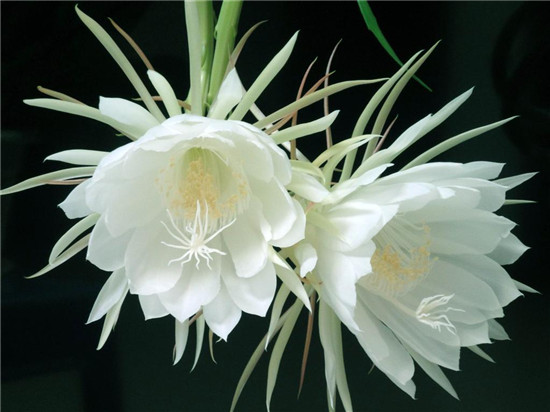
The epiphyllum belongs to the cactus family and is an epiphytic plant. It likes to grow in warm, humid, and semi-shaded environments and requires good soil. It is not tolerant of frost and should not be exposed to strong direct sunlight. It generally blooms in the evening during summer and autumn. The flowers are mostly white, funnel-shaped, and fragrant. People say the epiphyllum blooms only briefly, but that is not actually the case. In hot, dry weather, the epiphyllum's blooming period can last one to two hours, while in the cooler autumn, the bloom can stay open even longer.
The saying that the epiphyllum blooms only briefly exists because its blooming period really is a bit shorter than that of other flowers. After the epiphyllum blooms, it usually withers within 3 to 4 hours, because when it is in full bloom all its petals are open and it loses water very easily. When water is insufficient, the petals close up and the flower withers very quickly.
The epiphyllum's blooming season is generally from June to October, and the blooming time is generally after 8-9 PM. The full bloom lasts only 3-4 hours, which is very brief. When the epiphyllum opens, the floral tube slowly tilts upward, gradually opening its purple outer covering, and then the large, snow-white flower made up of more than 20 petals opens.
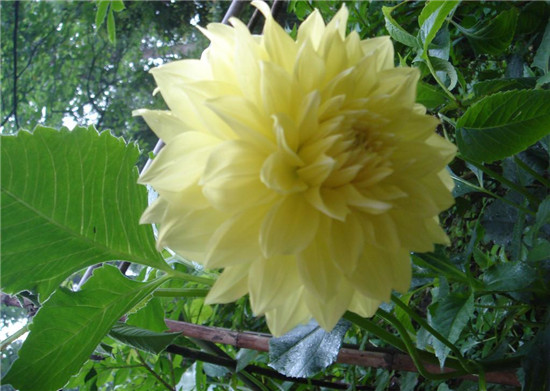
One night I finally waited for the epiphyllum to bloom. It was very beautiful, and under the light it looked even more dazzling and radiant, with a faint fragrance that was intoxicating. Unfortunately, it closed not long after it bloomed, which is why many people call it "a fleeting epiphyllum bloom." But now some people have come up with a "day-night reversal" method to make it bloom during the day, so its beauty lasts longer and more people can admire it.
The epiphyllum also exerts its innate effects in pharmacology, which can mainly be divided into clearing heat and relieving cough, preventing and treating pulmonary tuberculosis and asthma, treating palpitations and insomnia, heart and stomach qi pain, purifying the blood and detoxifying, and preventing and treating high blood pressure and high blood lipids. From this it can be seen that the medicinal value of the epiphyllum really should not be underestimated, but a small number of people should be careful: those with a cold stomach, for example, should try not to drink beverages brewed from fresh epiphyllum.
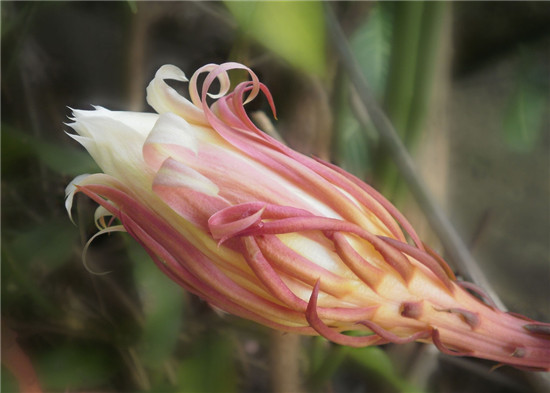
The epiphyllum can absorb carbon dioxide and release oxygen at night. Although ordinary flowers and plants can purify the air, they only do so during the day; when night comes, they become like the human body, absorbing oxygen and exhaling carbon dioxide. So if too many such flowers and plants are placed indoors, they will compete with people for oxygen, affecting people's health. The epiphyllum is exactly the opposite. It is a common plant with CAM metabolism. It closes the stomata on the underside of its leaves during the day, and at night, after the surrounding air temperature drops to an appropriate level, it opens the stomata on the underside of its leaves, releasing oxygen and absorbing carbon dioxide.
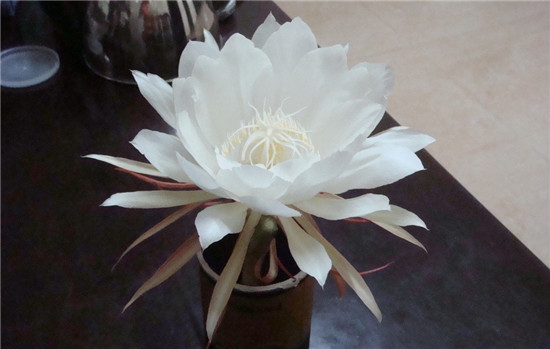
The epiphyllum can increase the negative ion content indoors. It is beautiful and noble when in bloom, with a rich, delicate fragrance, and has always been a beautiful flower favored by people. Not only that, it can release negative ions, making the indoor air fresh and pleasant. Negative ions can be called the vitamins of the air. When the negative ion content in a room decreases, people feel stuffy and suffocated. So the epiphyllum, which can increase the concentration of negative ions in the air, is truly a rare, beautiful, and beneficial flower.
The above is the full content of my summary of the epiphyllum's blooming season and time. I hope this article can help everyone. Please also continue to follow us.