How to Grow Anthurium? Detailed Guide to Cultivation Methods and Precautions
Anthurium, also known as flamingo flower and painter's palette, is native to the tropical rainforest regions of South America and can be propagated by sowing seeds, division and other methods. Let's take a look at the cultivation methods and precautions for anthurium.
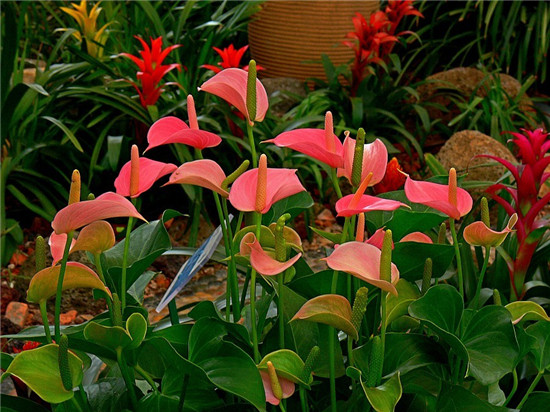
When growing anthurium at home, pay attention to the following aspects:
I. Humidity
Normal growth of anthurium requires about 70% air humidity, which is generally difficult to achieve in ordinary home cultivation. You can wipe the leaves with a clean damp towel several times a day, or spray water around the plant regularly to increase air humidity. (But never sprinkle water on the flowers, as this may affect their ornamental quality.)
II. Watering and Fertilizing
Under normal growth conditions, water the potting soil weekly, allowing it to dry out and become moist alternately. Generally follow the principle of not watering until the soil surface is dry, and watering thoroughly when you do. In spring, autumn and winter, the frequency and amount of watering can be reduced appropriately. Every half month, apply a 7-8% special nutrient solution or fertilizer water diluted 500 times along with watering.
III. Pruning
Generally, during the growth of anthurium, the petioles at the base gradually degenerate, and when the stipules dry out they can be cut off promptly. When the pedicel turns yellow after flowering, it should also be cut off as soon as possible, leaving a 2 cm protective stub from the base.
IV. Temperature
When growing anthurium at home, keep the temperature as stable as possible. The optimum growth temperature for anthurium is 16-24°C, and the minimum temperature should be kept above 12°C. Ordinary households with heating facilities can easily meet this condition. But at the same time, be careful not to place the pot on top of a radiator or too close to it. When the summer temperature exceeds 30°C, move the plant to a relatively north-facing room with good ventilation, and spray water around the plant to cool it down.
V. Light
Normal growth of anthurium requires sufficient scattered light. For home cultivation, generally pay attention to the following: in summer, avoid direct strong light on the leaves and flowers; in autumn and winter, when conditions permit, move the plant near a window to increase light exposure. Also rotate the plant regularly to ensure even light exposure and promote a full, rounded crown shape.
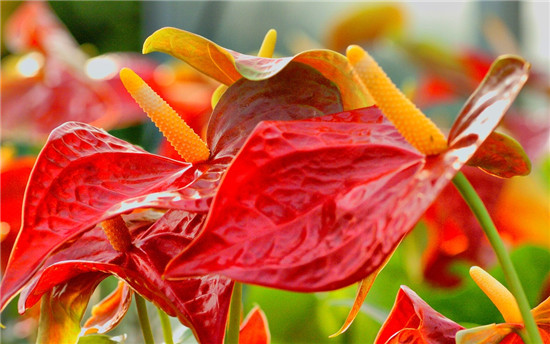
In addition to the above conditions, to learn the cultivation methods and precautions for anthurium, you need to understand the growing medium suitable for anthurium. The growing medium must have strong water and fertilizer retention, good permeability, no waterlogging, no toxic substances, and the ability to hold the plant firmly in place. Before planting, the medium must also be thoroughly sterilized to kill pests and diseases and keep the plant growing normally.
Many friends will find that although they have taken very careful care of their anthurium, it still develops many problems. A common one is that anthurium leaves rot easily. How should rotting anthurium leaves be handled? Generally speaking, the cause of rotting anthurium leaves is excessive humidity; high temperatures with poor ventilation make fungal diseases more likely, mostly fungal infections. Using fungicides can achieve good control results, and combined with careful water and fertilizer management, diseased plants can generally be restored to healthy growth.
Anthurium is a tropical flower that prefers shade and dislikes strong sun, prefers moisture and dislikes drought, and likes high temperatures but fears cold. When caring for it at home, pay attention to its habits: do not expose it to scorching sun, but do not leave it in a dim indoor spot for a long time either. It should be placed in a spot with scattered light and given some sunlight in the morning and evening. Generally, peat is used as the growing medium for anthurium, as it is loose and breathable. When the temperature is suitable, the potting soil should be kept moist, or water should be sprayed on the leaves regularly to increase air humidity. Now that the weather is turning cooler, if the temperature cannot be kept above 12°C in winter, watering should be controlled to improve the cold resistance of the anthurium. The minimum temperature must not fall below 8°C, otherwise it is very easy for the plant to be damaged by cold.
Precautions for Growing Anthurium
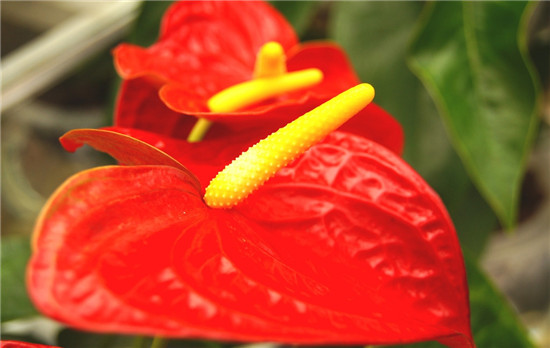
Anthurium needs attention to moisture retention. The anthurium has an elegant posture, with leaves growing diagonally above the petioles; viewed from the side, the plant shape is cup-like, and the spathes are fiery red and exceptionally vivid. The key to cultivating anthurium is to master humidity. If its growing-period humidity can be correctly controlled, it will naturally grow robustly, develop, bloom and set fruit.
So-called humidity control does not simply mean adding excessive water to the growing medium, but rather paying attention to maintaining humidity in the air environment. From spring to autumn, do not merely water the roots; more importantly, spray water on the leaves, and also spray inside the room where the flowers are grown, so that the leaves retain sufficient moisture.
In winter, when the potting soil shows slight dryness, spray the leaves 2-3 times a week. If the room temperature is low at night, cover the whole plant with plastic film to keep it warm and moist. In addition, the roots of anthurium also like moisture, so placing 20% water-absorbing stone or water-retaining moss in the growing soil around the roots can promote normal root growth and also achieve good results for the development of the whole plant.
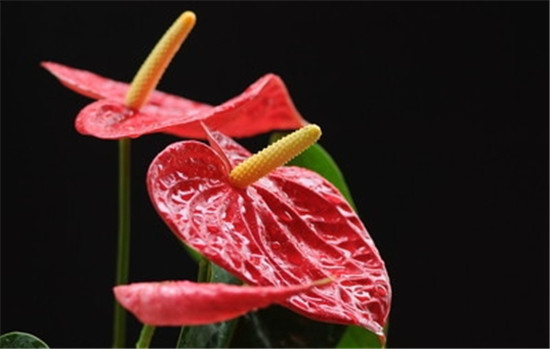
Strengthen management. When applying liquid fertilizer as a top dressing, mix it in a ratio of nitrogen, phosphorus and potassium of 3:3:7. From April to October, dilute the fertilizer 500 times and apply it several times every two months. The optimum temperature during the growth period of anthurium is 25-30°C. During overwintering, the minimum temperature should be kept above 15°C at least.
The above is the full content of the cultivation methods and precautions for anthurium that I have summarized for everyone. I hope this article can help you. Please also continue to follow us.