What are the correct methods for caring for Phalaenopsis orchids?
Phalaenopsis is a plant suitable for growing indoors. Before beginners start growing Phalaenopsis, they should be clear about which practices are bad for its growth. Let's take a look together!
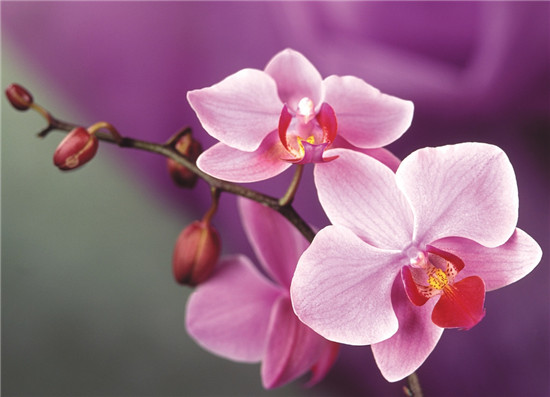
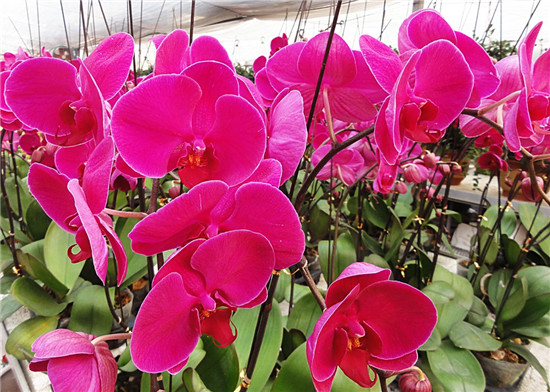
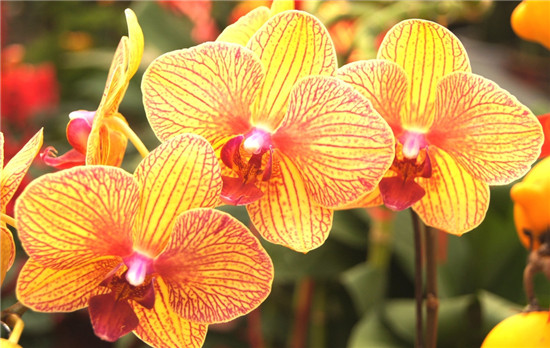
The scientific name of Phalaenopsis means "orchid like a butterfly" in its original Greek sense. It can survive by absorbing nutrients from the air and is classified among the epiphytic orchids; it can be said to be a major group within the tropical orchids. Its plant form is very unusual: it has neither stolons nor pseudobulbs. Each plant grows only a few broad leaves that look like fat spoons, arranged in overlapping layers above the base. Thick white aerial roots are exposed around the leaves, and some cling to the outer wall of the pot, giving it a very natural, wild charm. When the Chinese New Year season arrives, a flower stalk up to a full chi in length emerges from the leaf axil, and then the flowers open one after another. Each flower has 5 petals, with the lip embedded in the center. The flower colors are vivid and eye-catching, including pure white, goose yellow, and crimson red, as well as pale purple, orange-red, and azure blue. Many varieties combine two or three colors; some look as if patterned stripes have been embroidered on them, while others look as if they have been evenly sprayed with colored dots. Each stalk bears seven or eight flowers, and some as many as twelve or thirteen, and can be enjoyed in bloom for sixty to seventy days in a row.
The genus Phalaenopsis is a famous type of cut flower. The whole genus has more than 50 species. Phalaenopsis is a monopodial epiphytic orchid with a short stem, large leaves, and one to several arched flower stems. The flowers are large and are named for their butterfly-like shape. Its flower posture is graceful and its colors are gorgeous, making it a treasure among tropical orchids, with the reputation of "queen of orchids."
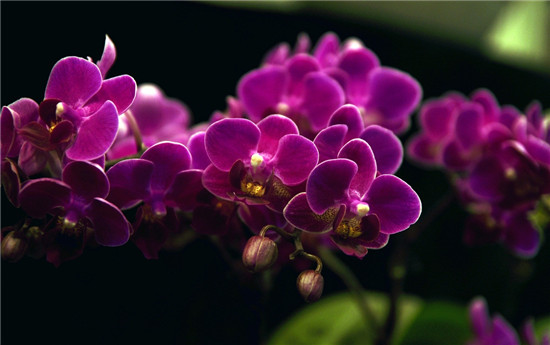
Phalaenopsis has a graceful flower posture and elegant, diverse colors, and is named for its butterfly-like flower shape. It is widely cultivated in countries around the world. Although it belongs to the epiphytic orchids, it has no pseudobulbs, only a very short stem at the base. The leaves are broad and thick, oblong, and can reach more than 50 cm. Some varieties have beautiful pale silver mottling on the leaves, with purple underneath. The flower stalk emerges from the leaf axil, is slightly curved, and varies in length; it bears from several flowers to several hundred, shaped like butterflies, with oblong sepals and a lip whose tip is three-lobed. The flower colors are extremely varied, and it can bloom for more than a month. Abroad it is mostly used as a cut flower and is a high-end type among Western orchids. The vast majority of Phalaenopsis orchids have no scent, and only a few are fragrant; we call these fragrant Phalaenopsis. This kind of Phalaenopsis is very rare, but many people say after smelling it that it is a foul odor, and some people who work near those flowers are made dizzy by the smell.
Home care for Phalaenopsis
Temperature When growing Phalaenopsis at home, the first thing to ensure is temperature. Phalaenopsis is native to tropical regions and likes a hot and humid environment. During the growing period, the minimum temperature should be kept above 15°C. When the daytime temperature is 27°C and the nighttime temperature is kept at around 18°C, Phalaenopsis (especially white-flowered Phalaenopsis) grows well. At the turn of autumn and winter and winter and spring, as well as when winter temperatures are low, attention should be paid to raising the temperature. Generally, in rooms with heating equipment in winter, this temperature is not difficult to achieve, but be careful never to place the flowers directly on the radiator or too close to it. When summer temperatures are on the high side, cooling is needed, and attention should be paid to ventilation. If the temperature is higher than 32°C, Phalaenopsis usually enters a semi-dormant state, so continuous high temperatures should be avoided. The peak flowering period is around the Spring Festival. Proper cooling can extend the viewing time. During flowering, the nighttime temperature is best kept between 13°C-16°C, but must not be lower than 13°C.
Water Phalaenopsis is an epiphytic orchid. In its place of origin, it mostly grows on tree trunks, with its roots exposed to the air, and it can absorb moisture from the humid air. When cultivated artificially, the roots are buried in the growing medium. If watered too much, the medium's aeration will worsen, and the fleshy roots will rot; usually the leaves turn yellow, and in severe cases this leads to death. The principle for watering is to water when dry and let it dry between waterings. Water thoroughly again when the surface of the growing medium becomes dry. Generally, watering is best done on a clear, sunny morning, and the water temperature should be close to room temperature. When the indoor air is dry, a sprayer can be used to spray water directly onto the leaf surface; but note that during the flowering period, the water mist must not be sprayed onto the flowers.
Light Although Phalaenopsis prefers shade, the orchid plant still needs to receive some light. Especially before and after the flowering period, proper light can promote flowering and make the flowers more vivid and longer-lasting. Generally, it should be placed in a spot indoors with diffused light, and direct sunlight should not be allowed. If placed on an indoor windowsill, use a window screen to block part of the sunlight.
Nutrition For growing Phalaenopsis, aquatic plants and moss are generally used as the growing medium. The principle for fertilizing should be to apply less fertilizer and use dilute fertilizer. During normal growth, apply a 2000-fold solution of orchid-specific fertilizer for root fertilization; depending on growth conditions, once every 2-3 weeks. Before flowering, a 1000-fold-2000-fold solution of 15-30-15 water-soluble high-phosphorus fertilizer can be used, sprayed about once every 10 days; stop fertilizing during the flowering period and in seasons with lower temperatures.
From seedling to flowering takes about 2 years. The flowering period is generally around the Spring Festival, and the viewing period can last as long as 2-3 months. After the flowers wither, the faded flowers must be cut off as early as possible, as this can reduce nutrient consumption. If the flower stem is cut at the 4th-5th node from the base, it can bloom again after 2-3 months. However, this consumes too many nutrients from the plant and is not good for growth the following year. If you want it to produce good flowers again the next year, it is best to cut the flower stem from the base. When the medium ages, it should be replaced in a timely manner; otherwise, aeration will worsen, causing root rot and weakening the plant's growth or even death. Generally, repotting in May, when new leaves grow out, is suitable.
Care for Phalaenopsis during the flowering period
When growing Phalaenopsis indoors, due to factors such as temperature and humidity, the orchid plant grows only 1-2 leaves in a year. Because of the limitations of temperature and humidity in home cultivation of Phalaenopsis, it grows singly at the top, and the flower bud grows between two leaves. When the orchid plant grows a flower bud, control the indoor temperature at 18-20 degrees, and after about 120 more days of care, the Phalaenopsis will bloom. You can set up support in the pot in advance for the flower stem that is about to emerge to prevent the flower stem from falling over. During the growth of the flower stem, it needs to be fixed multiple times to prevent the flower stem from breaking.
When each flower bud in the pot has grown well, do not change the direction in which the pot is placed anymore, so that the Phalaenopsis flowers do not bloom unevenly and affect the viewing. During the flowering period, which lasts as long as 4 months, keep the room ventilated and keep the temperature controlled between 15-18 degrees. The peak flowering period is around the Spring Festival. Proper cooling can extend the viewing time. During flowering, the nighttime temperature is best kept between 13°C-16°C, but must not be lower than 13°C.
During the flowering period, attention should be paid to gray leaf spot, mainly caused by not noticing water droplets on the petals, or other diseases, which impair the ornamental value of the flowers. Therefore, never spray fertilizer water onto the petals.
The above is all the content I have summarized for everyone on the correct methods for caring for Phalaenopsis. I hope this article can help everyone. Please also continue to follow us.