How to grow Anthurium in pots? Detailed care tips
Anthurium is a wonderful ornamental plant, and many of us have potted Anthuriums at home. What should we pay attention to when growing Anthurium at home? Below we look at the growing methods and care tips for Anthurium.
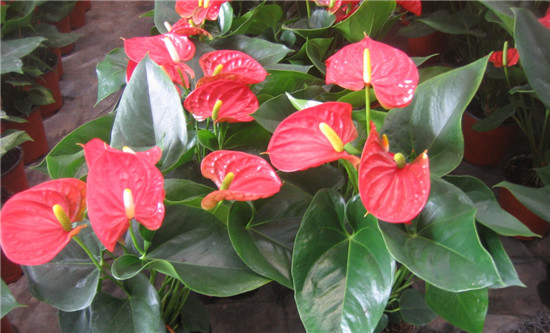
When growing Anthurium at home, pay attention to the following aspects:
1. Humidity
Anthurium needs around 70% air humidity for normal growth, which is generally hard to achieve in ordinary home growing. You can wipe the leaves several times a day with a clean damp towel, or mist around the plant regularly to increase air humidity. (But never sprinkle water on the flowers, as this can affect their ornamental quality.)
2. Watering and fertilizing
Under normal growth conditions, water the potting soil once a week, letting it dry out between waterings. Generally follow the principle of not watering when the soil surface is dry, and watering thoroughly when you do. In spring, autumn and winter, reduce the frequency and amount of watering appropriately. Every half month, apply a 7-8% special nutrient solution or a fertilizer solution diluted 500 times along with watering.
3. Pruning
Generally, during the growth of Anthurium, the leaf stalks at the base gradually degenerate; when the stipules dry out, they can be cut off promptly. After flowering, when the flower stalk turns yellow, it should also be cut off from the base as soon as possible, leaving a 2 cm protective stub.
4. Temperature
When growing Anthurium at home, keep the temperature as stable as possible. The optimal growing temperature for Anthurium is 16-24°C, and the minimum temperature should be kept above 12°C. In ordinary homes with heating, this condition is easy to meet. But at the same time, note that the pot must not be placed on top of a radiator, or too close to one. When the summer temperature exceeds 30°C, move the plant to a relatively north-facing room with good ventilation, and you can mist around the plant to cool it down.
5. Light
Anthurium needs sufficient scattered light for normal growth. For home growing, generally note the following: in summer, avoid strong direct light on the leaves and flowers; in autumn and winter, when conditions allow, move it near a window to increase light. Also rotate the plant regularly to ensure it receives even light and to promote a full, rounded crown shape.
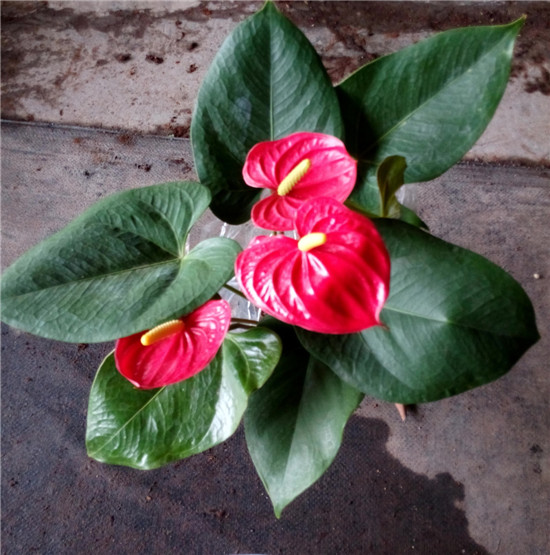
Morphological characteristics of Anthurium:
I believe many friends know a lot about Anthurium. The most distinctive feature of Anthurium is its very unusual leaves, because the leaves are heart-shaped, so the overall decorative effect of Anthurium leaves is quite good. Anthurium plants are generally 50 cm to 80 cm tall. Anthurium has no direct stem; the leaves grow straight from the roots, so the leaf stalks of Anthurium are very long.
Is Anthurium toxic?
For friends who don't know Anthurium, one thing they worry about is whether Anthurium is toxic, because when growing Anthurium you often touch it and need to prune some excess leaves. In fact, the main toxic parts of Anthurium are the flowers and roots. As long as we don't eat them by mistake and remember to wash our hands after pruning leaves, there won't be much of a problem. Also, the main toxicity of Anthurium comes from its sap, so as long as we try not to touch the sap of Anthurium, there is no problem.
Anthurium flowering period:
Anthurium is a plant with strong ornamental value, because its flowering period is quite long. Generally, after Anthurium blooms, each flower's flowering period lasts about a month, and the most unusual thing is that Anthurium can bloom all year round, so its ornamental period is relatively long. Also, the flowers of Anthurium are quite unique, and they look quite interesting.
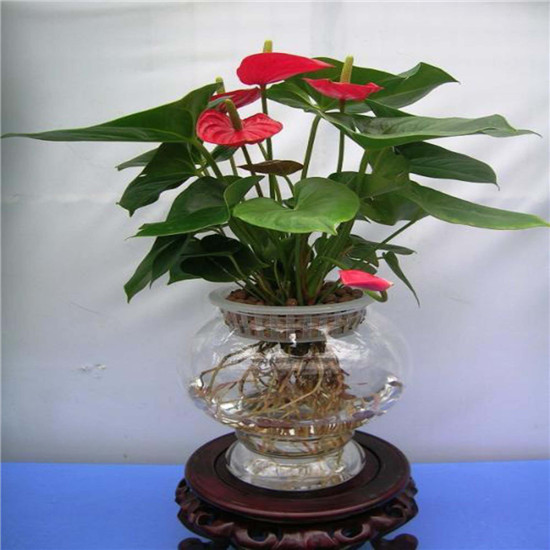
Reasons for Anthurium leaves turning yellow
(1) Newly bought ones don't adapt to the environment; in this case, just cut off the yellow leaves. (2) Watering too frequently: you shouldn't water flowers by the clock, but by the actual situation. Anthurium can generally tolerate being a bit dry, but waterlogging is a big problem. If there is too much water, then stop watering for now. (3) For gardening friends in the north, most Anthuriums grown in the north don't have very pretty leaves: some are yellow, some are split, etc. I would say this is due to unsuitable humidity, which ordinary gardeners can't change. (4) Sun exposure: Anthurium is easily damaged by exposure to the sun, so don't expose it to strong sun.
Dealing with yellowing Anthurium leaves
First cut off the yellow leaves, place the plant in a cool place, wait until the water is almost dry and then water again, and don't rush to fertilize. Control temperature and humidity well, give it morning and evening sun, and fertilize appropriately. Fertilizer must not be too concentrated; use a fully water-soluble fertilizer to water the potting soil. Do not apply ordinary chemical fertilizers, because Anthurium cannot absorb them and fertilizer burn will occur.
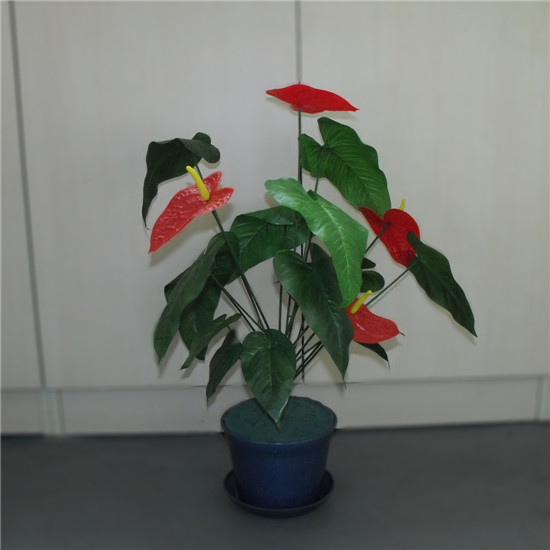
If leaves turn yellow, dry up or rot, you can spray a 0.3% garlic juice solution, a 0.2% vinegar solution, or fungicides such as carbendazim or chlorothalonil at 800-1000 times dilution for control.
What to do if hydroponic Anthurium leaves turn yellow
You need to disinfect the Anthurium. It is recommended to buy a hydroponic acclimation solution from a flower market, used to promote rooting. After dilution, it is safe to use for growing the plant. The water temperature should be close to room temperature, and do not use tap water directly. Yellow leaves should be pruned off. Generally, flowers will have yellow leaves; just prune them and it's fine. When the plant grows new leaves again, it shows it is very healthy.
The above is all the content I have summarized for you about care tips for growing potted Anthurium. I hope this article can help everyone. Please also continue to follow us.