A Detailed Guide to Growing Bird's Nest Fern and Its Benefits
The bird's nest fern is commonly found in primary forests at low to medium altitudes across Taiwan, China. It is relatively large in size with lush foliage. Unlike ordinary ferns, the bird's nest fern has its own peculiarities in both appearance and growing environment. So today let us learn more about the bird's nest fern.
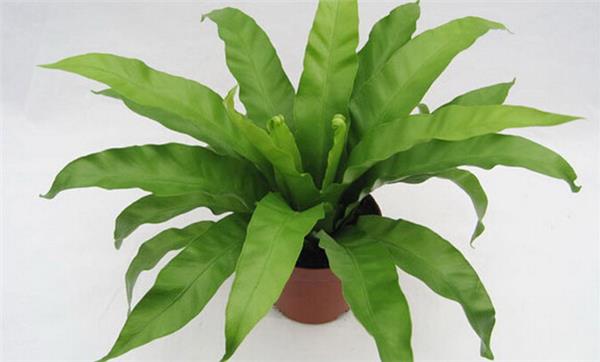
What are the benefits of the bird's nest fern
1. Ornamental value: The bird's nest fern is a relatively large shade-loving foliage plant. It has a full, plump form, glossy green leaves, an elegant and natural bearing, and a strong wild appeal, making it highly favored by people. Hanging it indoors also creates a distinctive tropical mood; planted beneath trees in tropical gardens or on rockeries and rocks, it can add a touch of wild charm; small potted plants used to decorate a bright living room, meeting room, study, or bedroom also appear compact, delicate, and elegantly beautiful.
2. Medicinal value: The bird's nest fern is rich in vitamin A, potassium, iron, calcium, dietary fiber, and more. The bird's nest fern tastes bitter and is warm in nature, entering the kidney and liver meridians. It has the effects of strengthening bones and muscles and promoting blood circulation to remove blood stasis, and can also be used for traumatic injuries, fractures, blood stasis, headache, blood strangury, impotence, and gonorrhea.
3. Edible value: The edible part of the bird's nest fern is its young shoots. After harvesting the bird's nest fern, rinse it clean with water, then blanch it briefly in boiling water, remove it and drain it, add various seasonings and serve it as a cold dish, or stir-fry it together with other ingredients.
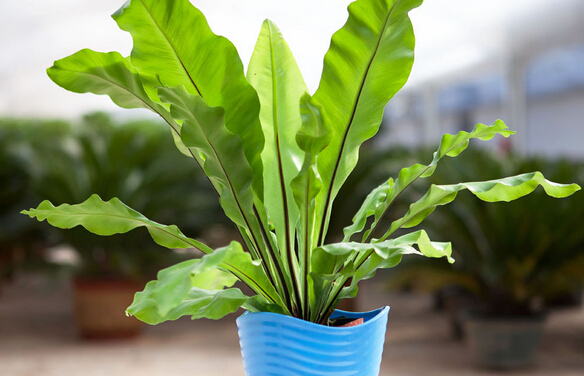
Can the bird's nest fern absorb formaldehyde
The bird's nest fern can absorb formaldehyde. Placing ferns such as the bird's nest fern indoors can purify the air. Generally speaking, spider plants are the plants commonly used by city residents to absorb formaldehyde, but ferns absorb formaldehyde noticeably better than they do.
In an experiment, 5 kinds of indoor ornamental ferns were selected to study their formaldehyde absorption capacity. The results showed that all 5 selected ornamental ferns had strong formaldehyde absorption capacity. Under specific experimental conditions, their formaldehyde absorption capacity was measured as: spider brake (Pteris multifida) > Boston fern (Nephrolepis exaltata) > bird's nest fern (Asplenium nidus) > maidenhair fern (Adiantum) > Dryopteris bissetiana. This is of great practical significance for discovering efficient and safe ornamental ferns for formaldehyde control.
How to grow the bird's nest fern
1. Planting For potted bird's nest ferns, peat soil or leaf mold is best. After 2-3 years of growth, bird's nest ferns grown by division become open in form, with the roots packed tightly against the pot frame; they can be taken out of the pot, part of the residual roots and withered spore leaves at the base removed, the plants separated, and each replanted into a pot. When repotting in spring, add leaf mold and moss to the pot, along with a little crushed stone.
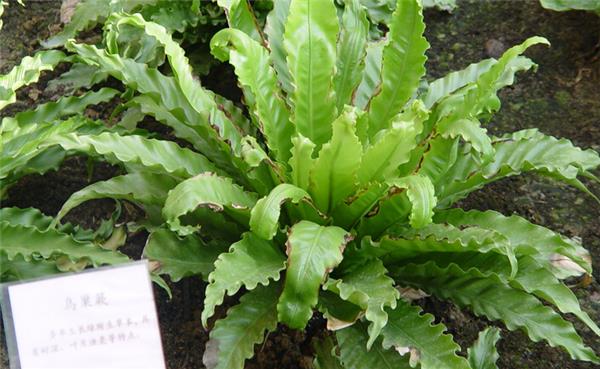
2. Temperature and light The suitable growing temperature for the bird's nest fern is 22-27°C. In summer, shade it or place it in a spot with dappled shade under a large tree, avoiding direct strong sunlight. This is good for growth and gives the leaves a glossy sheen. Indoors, place it in a bright spot and do not keep it in a dark place for a long time. In winter, move it into a greenhouse and keep the temperature above 16°C so it continues to grow, but the minimum temperature must not fall below 5°C.
3. Watering and fertilizing Under conditions of high temperature and high humidity in summer, new leaves grow vigorously and need more spraying; spray the leaf surfaces thoroughly and maintain relatively high air humidity, which favors spore germination. As the leaves grow larger, they often cover all the potting soil in the pot, so watering must soak through the pot to prevent the plant from drying out and the leaves from withering and curling due to lack of water.
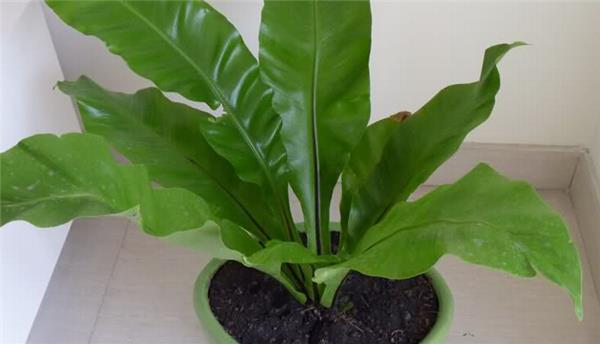
Above we have introduced what the benefits of the bird's nest fern are, as well as whether the bird's nest fern can absorb formaldehyde. We hope this can help everyone better understand the bird's nest fern.