How to properly care for orchids during the flowering period? Master these key points
Whenever orchids reach their flowering period, it is the time when people relax their orchid care the most. In fact, it is precisely at this time that proper care can make orchid flowers bloom large and beautiful. Let us take a look together at how to properly care for orchids during the flowering period.
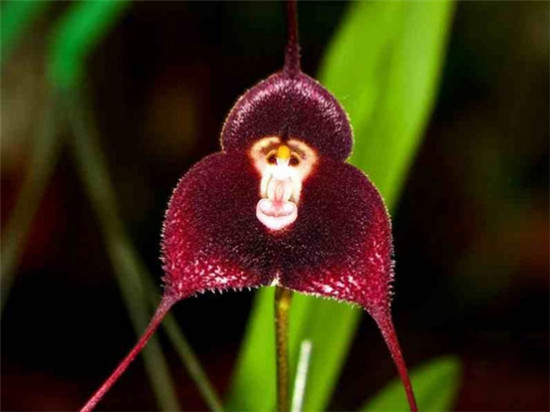
Flowering period care for orchids
Watch the humidity: From the emergence of the flower scape to blooming, orchids should be kept neither dry nor wet. Once the surface soil appears slightly dry and whitish, water immediately. When watering, watering by half the usual amount is best. If temperatures are too high, the air is dry, or the wind is strong, use a fine spray bottle to mist lightly, in order to increase local air humidity.
Adjust the light: Orchid flower scapes are phototropic. When the flower scape begins to emerge, the pot should be turned promptly to adjust its direction so that it receives even light and the flower stem does not lean. Note, however, that strong light easily scorches the flowers. Before the flowers open, the plant should be placed in a spot with scattered light, but the light must not be too weak either; if it is too weak, the flower color will be poor and the fragrance faint. During the flowering period, it is best to keep the plant in a suitably shaded spot to ensure the flowers bloom pretty and elegant.
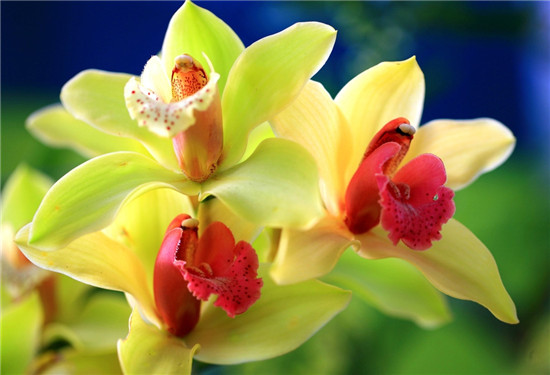
Keep warm and protect from cold: Cymbidium faberi and autumn orchids that bloom in summer often bloom poorly because temperatures are too high, while Cymbidium kanran, Cymbidium sinense, and Cymbidium goeringii that bloom in winter and spring are often hit by northwest winds and frost. Therefore, in summer and autumn, water should be sprinkled around the potted plants to lower the temperature, and in winter and spring, protection should be provided against northwest winds and frost. Thin the flowers appropriately. If an orchid blooms too much, it will consume nutrients excessively, affecting the formation of leaf buds that year and flower bud differentiation the following year, so the flowers should be thinned appropriately to reduce nutrient consumption. Generally, keep 2 to 3 sturdy flower scapes per pot. For those with multiple flowers on one scape, keep the strong and remove the weak, and thin the buds appropriately.
Supplement nutrients: To improve the color and fragrance of orchids, nutrients should be supplemented in the early stage of flower bud differentiation, using fully decomposed soybean cake water rich in phosphorus and potassium mixed with rice-washing water at a ratio of 1:10 for watering.
How to water orchids during the flowering period
First, water is an important component of the protoplasm of orchid plants. The water content of orchid protoplasm is generally above 80%. If the water content decreases, life activities are affected. If the protoplasm loses too much water, it will be damaged, leading to the death of the plant.
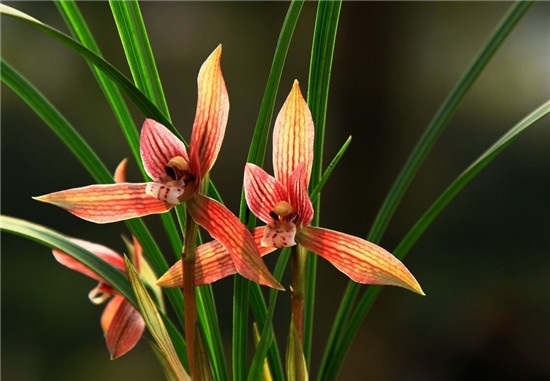
Second, water is a raw material in the metabolic processes of orchid plants. The assimilation and dissimilation processes within orchid plants all require the participation of water molecules, such as photosynthesis, respiration, and hydrolysis reactions.
Third, water is the medium for the metabolic processes of orchid plants. Only when the nutrient elements in the growing medium are dissolved in water can they be absorbed by the orchid roots, and various metabolic products must also be transported with water to all parts of the orchid plant.
Fourth, water enables orchid plants to maintain their inherent form. Only when the cells of orchid plants contain a large amount of water can the cells expand and the plant stand upright, making it easier to receive light and exchange gases. Once an orchid plant loses water, it will wilt.
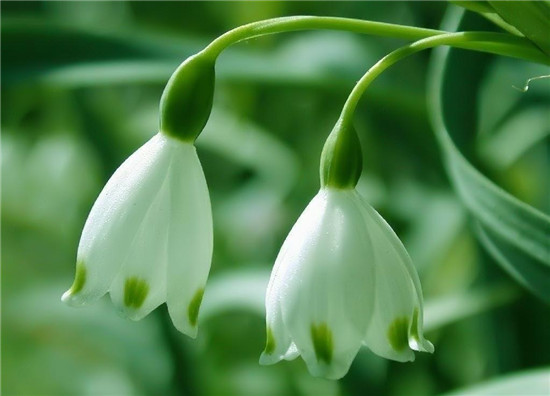
Fifth, water can regulate the body temperature of orchid plants. Water has a high heat of vaporization and specific heat, as well as high thermal conductivity, which helps orchid plants maintain body temperature and dissipate heat. One of the important roles of watering orchids is to regulate the body temperature of the orchid plant.
In short, water is the source of life for orchids and the foundation of orchid growth. Properly meeting the water needs of orchid plants is the most important condition for orchid growth.
The above is all the content I have summarized for you on how to properly care for orchids during the flowering period. I hope this article can help everyone. Please also continue to follow us.