How to Grow Syngonium (Arrowhead Plant): Care Tips and Solutions for Yellowing Leaves
Syngonium is a common indoor foliage plant, often used in indoor living rooms, studies, windowsides and other places, and is a very representative indoor plant. Syngonium has an elegant plant form, varied leaf shapes and fresh, clear colors, making it very suitable as an indoor potted ornamental. Together with pothos and philodendron, it is known as a representative indoor foliage plant of the Araceae family, and it is also a very popular indoor hanging-basket decorative material in Europe and America today.
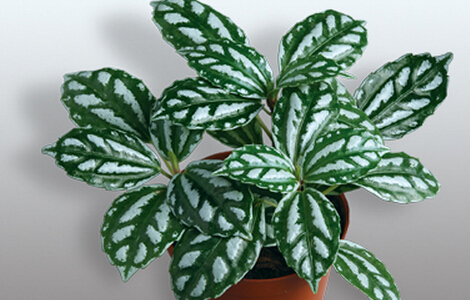
Syngonium care methods:
1. Soil: For potted Syngonium, soil that is fertile, loose and well-drained sandy loam is suitable. The potting soil should be a mixed soil of leaf mold, peat soil and coarse sand.
2. Watering: Syngonium likes moisture and fears dryness. During the vigorous growth period in summer, it needs sufficient watering to keep the potting soil moist, so as to facilitate rapid growth of stems and leaves. Increase leaf-surface spraying every day to maintain relatively high air humidity, so the leaves grow robust and full and have a better ornamental effect. If water is insufficient or the plant suffers drought, the leaves become rough and smaller.
3. Sunlight: Syngonium has strong adaptability and grows robustly, and can adapt to different lighting environments. In strong light, the stems and leaves are slightly light purple, the leaves are larger and the color is lighter; in weak light, the leaves are narrow and small and the color is dark. It grows well in bright indirect light. Shading of 50% is appropriate. For variegated varieties, the color patches are not obvious when light is insufficient.
4. Temperature: Syngonium is not cold-tolerant. The suitable growth temperature for Syngonium is 22-30°C. At 15°C it grows more slowly, and below 10°C the stems and leaves stop growing. In winter, when the temperature is below 5°C, the leaves suffer frost damage.
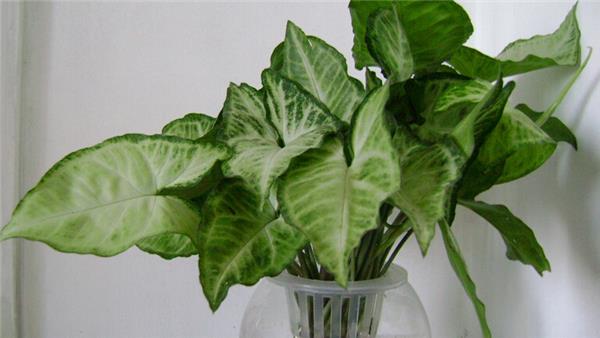
5. Fertilizing: During the growing period, apply dilute liquid fertilizer once every 1-2 weeks. Spraying a 0.2% ferrous sulfate solution once a month can keep the leaf color emerald green and lovely. If it is placed indoors and does not need to grow too fast, then the amount of fertilizer applied must be controlled. To increase the ornamental effect and make the white markings on the leaves more prominent, the amount of nitrogen fertilizer applied can be reduced.
6. Pests and diseases: Syngonium commonly suffers from leaf spot disease and gray mold, which can be sprayed with a 700-fold dilution of 70% zineb wettable powder. Ordinarily, an equal-part Bordeaux mixture can be sprayed for prevention. Pests include whiteflies and thrips, which damage stems and leaves; use a 1500-fold dilution of 40% omethoate emulsifiable concentrate to spray and kill them.
Is Syngonium toxic?
As a plant of the genus Syngonium in the Araceae family, Syngonium is toxic. The main toxic part is the rhizome, and the internal sap as well as the water that drips down are also toxic. Do not directly touch the plant, and even more so do not eat it. If it happens to get into the mouth, or if the sap splashes onto mucous membranes such as the eyes, mouth or nose, it should be washed with plenty of water. Households with young children had better not place Syngonium in the home.
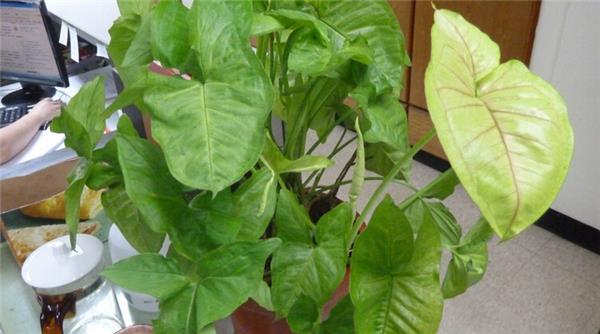
Why do Syngonium leaves turn yellow and fall off?
Syngonium is native to tropical rainforests. It likes high temperature and high humidity and is not cold-tolerant; it likes semi-shade and avoids direct strong light. If the environment during care does not meet these conditions, it will cause the leaves to turn yellow and even die.
1. Soil alkalinity: Syngonium should be planted in slightly acidic soil, while the soil in most northern regions is neutral or slightly alkaline. When this kind of soil is used to grow Syngonium, it leads to a lack of iron in the soil that plants can absorb and use, which is one of the main reasons for Syngonium leaves turning yellow.
2. Low-temperature damage: Syngonium likes high temperatures and is not cold-resistant. In winter, when the room temperature is below 10°C, the leaves will turn yellow due to low-temperature damage. When caring for it indoors in winter, by no means let the potting soil become too wet; otherwise, with low temperature and excessive moisture, it will cause root rot and death or yellowing and falling of leaves, affecting the ornamental value.
3. Improper fertilizing: If watered too much, especially too much in winter, the potting soil is damp, which especially causes root rot and leads to Syngonium leaves turning yellow. In addition, insufficient fertilizing, lack of nutrients, or long-term failure to repot or change the soil, with the root system crowded and filling the pot walls, hindering the development of new roots, can all cause the leaves to turn yellow.
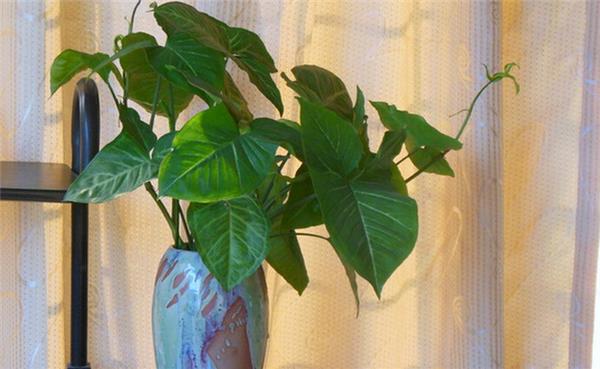
The above is an introduction to how to grow Syngonium and to the causes and solutions for its leaves turning yellow. I hope it can help everyone. Syngonium's big, lush green leaves placed in the home are very lively and can give people a fresh and comfortable feeling. The care methods for Syngonium are also relatively simple. If you like to place potted plants indoors, you might consider it.