A Complete Guide to the Red Banana: Introduction and Growing Tips
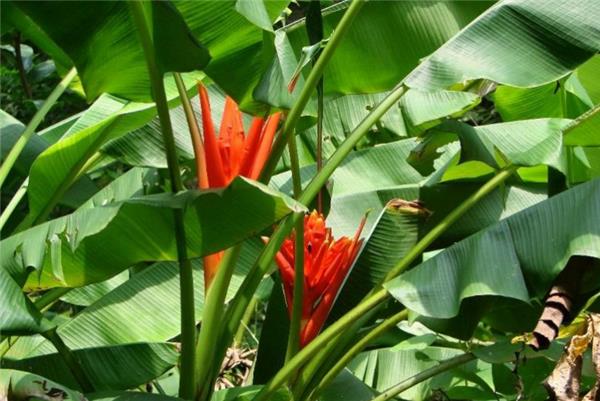
The red banana is an ornamental flowering plant with slender stalks and deep red buds that glow like torches, just like a shy maiden holding back her words, standing gracefully in the wind. So, how much do you know about the red banana? Let's take a look.
I. Introduction to the Red Banana
The red banana is a perennial herb with large leaves, and the whole plant resembles the banana. However, the bracts of the entire inflorescence, along with the small flowers, are all red, dazzling and eye-catching, appearing even more brilliant against the backdrop of the green leaves.
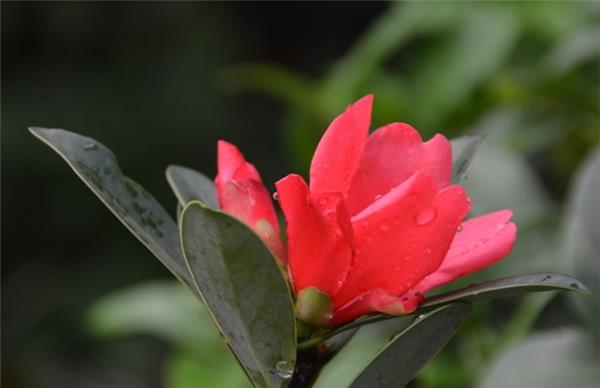
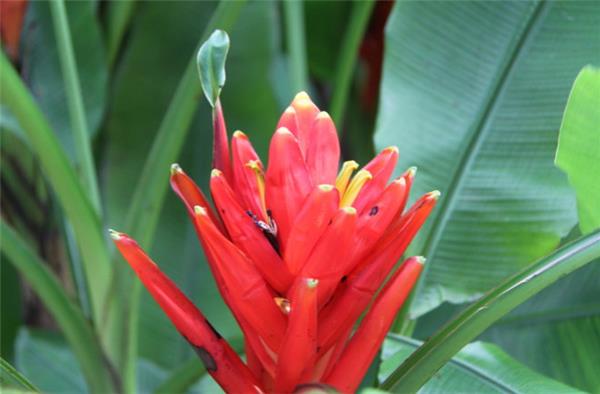
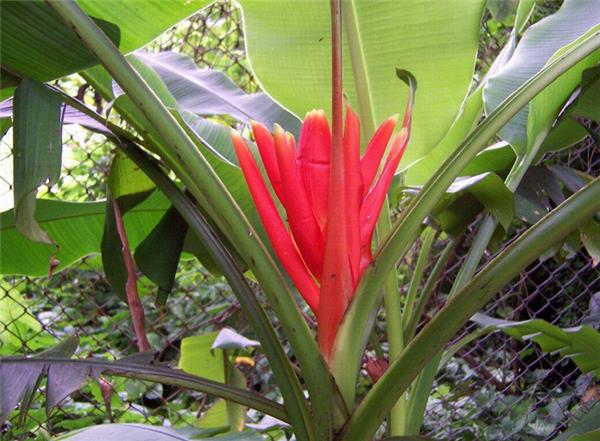
The pseudostem is 1-2 m tall. The leaves are oblong, 1.8-2.2 m long and 68-80 cm wide, yellow-green on the upper surface and pale yellow-green on the underside, without white powder, with a markedly unequal base, rounded and without auricles; the petiole is 30-50 cm long, with open narrow wings. The inflorescence is erect, the rachis is hairless, the bracts are bright red and beautiful on the outside and pink on the inside, with obvious wrinkles, and each bract contains a single row of flowers, about 6 in number; the perianth segments of the male flowers are cream-yellow, the compound perianth segment has 5 (3+2) toothed lobes, the two lateral lobes are angled, and the free perianth segment is pointed at the tip with fine teeth, nearly equal in length to the compound perianth segment. The berry is straight, hanging obliquely downward on the rachis, grayish-white, without ridges, 10-12 cm long, about 4 cm in diameter, with a fruit stalk 3-3.5 cm long, and the fruit contains numerous seeds. The plant is slender, and the flower buds are deep red like torches, very beautiful, and can be used as greening material for courtyard landscaping. The fruit, flowers, tender heart and root crown are toxic and cannot be eaten. The pseudostem is 1-2 m tall. The leaves are oblong, 1.8-2.2 m long and 68-80 cm wide, yellow-green on the upper surface and pale yellow-green on the underside, without white powder, with a markedly unequal base, rounded and without auricles; the petiole is 30-50 cm long, with open narrow wings. The inflorescence is erect, the rachis is hairless, the bracts are bright red and beautiful on the outside and pink on the inside, with obvious wrinkles, and each bract contains a single row of flowers, about 6 in number; the perianth segments of the male flowers are cream-yellow, the compound perianth segment has 5 (3+2) toothed lobes, the two lateral lobes are angled, and the free perianth segment is pointed at the tip with fine teeth, nearly equal in length to the compound perianth segment. The berry is straight, hanging obliquely downward on the rachis, grayish-white, without ridges, 10-12 cm long, about 4 cm in diameter, with a fruit stalk 3-3.5 cm long, and the fruit contains numerous seeds. The flowering period is in summer and autumn, and it is a canna.
II. Cultivation Techniques for the Red Banana
For potted red banana, you can choose a large-diameter earthenware flower pot and loose, fertile sandy soil rich in humus for cultivation. Throughout the growing season, the potting soil should be kept moist, but the plant's leggy growth must be controlled, and watering must follow the principle of watering thoroughly only after the soil has dried out. When potted plants are grown indoors, they should be moved outdoors regularly for effective sunlight exposure, so that the leaves remain verdant and glossy. From early autumn to late autumn, the plant should be fully exposed to gradually decreasing temperatures so that it gradually adapts to the cold climate and favorable conditions are created for overwintering. After winter begins, place the potted plant on a south-facing windowsill, strengthen bright sunlight exposure, and raise the indoor temperature. At this time, watering should be controlled, and the leaves should often be sprayed with warm water at 25°C to maintain appropriate air humidity. The daytime temperature should be controlled at 15-20°C, and the nighttime temperature at 10-15°C, with a temperature difference of about 5°C. The pseudostem is 1-2 m tall, and the leaves are oblong, 1.8-2.2 m long and 68-80 cm wide, yellow-green on the upper surface and pale yellow-green on the underside, without white powder, with a markedly unequal base, rounded and without auricles; the petiole is 30-50 cm long, with open narrow wings. The inflorescence is erect, the rachis is hairless, the bracts are bright red and beautiful on the outside and pink on the inside, with obvious wrinkles, and each bract contains a single row of flowers, about 6 in number; the perianth segments of the male flowers are cream-yellow, the compound perianth segment has 5 (3+2) toothed lobes, the two lateral lobes are angled, and the free perianth segment is pointed at the tip with fine teeth, nearly equal in length to the compound perianth segment. The berry is straight, hanging obliquely downward on the rachis, grayish-white, without ridges, 10-12 cm long, about 4 cm in diameter, with a fruit stalk 3-3.5 cm long, and the fruit contains numerous seeds. The red banana likes fertilizer and is not particular about the type; barnyard manure or compost can be used as a base fertilizer, or the fertilizer can be mixed into the soil so that the potting soil has good fertility. During the growing season, apply a decomposed organic liquid fertilizer once every 15-20 days, and for indoor cultivation, a compound granular chemical fertilizer can be applied. May to June is the period of flower scape emergence and flower bud differentiation, so phosphorus and potassium fertilizers can be applied, or a 0.2% potassium dihydrogen phosphate aqueous solution can be applied as a top dressing to promote thick and strong flower scapes and early flower bud differentiation. After the flowers fade in late autumn, a quick-acting inorganic fertilizer can be applied 2-3 times to help the plant recover as quickly as possible. Before winter begins, apply phosphorus and potassium fertilizers to improve the plant's disease resistance. May to August is the suitable period; since this is the peak growing season, well-grown young plants can be dug up from beside robust mother plants and planted. When potting, choose a wind-sheltered spot, water thoroughly after planting, but do not allow waterlogging. In summer, keep the soil moist and frequently spray water on the leaves to appropriately raise air humidity. Generally, after about 20 days of cultivation, divided seedlings will be able to grow new leaves.
The above is an introduction to the red banana and its growing techniques. I hope you can also cultivate a charming and delicate red banana.
The above is an introduction to the red banana and its growing techniques. I hope you can also cultivate a charming and delicate red banana.