How to grow freesias so they look beautiful? Let us introduce you to freesias
Plants and flowers are among the most beautiful things in nature. Every plant and flower has its own characteristics, and their presence brings a lot of joy to our lives and elevates our quality of life. The freesia is one such beautiful plant; its pleasant fragrance can bring us a comfortable space. Now let us learn about this lovely plant together.
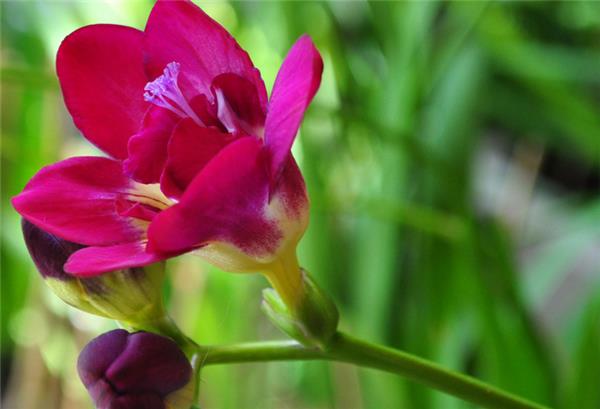 I. Introduction to freesias:
Freesia is also known as fragrant snow orchid, small freesia, foreign tuberose, wheat orchid, and so on. It belongs to the genus Freesia in the iris family (Iridaceae) and is a perennial bulbous flower. Its flowering period is around the Spring Festival, its fragrance is rich and pure, its form is gorgeous, and its flower colors are vivid, including bright yellow, pure white, orange-red, pink, snow blue, purple, and bright red. It is a popular winter indoor potted flower and also an important cut flower material. Freesia leaves are linear and hard in texture; it blooms in early spring, with colors such as yellow, white, purple, red, and pink, in a spike inflorescence, with the flowers leaning to one side, narrow and fine below the middle of the tube, unequal lobes, and a fragrant scent. It is native to South Africa and tropical Africa, and one species is also native to Sudan in North Africa. There are 14 species of freesia in the world. As an ornamental flower, freesia is deeply welcomed by gardening enthusiasts for its rich colors and the strong fragrance of its blooms, and there are many cultivated varieties. Freesia essential oil is also often used as one of the raw materials in products such as shower gels and body care lotions.
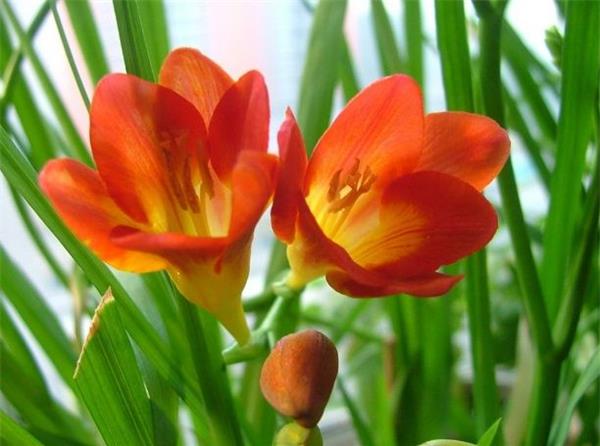 II. Potted cultivation techniques for freesias:
In August to September, choose medium-sized freesia bulbs and place them in a 1500-fold carbendazim solution to disinfect for 1 to 2 days. After removing them, place them in the shade to dry for later use. The growing soil is made by mixing one part each of leaf mold, garden soil, fine river sand, and decomposed organic fertilizer. Plant the bulbs into flower pots with a diameter of 18 to 20 cm, with 6 to 7 per pot. After potting, water thoroughly. After the water seeps down, cover with 2 to 3 cm of soil and place in a cool place. After half a month, seedlings begin to emerge, then move the flower pot into the sunlight. Before frost, move the flower pot indoors, ensure sufficient sunlight, keep the room temperature at 10 to 18°C, keep the potting soil moist, and apply dilute bean cake water once every half month. Freesia is relatively tolerant of fertilizer; if fertilizer and water are appropriate, the flowers will be large and the fragrance strong. Therefore, during the growing season, fertilizer and water management should be strengthened. When entering the flowering period, watering should be appropriately controlled and fertilizing stopped to prolong the flowering period, and after flowering, water less. In May to June of the following year, when the leaves wither and turn yellow, stop watering to help the bulbs mature.
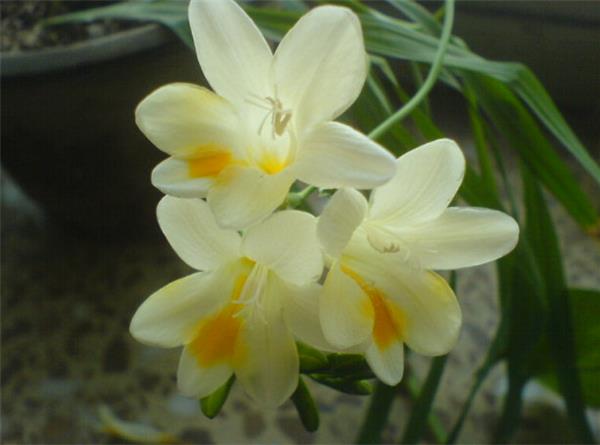 III. To make freesias bloom, the following conditions must be met:
1. Flowering corms: usually large corms bloom in the same year, while small corms can only become flowering bulbs after being planted for 1 year.
2. Sufficient light: freesias need sufficient light when planted, especially during the growing period, when light should be strengthened even more.
3. Moderate moisture: do not water too much, to prevent the leaves from growing excessively. During the flowering stage, water must not be lacking, otherwise the flowers will wilt and cannot recover.
4. Enough fertilizer: sufficient base fertilizer must be applied before planting. When the seedlings grow 3 to 4 cm tall, begin topdressing, applying once every 10 days until flowering, and stop fertilizing during the flowering period.
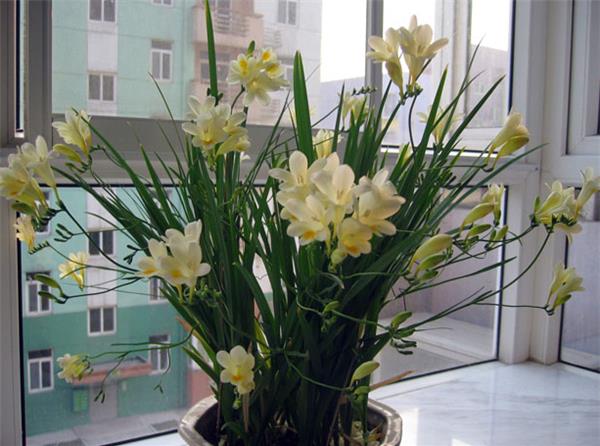 5. Suitable temperature: freesias cannot overwinter outdoors in winter and need to be moved indoors for care after "Frost's Descent."
6. Management after flowering: after freesias bloom, they still need routine care and management until June to July, when all the leaves have withered and turned yellow. Then dig out the corms, dry them in the sun, and store them until August to plant again.
The above is the relevant knowledge about freesias. I hope it can help you.