Types of Daffodils and How to Grow Them: Make the Flowers Bloom on Your Schedule
Daffodils are beloved by flower lovers for their elegant colors and graceful leaf shapes. So what types of daffodils are there, and how do you grow them? Let's take a look together.
I. Introduction to Daffodils:
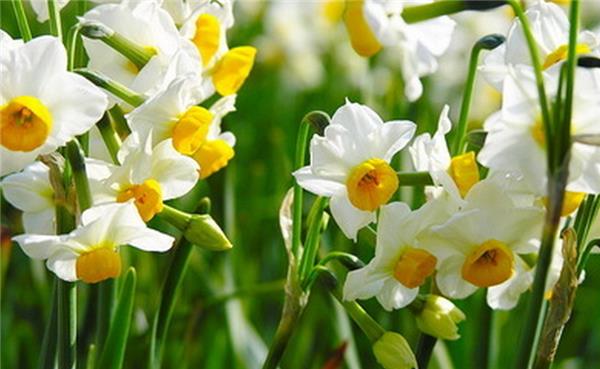
The outer layer of the daffodil is a brown skin membrane. The leaves are narrow and strap-shaped, 30-80 cm long and 1.5-4 cm wide, with entire margins and a white powdery coating on the surface. The flower scape emerges from the leaf cluster and rises above the leaves; those that generally bloom are leaf clusters with 4-5 leaves, with each bulb producing 1-7 flower stems, and some can reach more than 10; the corymb (umbel) bears 4-6 flowers, with some bearing more than 10; the flowers are white and fragrant; the flowering period is from January to March.
II. Daffodil Categories:
1. Trumpet Daffodil:
The bulb is spherical, and the leaves are flat and linear, 20-30 cm long and 1.4-1.6 cm wide, grayish-green and smooth. The flower is solitary and large, pale yellow, about 5 cm in diameter; the corona is about equal in length to the perianth segments. The flowering period is February and March. This species has many horticultural cultivars, including broad-leaved and narrow-leaved varieties, and those with white perianth, yellow corona, or both perianth and corona entirely yellow.
2. Hoop Petticoat Daffodil:
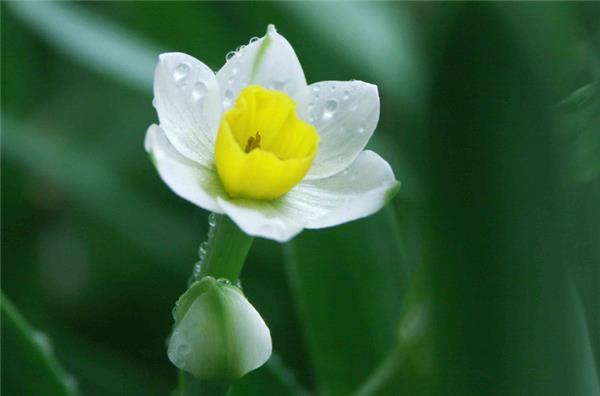
The plant is low-growing, with fine strap-shaped, dark green leaves. The flower is solitary and small, with a long funnel-shaped corona. The perianth segments are very small, and the flower color is pure yellow.
3. Cyclamen-flowered Daffodil:
The plant is short, with 2-3 flowers clustered together, small and nodding or lateral; the flowers are yellow, and the perianth segments curl backward. Star Daffodil: the bulb is oval. The leaves are flat and linear, 30-40 cm long and about 1 cm wide, powdery green. The flower is solitary, held horizontally or slightly nodding, 5-5.5 cm in diameter; both the perianth and corona are yellow, and there are also varieties with white perianth. The flowering period is mid-April.
4. Three-stamen Daffodil:
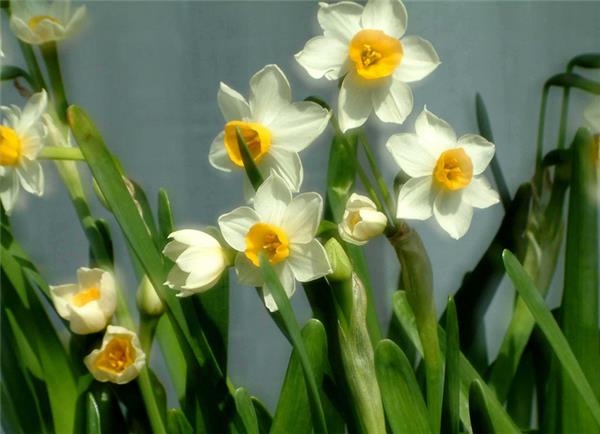
The plant is short, with 1-9 flowers clustered together, and only three stamens extending beyond the corona; the flowers are white, resembling the cyclamen-flowered daffodil but with a shorter corona.
5. French Daffodil:
3-10 flowers are clustered together; the corona is the same color as or a different color from the perianth, and it is fragrant.
6. Poet's Daffodil:
Also known as red daffodil. The leaves are about 30 cm long and 0.8-1 cm wide. The flower is solitary, or occasionally one or two, 5-6 cm in diameter; the perianth is white; the corona is shallow cup-shaped, yellow, with a wrinkled, slightly red rim. It blooms in spring.
7. Jonquil:
There are 1-3 leaves, cylindrical and dark green. The flowers number 1-2, salverform, 2.5 cm in diameter; the perianth is yellow, and the corona is orange-yellow, with a strong fragrance. It blooms in spring.
II. How to Grow Daffodils:
First, for winter water culture of daffodils, temperature, light, and water supply are the three key factors determining whether the daffodil can bloom.
1. Daffodil growth requires plenty of sunlight; the suitable temperature is 12-15°C.
2. Add clean water up to 2/3 of the bulb. When first potted, change the water once a day with sun-warmed tap water; before flowering, you can change it once every 2-3 days.
3. It can survive without pebbles, and you can appropriately add warm water to force flowering; the water temperature should preferably be close to body temperature.
4. It can be kept indoors at night. The sap of the daffodil bulb is toxic and contains lycorine, which is used as a surgical analgesic; the crushed bulb can be applied to treat boils and swellings.
5. If the room temperature is kept at 15°C, it will bloom in 28-30 days; if the room temperature is 18-20°C, it can bloom in 23-25 days. In the Pearl River Delta region, the room temperature from mid-January to mid-February is about 16-20°C, so under normal conditions it can bloom in 20-25 days.
Second, the length of the flowering period changes with room temperature.
Scientifically controlling the greenhouse is the best method. When the room temperature is ≥3°C, the flowering period is only about 7 days; at 8-12°C, the flowering period can last as long as 15-20 days; at 15-20°C, the flowering period is 10 days; if the room temperature is kept at about 4°C, the flowering period can last as long as 1 month. Under the temperature conditions of the Pearl River Delta region, the flowering period can generally be maintained for 10 days.
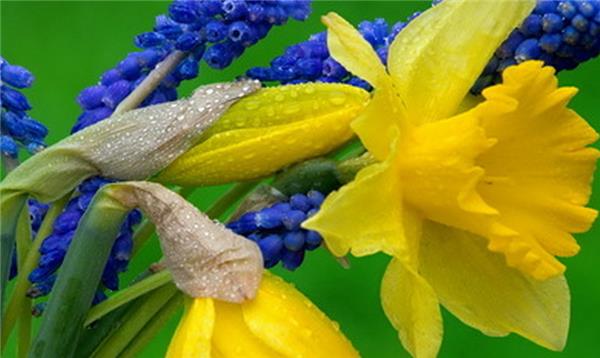
Third, during the Spring Festival, daffodils grown at home should be placed in a spot with plenty of sunlight, good ventilation, and away from radiators and stoves.
When the flower buds are about to open, they need to be moved to a cool indoor spot, avoiding direct sunlight and keeping the room temperature stable with little fluctuation. Control the flowering time. Under conditions of sufficient light and clean water, when the indoor temperature is 12-15°C, it takes about 40 days for the daffodil to go from soaking to flowering; at about 18°C, it takes about 30 days; at 20°C, it takes only 25 days to bloom; therefore, you can determine the soaking date of the daffodil bulbs according to your needs, so you can enjoy the fragrant and beautiful daffodils at the right time. Growing daffodils requires no fertilizer at all, only clean water. To make the daffodils grow strong, they should be taken to the balcony to bask in the sun during the day. If you want to delay the flowering period, you can lower the water temperature, or pour out all the water in the basin in the evening and add clean water again the next morning. In addition, if you cannot see plump flower buds 10 days before the festival, you can use the method of warming the water to force flowering; the water temperature should preferably be close to body temperature.
The above are the classification and growing tips for daffodils. As long as you master the conditions for daffodil care, you can make the "flowers bloom on your schedule."