How to grow redbud? Master the planting methods to produce beautiful flowers
Because of its bright and beautiful flower color, the redbud is loved by many flower enthusiasts, so what are the methods for planting redbud?
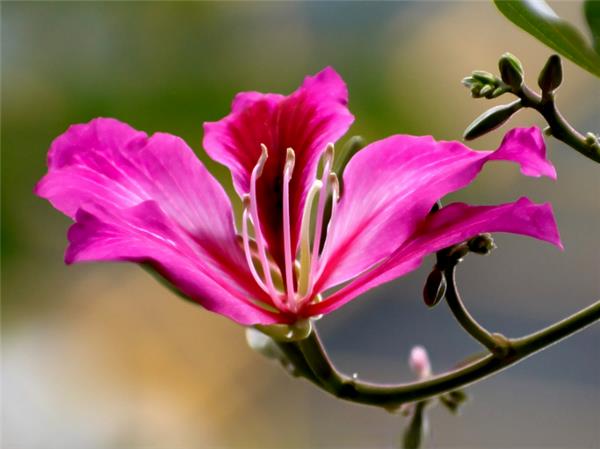
I. Introduction to redbud:
Redbud is also called mantiaohong, sufanghua, zizhu, wusang, and luokuangshu. It is a deciduous shrub or small tree of the genus Cercis in the Fabaceae family, and is one of the main ornamental flowering plants of spring. It likes sunlight and tolerates summer heat. The trunk is upright and clustered, and in early spring it blooms before the leaves appear. The flower shape resembles a butterfly, and when in full bloom the flowers are numerous, forming clusters and pressing close to the branches and trunk, with the whole tree covered in flowers. Not only can flowers appear on the branches, but flowers can also bloom on the old trunk, giving a feeling of a profusion of flowers; in summer and autumn, it has lush green leaves, full of verdant greenery; after leaf fall in winter, the branches and trunk reveal their structure, and a sense of rugged twisting is immediately visible. It is a garden tree and flower excellent for viewing flowers, leaves, and trunk alike, suitable for planting in courtyards, parks, squares, lawns, street pocket parks, road greenbelts, and other places, and can also be grown in pots for viewing or made into bonsai.
Also: the flower of the Hong Kong Special Administrative Region, the bauhinia, is also called zijinghua, but it is extremely different from this species. The bauhinia flower on the regional flag and regional emblem of Hong Kong, China is white. The white-flowered redbud is very rare and therefore very precious.
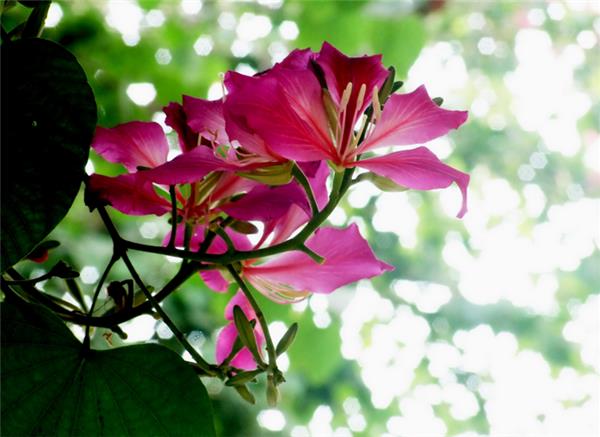
II. Planting redbud:
Redbud is commonly propagated by sowing, division, layering, and cuttings. For superior cultivars such as the Canadian red-leaf redbud, grafting can also be used for propagation.
1. Sowing
From September to October, collect mature pods, take out the seeds, and bury them in dry sand in a cool place to overwinter. Sow from late March to early April, and treat the seeds before sowing so that the seedlings emerge evenly and grow strong. Soak the seeds in warm water at 60°C, and after the water cools, continue soaking for 3 to 5 days. Change the cool water once a day. After the seeds swell from absorbing water, place them in a 15°C environment to promote germination, and pour warm water over them 1 to 2 times a day. After they show white, sow them in a seedbed, and they can emerge uniformly in 2 weeks. After emergence, thin the seedlings appropriately. When they have 4 true leaves, they can be transplanted into a nursery, and the plot should preferably be loose and fertile loam. For ease of management, plant in wide and narrow rows, with wide rows 60 cm, narrow rows 40 cm, and plant spacing 30 cm to 40 cm. Seedlings are not cold-tolerant, and in winter they need to be protected for overwintering with plastic arched sheds.
2. Division
The roots of redbud easily produce root suckers. In October in autumn or before sprouting in spring, use a sharp knife to cut off the lateral roots connecting the sucker seedlings to the mother plant and plant them separately, and they easily survive. Divisions made in autumn should be heeled in for protection through winter, and planted in the field in March of spring. Generally, they can bloom in the second year.
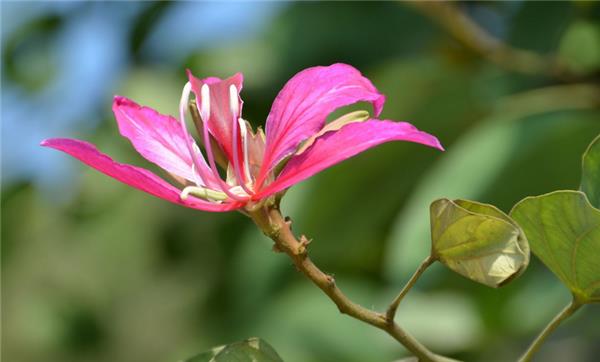
3. Layering
It can be done during the growing season, and March to April in spring is better. For air layering, select 1- to 2-year-old branches, use a sharp knife to score and girdle the bark for about 1.5 cm, exposing the xylem, apply rooting powder solution (diluted according to the instructions) about 3 cm above the scored area, and after it dries, wrap a cylindrical plastic bag around the scored area, fill it with loose garden soil, water it, and tie both ends tightly. Check after one month; if the soil is too dry, add water to keep it moist, and after rooting, cut it off and plant separately. For shrub-type trees, select thinner, more flexible 1- to 2-year-old branches around the periphery, score the base, apply rooting powder solution, bend them sharply and bury them in the soil, press bricks or stones on top to secure them, and the tip can be supported and straightened with a stick. Generally, in March of the second year, separate and plant them elsewhere. Some branches do not root in the same year and can continue to be buried and pressed, and may root in the second year.
4. Cuttings
Carry this out during the growing season in summer. Cut off current-year tender shoots as cuttings and insert them in sandy soil; they can also survive, but this is not commonly used in production.
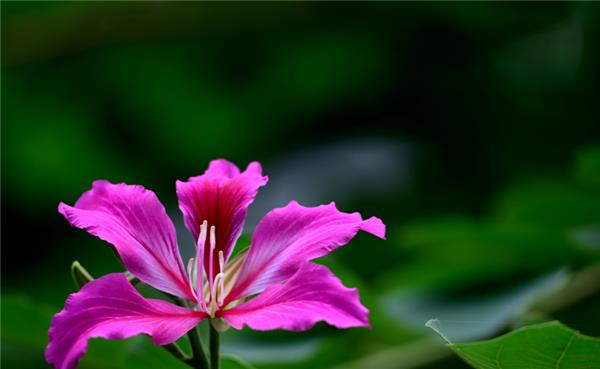
5. Grafting
Common redbud or giant redbud with strong growth can be used as rootstock, but because giant redbud is not strongly cold-tolerant, it should not be used in northern regions. Use buds or branches of superior cultivars such as the Canadian red-leaf redbud as scions. The scions should be of pure cultivar and vigorous growth; choose plump branches from the sunny side and periphery of plants with no pests and diseases or few pests and diseases. After collecting the scions, cut off the leaves and graft promptly. Branch grafting can be used in April to May and August to September, and bud grafting in July. If the weather is dry, irrigate thoroughly once 1 to 2 days before grafting to improve the grafting survival rate. About 3 weeks after grafting redbud, check whether the scions have survived; if they have not, promptly regraft. For grafted plants that have survived, promptly remove the sprouts and buds growing from the rootstock to prevent them from competing with the scions for nutrients and affecting their normal growth.
The above is the relevant knowledge about redbud. I hope it can help you.