Introduction to Canna Lily and How to Grow It: Learn to Produce Beautiful Flowers
Canna lily is an ornamental plant valued for its beautiful appearance and its ability to decorate the home. So what is the relevant introduction to canna lily, and what are its planting methods? Let us take a look together.
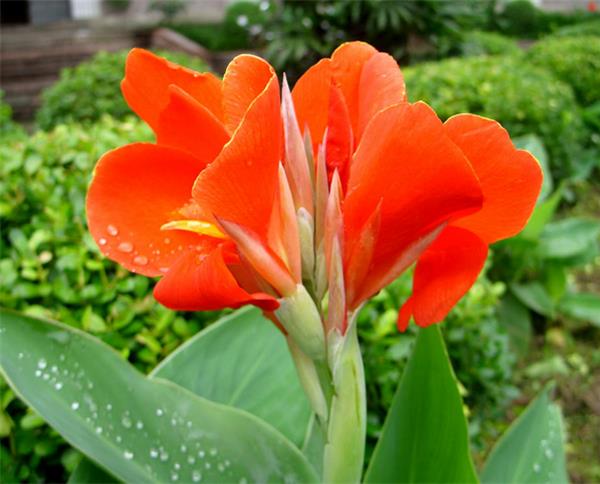
Canna lily, also known as "red flame canna", "tanhua" and so on, is a large-flowered plant. In Buddhism, it is believed that the canna lily was transformed from blood flowing from the Buddha's toe. The flower language of the canna lily is "a solid future". It belongs to the genus Canna, native to tropical America and Africa and other places. Canna is a perennial bulbous rhizomatous herbaceous plant, with thick, fleshy rhizomes lying horizontally underground. In warm regions it has no dormancy period and can grow year-round, growing best at 22-25°C; growth stops at 5-10°C, and frost damage occurs below 0°C. Because canna lilies like moisture and dislike dryness, in hot summer, if exposed to direct scorching sun or dry hot winds, leaf edges may scorch; excessive watering can also cause the same phenomenon. Canna lilies like warmth and ample sunlight, and are not cold-tolerant. They require deep, fertile soil; for pot cultivation, the soil should be loose and well-drained. Fertilize regularly during the growing season. The whole plant is green and can reach 2 m in height. Leaves are ovate-oblong, 10-30 cm long and up to 10 cm wide. Racemes are loosely flowered; slightly extending above the leaves; flowers red, solitary; bracts ovate, green, about 1.2 cm long; sepals 3, lanceolate, about 1 cm long, green and sometimes tinged red; corolla tube less than 1 cm long, corolla lobes lanceolate, 3-3.5 cm long, green or red; outer staminodes 3-2, bright red, of which 2 are oblanceolate, 3.5-4 cm long and 5-7 mm wide, and the other, if present, is very small, 1.5 cm long and only 1 mm wide; labellum lanceolate, 3 cm long, curved; fertile stamen 2.5 cm long, anther chamber 6 mm long; style flattened, 3 cm long, half united with the filament of the fertile stamen. Capsule green, long-ovate, with soft spines, 1.2-1.8 cm long. Flowering and fruiting period: March to December.
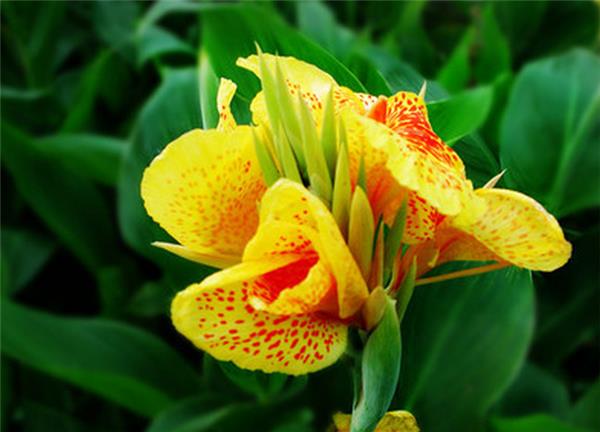
Canna lily cultivation methods:
1. Cultivation:
Canna lily is native to tropical regions such as America, India and the Malay Peninsula. It likes warmth, moisture and ample sunlight, is not cold-tolerant, and fears strong winds and frost. It is not strict about soil and can tolerate poor soil, but grows well in fertile, moist, well-drained soil. After the plant withers in late autumn, cut off the aboveground parts, dig out the rhizomes, dry them in the sun for 2-3 days, and bury them in well-ventilated sandy soil in a greenhouse. Do not water, keep the temperature above 5°C, and they can overwinter safely. South of the Yangtze River, the rhizomes do not need to be dug out in winter; as long as soil is added to cover them well, they can still sprout again the following spring.
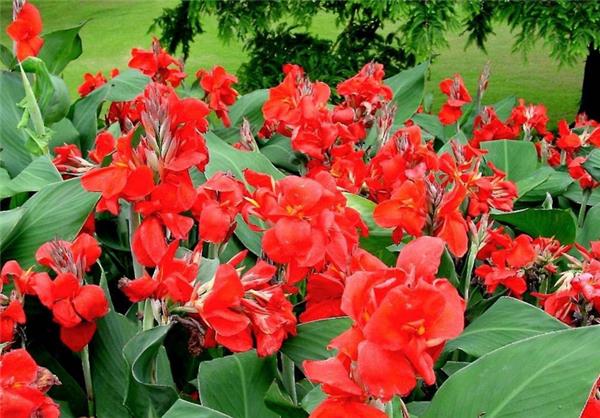
2. Seed propagation:
In April-May, cut a notch in the hard seed coat with a sharp tool, soak the seeds in warm water for a day and night, then sow in the open field. They sprout 2-3 weeks after sowing. When 2-3 leaves have grown, transplant once, and they can bloom in the same year or the next year. It is a commonly used material for shrub edges, flower borders and flower mirrors in gardens. For pot cultivation, dwarf varieties should be chosen. Use loam rich in organic matter mixed with a small amount of river sand for the potting soil. Plant after the late spring frost, 1-2 plants per pot. After planting, water thoroughly and keep the potting soil moist; otherwise leaf edges may scorch and flowering may even be sparse. After the plant grows 3-4 leaves, apply liquid fertilizer once every 10 days until flowering. After flowering, promptly cut off spent flowers to encourage continuous sprouting of new flower branches. Before autumn frost, move them indoors in time for care. Canna lilies like high temperatures and heat and prefer ample sunlight. They grow robustly in deep, fertile soil rich in organic matter. They fear strong winds and are not cold-tolerant; once frosted, the aboveground stems and leaves all wither, leaving underground tubers. South of the Yangtze River, they can overwinter in the open field. North of the Yangtze River, the underground stems should be dug up and overwintered in a cellar, then planted again the next year. During storage, avoid waterlogging and moisture, and be careful to prevent tuber rot.
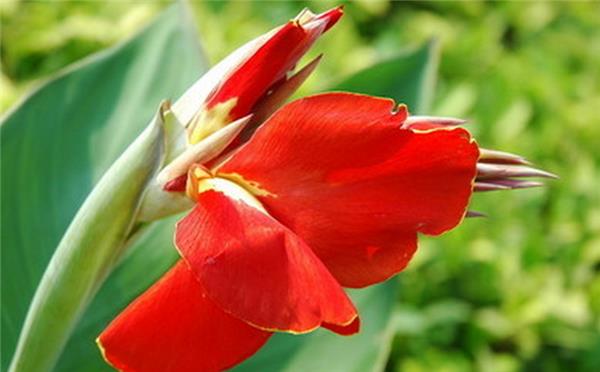
3. Propagation by tubers:
Tuber propagation is carried out in March-April. Dig out the old rhizomes, divide them into blocks, keep 2-3 buds on each rhizome block, with fibrous roots attached, and plant them in soil about 10 cm deep, keeping plant spacing at 40-50 cm, then water thoroughly. When new shoots grow to 5-6 leaves, apply decomposed fertilizer once, and they can bloom in the same year. For pot cultivation, low-growing varieties are mostly used, leaving 3 buds per pot. After planting, cover with 8-10 cm of soil. During the growing period, sufficient light is required, ensuring at least 5 hours of direct sunlight every day. If the environment is too shady and light is insufficient, flowering will be delayed. It likes warmth and avoids severe cold, with a suitable growing temperature of 16-30°C. When flowering, to prolong the flowering period, it can be placed in a low-temperature place without sunlight, and the ambient temperature should not be lower than 10°C. After planting, before the rhizomes have grown new roots, water less. The potting soil should be moist. Soil that is too wet easily causes root rot. After the scape emerges, water frequently to keep the potting soil moist. If water is lacking, the phenomenon of "flowers hidden among leaves" is likely to appear after flowering. In winter, reduce watering, following the principle of "water when dry, stop when wet". In addition to applying sufficient base fertilizer before planting, during the peak growing season apply dilute cake liquid fertilizer 3-4 times each month. If the scape has not yet emerged 20-30 days before the scheduled flowering date, spray the leaves once with a 0.2% potassium dihydrogen phosphate aqueous solution to force flowering. If you want it to bloom for the "May 1st" holiday, in January cover the stored rhizomes with soil mixed with a small amount of fertilizer, requiring an ambient temperature of 30°C during the day and about 15°C at night; after 10 days they will sprout. After sprouting, plant the rhizomes with 2-3 buds into pots, keep the potting soil moist, and apply fertilizer as appropriate. Flower buds appear in early April; pay attention to ventilation, and it can bloom by "May 1st". In cold regions, in autumn after 1-2 frosts and when most stems and leaves have withered and yellowed, cut off the aboveground parts, dig out the rhizomes, dry them appropriately, and pile them indoors, where they can overwinter safely at 5-7°C. In warm regions, they can overwinter in the open field in winter and do not need to be harvested, but after 2-3 years they must be dug out and replanted, and the planting scale can also be expanded at the same time.
The above is the introduction to canna lily and its cultivation methods. I hope it can help you.
After planting, before the rhizomes have grown new roots, water less. The potting soil should be moist. Soil that is too wet easily causes root rot. After the scape emerges, water frequently to keep the potting soil moist. If water is lacking, the phenomenon of "flowers hidden among leaves" is likely to appear after flowering. In winter, reduce watering, following the principle of "water when dry, stop when wet". In addition to applying sufficient base fertilizer before planting, during the peak growing season apply dilute cake liquid fertilizer 3-4 times each month. If the scape has not yet emerged 20-30 days before the scheduled flowering date, spray the leaves once with a 0.2% potassium dihydrogen phosphate aqueous solution to force flowering. If you want it to bloom for the "May 1st" holiday, in January cover the stored rhizomes with soil mixed with a small amount of fertilizer, requiring an ambient temperature of 30°C during the day and about 15°C at night; after 10 days they will sprout. After sprouting, plant the rhizomes with 2-3 buds into pots, keep the potting soil moist, and apply fertilizer as appropriate. Flower buds appear in early April; pay attention to ventilation, and it can bloom by "May 1st". In cold regions, in autumn after 1-2 frosts and when most stems and leaves have withered and yellowed, cut off the aboveground parts, dig out the rhizomes, dry them appropriately, and pile them indoors, where they can overwinter safely at 5-7°C. In warm regions, they can overwinter in the open field in winter and do not need to be harvested, but after 2-3 years they must be dug out and replanted, and the planting scale can also be expanded at the same time.The above is the introduction to canna lily and its cultivation methods. I hope it can help you.