How to care for Phalaenopsis orchids after blooming? A detailed guide to post-bloom care methods
Phalaenopsis is a plant suitable for indoor cultivation. Since most Phalaenopsis orchids originate from humid Asia, this determines the growth characteristics of Phalaenopsis. Next, let's take a look at how to care for Phalaenopsis orchids after blooming!
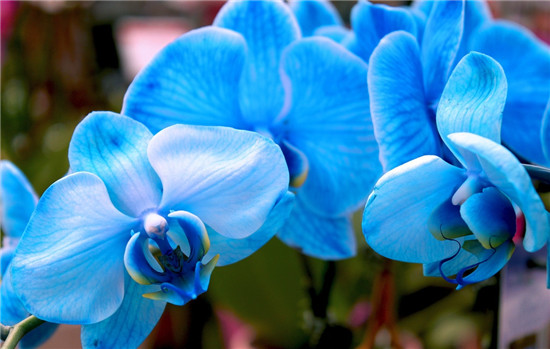
When potting a Phalaenopsis orchid, first fill the bottom of the pot with a permeable substrate, then plant the Phalaenopsis seedling in the pot with 1/3 moss and 2/3 fern roots on top, and press down slightly, just enough to secure the orchid seedling in the pot. If potting entirely with moss, squeeze the water-soaked moss dry, loosely wrap it around the lower part of the orchid seedling's roots, and press lightly, but do not press the moss too tightly, because moss absorbs a large amount of water; if pressed too tightly, it will cause root rot.
The best time to repot is late spring and early summer, just after the flowering period, when new roots begin to grow. The temperature should not be too low when repotting, and even a slight lapse in care can cause root rot and death.
Potted seedlings should be gradually moved into pots one size larger according to their growth; never plant a small seedling directly into a large pot. When repotting seedlings, there is no need to remove the original growing medium, so as to avoid damaging the roots. Simply wrap another layer of moss or other potting medium around the roots and plant them into a pot one size larger, keeping the root collar level with the rim of the pot. Well-growing seedlings can be repotted once every 4-6 months. After repotting, the plant should be placed in a shaded area for two weeks; during this period, do not fertilize, only mist or water appropriately.
Soil is essential for plant growth. When choosing to grow Phalaenopsis orchids, choosing the soil is very important. Phalaenopsis has high soil requirements: it must be breathable, rot-resistant, slightly acidic, and retain water. Generally, we can choose materials such as pine needles, peanut shells, shredded bark, and clay balls as the growing medium for Phalaenopsis. If you cannot prepare these materials yourself, the editor suggests going directly to a flower market to buy special orchid soil for Phalaenopsis, which is more conducive to its growth.
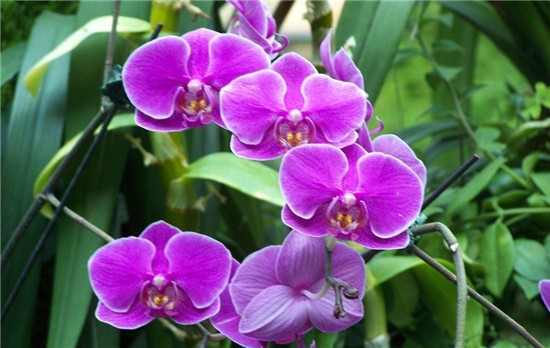
High humidity is what Phalaenopsis loves most. Avoid letting Phalaenopsis be in a state of water shortage, especially during its growing period. Once water shortage occurs frequently, it will cause the leaves to turn yellow, and it is very difficult to recover. Usually, when watering Phalaenopsis, you can use a spray bottle to water; just water until water flows out from the bottom of the pot, and avoid watering too much.
In flower-growing forums, we often see some flower-growing questions about Phalaenopsis root rot, and this may also be caused by the lack of a ventilated environment. Phalaenopsis is delicate, and choosing a ventilated environment will be more conducive to its growth. A stuffy and hot environment is also unsuitable for growing Phalaenopsis, especially in the summer in the south, where attention should be paid to shading the Phalaenopsis. Phalaenopsis is an epiphytic orchid and likes semi-shade. In winter, when the temperature is low, use the midday time to ventilate it, but do not let the draft blow directly toward the orchid plant. In spring and autumn, pay attention to protecting the orchid from light. In this way, ensuring good light and ventilation, the flowers that bloom will be even more delicate and beautiful!
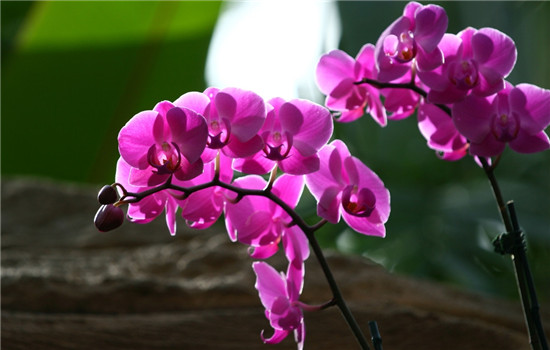
How to care for Phalaenopsis orchids after blooming
1. Should the flower spike be cut after Phalaenopsis blooms?
After Phalaenopsis finishes blooming, the flower stem can be cut, but it is best not to cut it all off (decide according to the condition of the whole plant; if the roots and leaves are very healthy and strong, it is recommended to keep a few nodes of the flower stem, and generally new flower buds can emerge after about 2 months). Cut it near the first flower or the first branch; the remaining spent flower stalk still has buds and can sprout again after being grown for a certain period. For orchids, do not let them bear fruit, because even if they can bear fruit, propagation by seed is very difficult, and the fruiting process consumes nutrients. Whether to fertilize can be determined after flowering by observing the plant's growth.
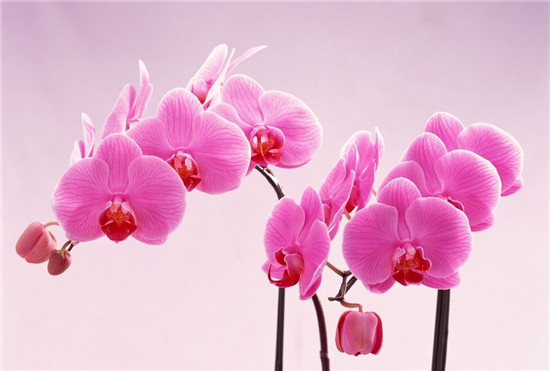
2. How to care for Phalaenopsis after blooming
After Phalaenopsis blooms, you can give it a little slow-release fertilizer. It should be placed in diffused light, watered only when dry at ordinary times, and misted frequently. Be careful not to wet the new buds, otherwise they will easily rot. In summer, place it in a ventilated and cool place; in winter, it is best not to let it go below 15 degrees.
The above is all the content I have summarized for you on how to care for Phalaenopsis orchids after blooming. I hope this article can help everyone. Please also continue to follow us.