How to Care for a Clivia and Its Daily Management
Clivia is a noble and precious flowering plant with an air of refinement and gentlemanly grace. That is why so many people love it. How do you grow clivia? What are the methods for caring for clivia?
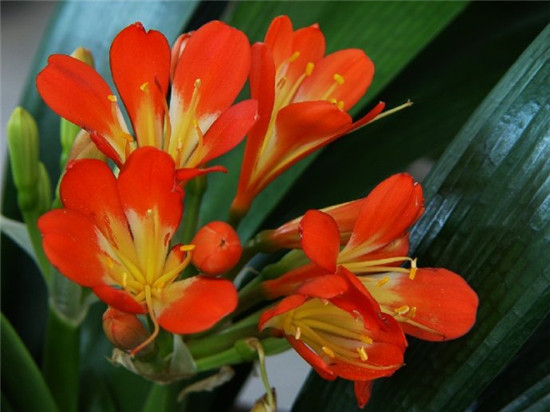
When growing clivia, pay attention to the following points:
Soil selection - The roots of clivia are fleshy roots, suited to growing in loose, fertile, well-aerated, slightly acidic soil, so the soil used to grow clivia should meet these requirements.
Watering - The principle of watering is not to water until the soil is dry, and when you do water, water thoroughly. Never give just a little at a time; that skimming-the-surface approach is extremely harmful to clivia. Also pay attention to the timing of watering, preferably in the morning or evening; at midday in summer the temperature is very high, so it is not suitable for watering. One more point: when watering, avoid the heart of the plant, so as to prevent the heart from rotting.
Fertilizing - There is no doubt that fertilizer is an essential and important source of nutrients for vigorous plant growth, and of course clivia is no exception; it too likes to be supplied with nutrients through fertilizer. Fertilizing clivia should be determined specifically according to the size, variety and growth and development of the plant. Too much or too little fertilizer will not do. Too much will burn the roots; too little will leave it short of nutrients, and the leaves will become noticeably narrower and no longer stand upright.
Light - Clivia is a plant that likes moisture and is suited to growing in a high-humidity environment, but it has low light requirements; as long as the temperature is suitable, it does not matter whether the light lasts a little longer or a little shorter. Although good light can ensure that the clivia flowers are brightly colored, it still prefers slightly weaker light, so strong light must be avoided.
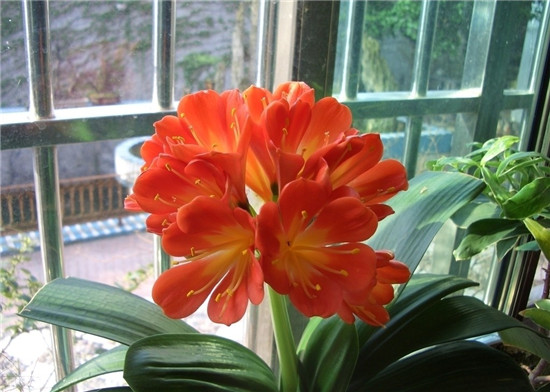
Repotting - When clivia has grown larger, it needs a bigger pot, which is what is called "repotting and changing the soil." The best time to change the soil is in spring and autumn, because clivia grows vigorously then and the plant's growth will not be affected by the soil change. The most critical point when changing the soil is to firm the soil around the roots; otherwise, if there is no soil around the roots, water and nutrients will not reach the roots, and root rot can easily occur.
Light - Light is an indispensable element for clivia's photosynthesis. It needs sufficient light; indoor-grown clivia should be placed on a windowsill to ensure adequate light. It is not tolerant of strong light and prefers weak light (dappled light). In summer, when the light is strong, shading treatment is needed to prevent the leaves from being scorched. Clivia leaves have a strong phototropic tendency, so regularly adjust the angle toward the light to keep the plant's shape neat; if conditions allow, the leaves should be oriented so that they extend in line with the north-south direction. Clivia leaves should be kept clean; frequently wipe the dust off the leaves with a soft damp cloth, which is good for photosynthesis.
Temperature - The suitable temperature for clivia growth is 15°C-25°C, neither too cold nor too hot. In summer, when the temperature is above 25°C, methods such as ventilation and shading should be used to lower the temperature; above 30°C with low humidity, the leaves will lose their luster, and high temperatures with plenty of water will make the leaves grow too long; high temperatures can even cause "high fever disease," leading the whole plant to rot. Below 10°C, growth and development will be slow; below 5°C, growth will be inhibited; below 0°C, the leaves will freeze and be damaged or the plant will die.
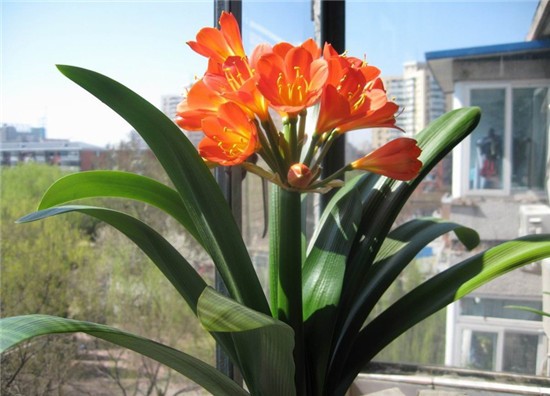
Humidity - Clivia likes a warm, humid environment; low environmental humidity will affect the luster of the leaves. Dry air and wind and sun in the open will cause the leaves to lose their delicate luster, becoming rough and dull in color. People have found that clivia grown in a greenhouse is delicate, lush and glossy, while clivia grown on a windowsill cannot achieve this effect, and this is the reason. The solution is to try to create a small greenhouse-like environment on a balcony.
Little-Known Facts About Growing Clivia
Clivia belongs to the Amaryllidaceae family and is a perennial evergreen herbaceous plant. Its leaves are broad and strap-shaped, hard and thick in texture, with luster and leaf veins.
The flowers of clivia do not have the magnificence of peonies, nor the rich fragrance of jasmine, and still less the colorful charm of Chinese roses, but it has sword-like green leaves, broad, thick and glossy; and fire-like red flowers, blooming elegantly, with red and green setting each other off, making it an ideal potted flower for beautifying the environment.
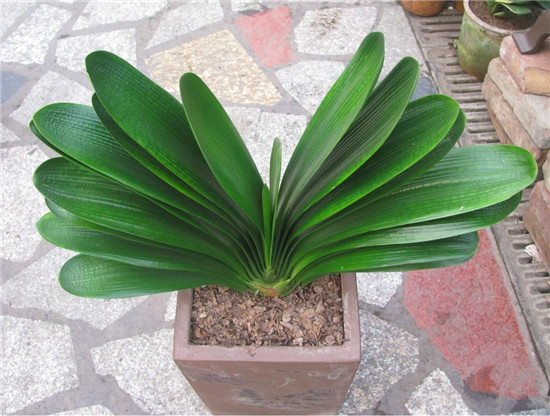
Moreover, the clivia plant, especially its broad, thick leaves, has many stomata and hairs that can secrete a large amount of mucus; through air circulation, it can absorb a large amount of dust, smoke and harmful gases, and can filter indoor air, making the air clean.
Clivia originated in southern Africa, growing beneath large trees, so it fears heat and is not cold-tolerant; it likes a semi-shaded and humid environment, fears strong direct sunlight, likes a ventilated environment, and is suitable for indoor cultivation. It is an ideal precious flowering plant for buildings, halls, institutions and homes.
The above is the complete content of my summary of how to care for clivia and its daily management. I hope this article can help everyone. Please also continue to follow us.