How to Water a Clivia? A Detailed Guide to the Correct Watering Method
Water is indispensable for plant growth. When caring for a clivia, how to water it, how to do it properly, and how often to water are all questions you need to consider. Let's take a look at the answers to these questions.
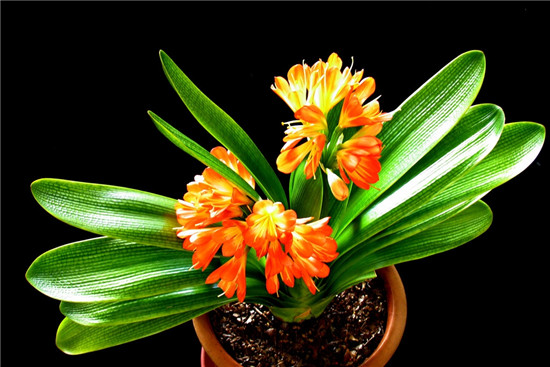
How to water a clivia? How should you do it? We usually use tap water for watering flowers, but tap water contains a small amount of substances harmful to clivia, which is bad for its growth. In addition, the temperature difference between tap water and the potting soil is fairly large; watering directly with tap water shocks the roots and is not good for the clivia's growth. So if you use tap water on a clivia, you should generally let the tap water sit indoors for two days first. This not only evaporates or precipitates out harmful substances such as bleaching powder, but also brings the water temperature up to, or closer to, that of the potting soil.
Pay attention to the amount and frequency of watering. When watering a clivia in winter, if the indoor temperature is high and the humidity is low, you can water once every 2-3 days. If the indoor temperature is very low, you can extend it to once a week. Each watering should soak through, but do not let it run out, to prevent nutrient loss. The best time to water is in the morning, because the indoor temperature is low in winter, and the morning water temperature is closer to room temperature and the potting soil temperature; watering at this time does not shock the roots, and allows the clivia to stay in a suitable temperature for growth and development for a longer period.
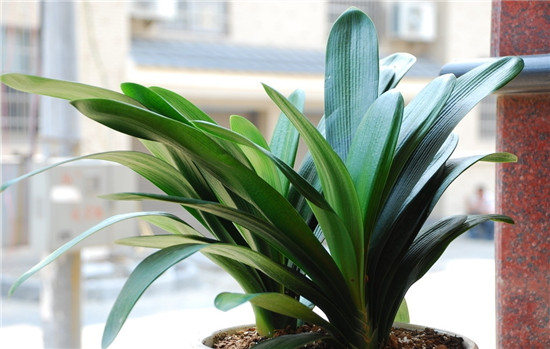
Generally do not use a spray bottle for watering. Because before flowering in winter, the clivia is in the stage of sending up its flower stalk, and spraying water at this time can easily cause the flower stalk and flower center to stay damp for a long time and rot.
Clivia has well-developed fleshy roots that can store a fair amount of water, giving it a certain drought tolerance. But prolonged lack of water will affect new leaf growth, rooting and flower stalk emergence; too much water, however, easily causes root rot.
So how do you water a clivia scientifically? Experience shows that you should not wait until the potting soil is dry before watering a clivia; water when it is half dry, so that the potting soil stays consistently moist top and bottom, which is what favors growth and flower stalk emergence.
But the amount of water each time should be handled differently. For small pots and small plants, when the temperature is high, ventilation is good, evaporation is fast and the soil has good air permeability, water more; otherwise water less. Seedling-stage management needs less water, and the flowering stage needs more; in spring and summer water once a day, in autumn water once every other day, and in winter water once every 3-5 days. For watering, it is best to use magnetized water, rainwater, snow water or river water. If you have no choice but to use tap water, store the tap water in a container as much as possible and let it sit for 1-2 days before use.
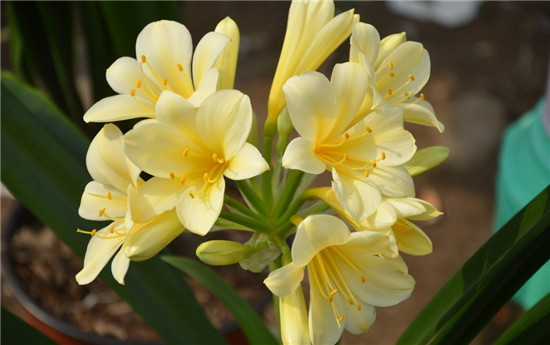
Methods for Watering a Clivia
1. Tap
Lightly tap the pot at the 1/2-1/3 point. A clear, ringing sound means the soil no longer has enough water and it is time to water. A dull sound means there is plenty of water and no watering is needed.
2. Weigh
Before watering, lift the pot and feel its weight. Water it. After watering, lift the pot again and feel the weight. Over time, with some experience, you will know just by lifting the pot whether it is time to water.
3. Probe
Probing is the most direct method. Put a finger about 1/3 of the way into the soil and feel the moisture. If it is moist, no watering is needed. If it is damp, get ready to water. If there is only a slight trace of moisture, it is time to water.
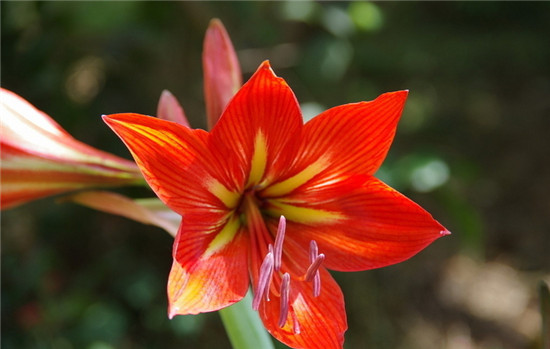
When watering a clivia, you should soak it through. At home, the best way to water a clivia is the "sit-pot" method. That is, place the clivia's pot inside a basin and water it, and keep the water that flows out of the pot for watering the flowers next time. This way the soil is easily soaked through, and the nutrients flowing out of the pot are not lost and wasted with the water. When watering, also be careful not to let water get into the leaf core; if water accidentally gets into the leaf core, immediately use highly absorbent paper or cotton to draw the water out.
The above is the complete content I have summarized for you on how to water a clivia. I hope this article can help you. Please also keep following us.