Introduction to Lilium leichtlinii and Lilium longiflorum and Growing Tips
Lilium leichtlinii is a beautiful ornamental flower with a rich fragrance and delicate colors, symbolizing nobility and prosperity. Now let us take a look at the introduction to Lilium leichtlinii.
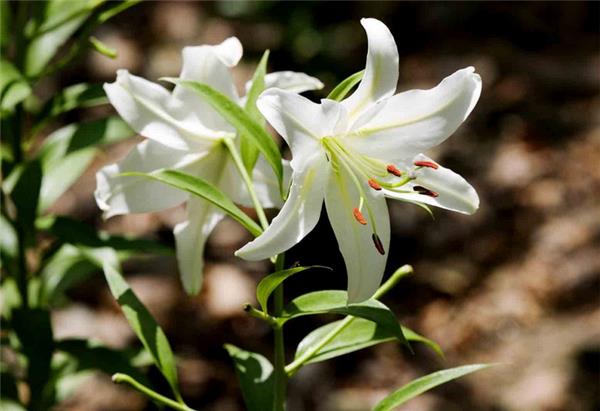
I. Introduction to Lilium leichtlinii
Lilium leichtlinii, a perennial bulbous herbaceous flower, with a plant height of 40-60 cm. Some have a rich fragrance, hence the name "Lilium longiflorum" (Easter lily). It is mainly distributed in the temperate regions of the Northern Hemisphere, including eastern Asia, Europe and North America. It is a perennial bulbous herbaceous flower with a plant height of 40-60 cm, and some reach over 1 m. The stem is erect, unbranched, grass-green, with red or purplish-brown spots at the base of the stalk. It has underground bulbs; the bulb is formed by broad ovate or lanceolate fleshy scales, white or pale yellow, 6-8 cm in diameter, clasped together into a sphere, with a membranous layer outside. Most fibrous roots grow from the base of the bulb. Leaves are simple, alternate, narrowly linear, without petioles, directly clasping and growing on the stalk, with parallel veins. Some varieties produce purple or green granular bulbils in the leaf axils, and these bulbils can propagate into small plantlets. Flowers are borne at the top of the stalk, in a raceme, clustered or solitary; the corolla is relatively large, the floral tube is relatively long, funnel-shaped and trumpet-like, with six lobes and no sepals; because the stalk is slender and the flower is large, it often droops or extends horizontally when open; the flower color varies among varieties, mostly yellow, white, pink, orange-red, some with purple or black spots, and some with multiple colors in one flower, extremely beautiful. Petals may be flat or curled outward, hence the elegant name "Juan Dan" (tiger lily). After the flowers fall, it produces oblong capsules.
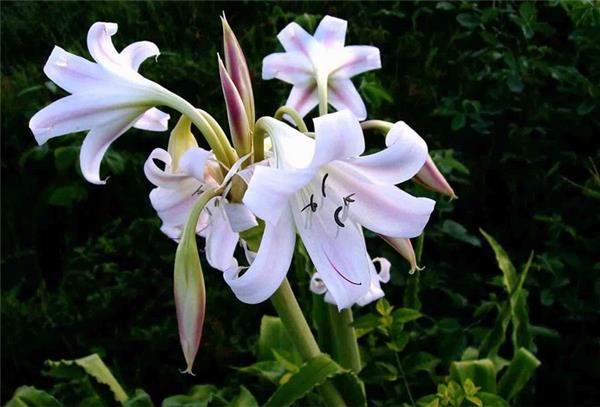
II. Ecological Habits of Lilium leichtlinii
It likes moisture and light, and requires fertile, humus-rich, deep sandy soil with extremely good drainage. Most varieties are suitable for growing in slightly acidic to neutral soil.
III. Distribution Area of Lilium leichtlinii
Lilium leichtlinii is mainly distributed in the Northern Hemisphere, including eastern Asia, Europe and North America.
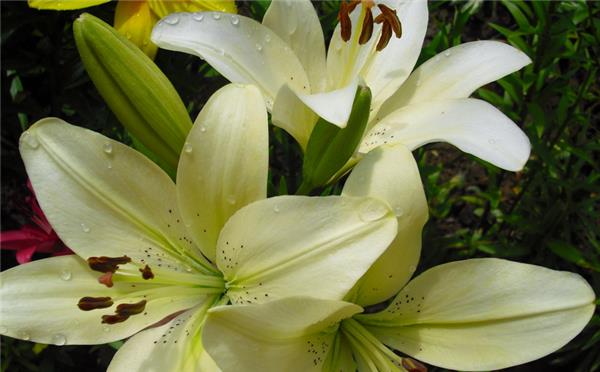
IV. Cultivation of Lilium leichtlinii
1. Land preparation: Fertilization. Lilium leichtlinii has strong adaptability, and mild climate with sufficient sunlight is preferable. For potted plants, deep sandy loam with good drainage is suitable, clay soil is second best, and waterlogged land with standing water is not suitable for planting. When planting, choose a good plot, and apply 4000 kg of barnyard manure and soil-mixed fertilizer plus 40 kg of superphosphate per mu as base fertilizer; plow 20 cm-30 cm, harrow fine and level; make beds 130 cm wide, with the bed length depending on the terrain. In areas with especially heavy rain, pile up beds into ridges 80 cm-100 cm wide, open drainage ditches 10 cm-15 cm deep to prevent water accumulation.
2. Cultivation techniques: Lilium leichtlinii generally matures and is dug up in mid-to-late July. After digging, bury it in slightly moist fine sand for storage, but it can also be left in the pot without digging and dug as needed for planting. Between September and October, take out the root buds, separate the root buds, and on the prepared land, plant the root buds with the buds facing upward in furrows at a row spacing of 25 cm-30 cm and a plant spacing of 5 cm-20 cm. For flat beds, cover with 4 cm-5 cm of soil; for pit planting, cover with 5 cm-7 cm. If the soil is too dry when planting, water lightly. Use 130 kg-150 kg of root buds per mu.
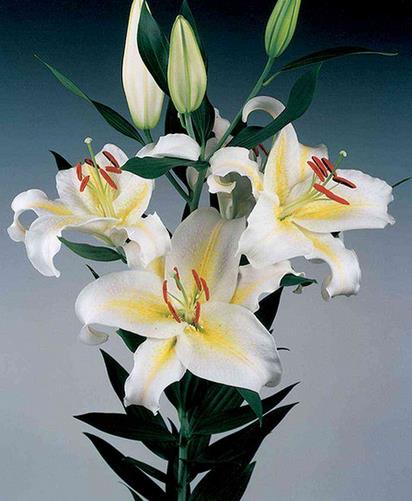
3. Pest and disease control: Pay attention to intertillage and weeding; intertillage should be shallow rather than deep. Lilium leichtlinii consumes its own nutrients in the early growth stage, has base fertilizer in the middle stage, and flowers in the late stage. When flower buds appear, remove them promptly to reduce nutrient consumption and increase yield. Lilium leichtlinii basically has no diseases throughout the growing period. If root rot is found, apply 50% wettable powder Tuzet at 500 times dilution to drench the roots when the disease occurs. The main insect pest is aphids, which can be controlled with commonly used low-toxicity insecticides.
The above are the growing tips for Lilium leichtlinii. We hope they can help you.