A Detailed Introduction to the Ornamental Peach and Its Cultivation Techniques
The ornamental peach is a variety of peach and a well-known ornamental plant. The poet Su Dongpo once wrote, "The water cuts off the southern hills, and no one crosses; the east wind ages the ornamental peach blossoms." Whether lightly adorned or richly dressed, the ornamental peach has a beauty that is just right. Now let us take a look at some knowledge about the ornamental peach.
I. Introduction to the Ornamental Peach
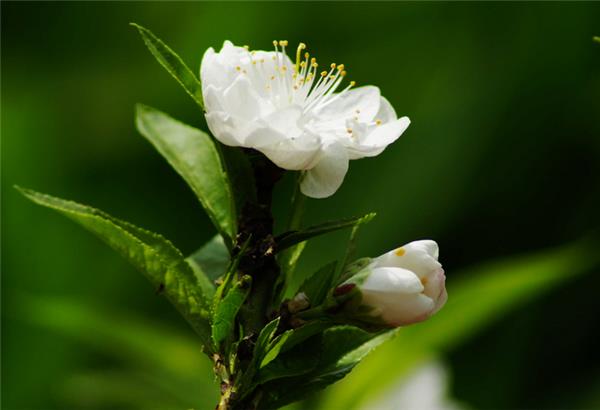
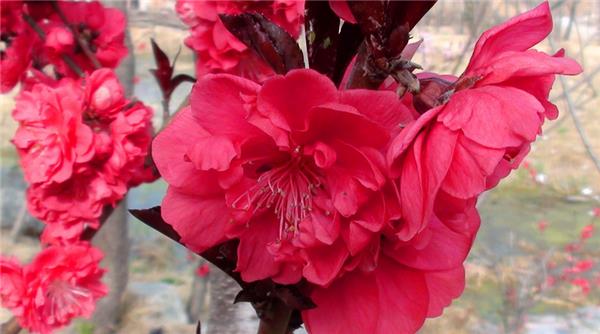
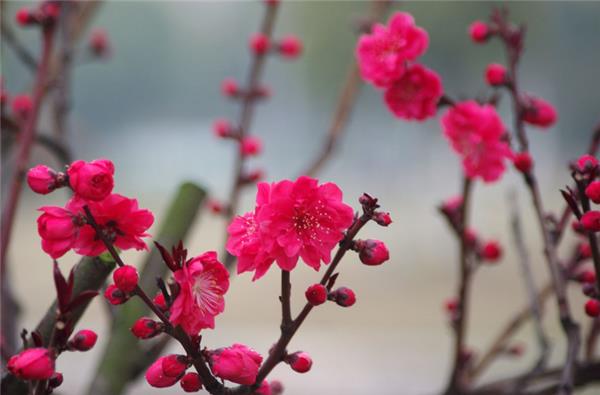
The ornamental peach is a variety of peach, belonging to the genus Prunus in the rose family (Rosaceae). By convention, the semi-double and double varieties that belong to the ornamental peach category are collectively called ornamental peach. The flowering period of the ornamental peach is from March to April, longer than that of plum blossom. The flowers are plump, the colors are bright and rich, and the flower forms are many. Common cultivated varieties include white ornamental peach, ornamental peach, and red ornamental peach, as well as 'Sajin' ornamental peach, which has pink and white on the same plant, the same flower, or even the same petal, and variants such as chrysanthemum-flowered ornamental peach, five-color ornamental peach, weeping ornamental peach, and red-leaf ornamental peach. It is a small deciduous tree. It can reach 8 m in height, and after shaping is generally kept at 3 m-4 m. The twigs are reddish brown and hairless; the leaves are elliptic-lanceolate, 7 cm-15 cm long, with a gradually pointed tip. Flowers are borne singly or in pairs in the leaf axils. The double varieties belonging to the ornamental peach category are collectively called ornamental peach, all being forms of the fruiting peach; there are many varieties, such as white ornamental peach, red ornamental peach, 'Sajin' ornamental peach, and two-color ornamental peach. The leaves are elliptic-lanceolate, long and pointed at the tip, broadly wedge-shaped at the base, smooth and hairless on the surface. The leaf margin has coarse serrations, the leaf margin has coarse serrations, and the leaf base has glands. The flower buds are axillary, flowering before leafing out, with solitary flowers and very short pedicels. The original species has pink or white single flowers, and there are more than 40 cultivated varieties.
II. Pot Cultivation Techniques for the Ornamental Peach
1. Bonsai Creation
Production method:
Take a successfully grafted peach seedling and, around the Awakening of Insects (Jingzhe) the following year, cut it off 1.5 cm-2.0 cm above the grafted bud to encourage the grafted bud to grow; during this period, potting and shaping pruning can be carried out at the same time. For the ornamental peach, use a loose, breathable, drainage- and fertilizer-retaining sandy soil. For the pot, choose a purple clay ceramic pot or glazed ceramic pot whose color contrasts with the flower color. For shaping and pruning, according to the tree's vigor and growth and your own aesthetic sense, gradually carry out thinning, twisting branches, pulling branches, bending, heading back, flat cutting, scar creation, flower thinning, and other methods. To create a peculiar and elegant masterpiece, note that its branches and trunk should be sparse rather than dense; if dense, it loses its charm.
Flowering period control. When the bonsai has begun to take shape, flowering period control should be carried out. The ornamental peach normally blooms around Qingming Festival. If you want it to bloom during Spring Festival, place the ornamental peach bonsai outdoors in a wind-sheltered, sunny spot for winter chilling treatment, then move it indoors about 60 days before Spring Festival, keeping the room temperature at 15°C-20°C.
2. Daily Care
The ornamental peach likes light and should be placed in a wind-sheltered spot; never place it in a drafty opening. During the flower bud differentiation period from July to August, water should be withheld appropriately to promote flower bud differentiation. During the winter dormant period, watering should be reduced. Fertilizer and water should be light and dilute; never use too much nitrogen fertilizer, lest the branches and leaves grow excessively and fail to form flower buds. Generally, apply base fertilizer once each year in winter. Before flowering, the content of phosphorus and potassium fertilizer can be increased. In winter or from after flowering until fruit set, fertilizing is not suitable, so as to avoid flower and fruit drop. During the growing season, the ornamental peach should be thinned by combining shaping with the removal of overly dense flowering branches; in the peak growing season, pinching can be done 1-2 times. Before flowering and around June, long branches should be appropriately shortened to encourage more flowering branches. Repot every 3-5 years, preferably before bud break in spring. Low-temperature treatment: after leaf drop, place the ornamental peach outdoors, and by early December it goes through the low-temperature stage after Light Snow. After Major Snow, bring it indoors. Suitable temperature treatment: when the ornamental peach is moved indoors, the temperature should be kept at about 12°C; after the Major Cold period, the ornamental peach can hold its buds ready to bloom to welcome Spring Festival. Suitable moisture: the ornamental peach does not need much water in winter; generally, maintaining a soil moisture content of about 40% is sufficient. Increasing temperature and humidity: 25 days before Spring Festival, cover the entire flower pot with a transparent plastic bag, which can raise the temperature by 1-2°C and the humidity by about 20%. It blooms 10-15 days earlier than without the plastic bag. The bagging time is about 25 days before Spring Festival. After the ornamental peach blooms, remove the plastic bag for viewing. Increasing light: indoors, the ornamental peach needs sufficient sunlight; sunlight can promote flower bud differentiation, advance flowering, and make the flowers larger and the flower color brighter. According to measurements, an ornamental peach receiving 5 hours of light per day blooms 20 to 23 days earlier than one receiving 1 hour of light per day, and 25 to 30 days earlier than one in dim light. An ornamental peach intended to bloom for Spring Festival must be guaranteed sufficient sunlight, and is generally placed on a windowsill that gets sunlight.
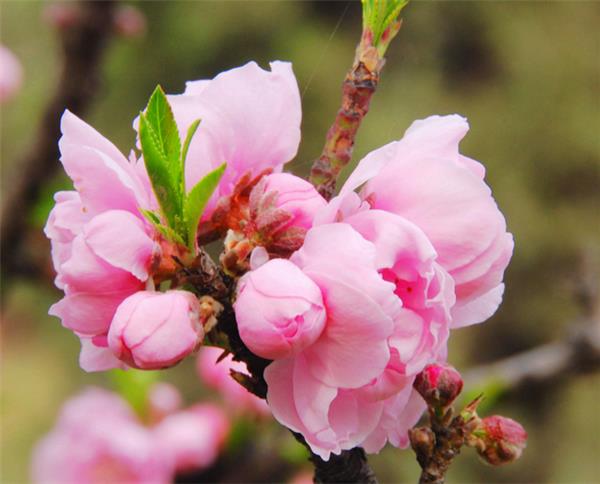
Extending the flowering period: the flowering period of the ornamental peach is generally 10-15 days. But to make its flowering time longer, two methods should be used: first, after flowering, move it to a bright place without direct sunlight. The pot soil moisture should not be too high, not exceeding 40%, nor too dry, not less than 30%. This can extend the ornamental peach flowering period to 20-25 days. Second, during the flowering period, water it with a 400-fold vinegar solution, or use a sprayer to spray a small amount of vinegar mist onto the flowers, which can keep them fresh and extend the flowering period, keeping the ornamental peach flowering period at about one month.
The above is the related knowledge about the ornamental peach; I hope it can help you.