How do you care for a jade plant (Crassula ovata) so it stays evergreen all year round? A guide to growing methods
The jade plant has thick, fleshy branches and leaves, is emerald green all year round, has unusual leaf shapes and a dignified form, and is easy to cultivate and simple to manage. It is well suited to pot culture and can be placed on a balcony or used as an accent on an indoor table or desk, where it looks very elegant and refined. Below, we introduce the jade plant and growing tips.
I. An introduction to the jade plant
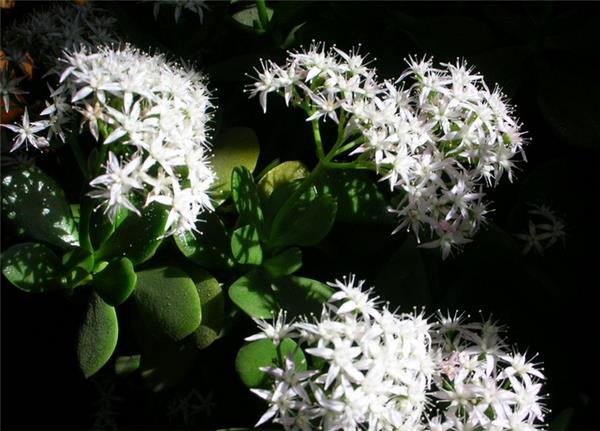
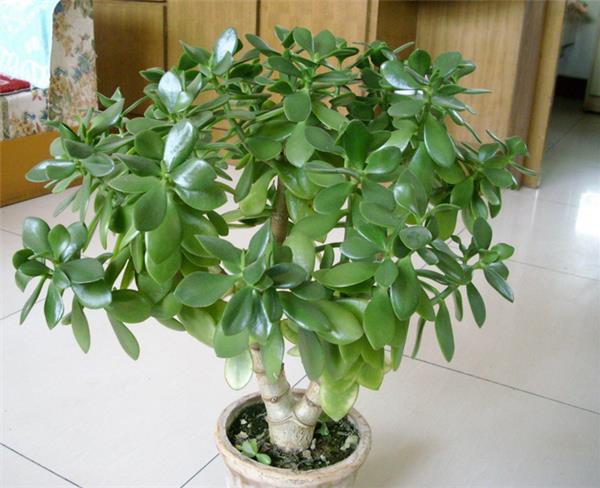
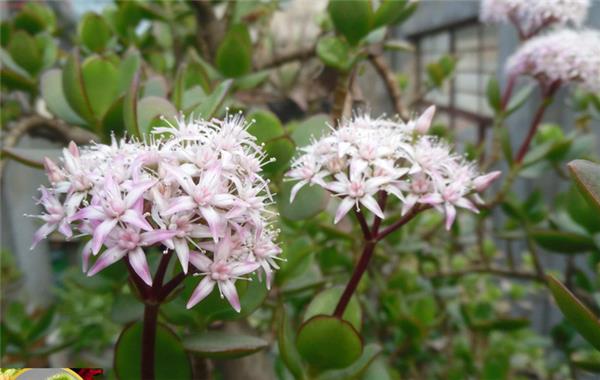
The jade plant is the variety that flower lovers most easily confuse with the jade tree (Crassula ovata); jade plant leaves have red edges, while jade tree leaves are green. The jade plant has a subshrub form with many branches, a distinct round stem, green or yellowish-brown skin, and small dots on the leaves. The fleshy leaves are opposite, growing densely at the top of the stem or branches; the fleshy leaves are long ovate, slightly curved inward, with a slight leaf tip, and range in color from green to red-green with a glossy sheen. When the temperature difference is large, the leaf edges turn red while the leaf center stays green, which is very beautiful; under controlled water and strong light, the whole plant takes on a very attractive red-green color. Normally grown plants are green with a touch of red on the edges, while plants kept in low light turn green. The flowers bloom in clusters; the small flowers are white or white-pink, cross-pollinated between different plants, and it does not flower easily. The jade plant has a tall, graceful crown, emerald-green stems and leaves, and white flowers borne at the top, making it very elegant and distinctive. If combined with a pot stand and gravel to make a small bonsai, the jade plant is suitable for pot culture, and it can also be trained into the look of an old tree stump, making it even more attractive as a decoration for a tea table or desk. However, its leaf sap is toxic and can cause blindness; the latest research reports that medicine made from jade plant extract can effectively treat diabetes. The jade plant is an evergreen small shrub, 1-3 m tall, with a fleshy stem and many branches. The leaves are fleshy, ovate, 3-5 cm long and 2.5-3 cm wide, gray-green, with red edges. The jade plant's flowers are 2 mm across, white or pale pink. It is a perennial evergreen succulent plant with thick, fleshy leaves, emerald-green stems and leaves, and white flowers borne at the top, making it very elegant.
II. Growing tips for the jade plant
1. Potting up
When potting up small seedlings, first place a 2-2 cm thick layer of coarse-grained substrate or clay pebbles in the bottom of the pot as a drainage layer, then sprinkle a layer of fully decomposed organic fertilizer on top as a base fertilizer about 1-2 cm thick, then cover with another layer of substrate about 1-2 cm thick, and then place the plant in, so as to separate the fertilizer from the roots and avoid burning the roots.
For the potting substrate, one of the following can be used. Garden soil: cinder = 3:1; or garden soil: medium-coarse river sand: sawdust (mushroom residue) = 4:1:2; or one of paddy soil, pond mud, or leaf mold. Or peat + perlite + clay pebbles = 2 parts + 2 parts + 1 part; garden soil + cinder = 3 parts + 1 part; peat + cinder + clay pebbles = 2 parts + 2 parts + 1 part; sawdust + vermiculite + medium-coarse river sand = 2 parts + 2 parts + 1 part. After potting up, water once thoroughly and keep it in a slightly shaded environment for a week.
2. Humidity management
It likes a relatively dry air environment; if rainy weather lasts too long, it is easily infected by pathogens. It is afraid of rain, so keep the leaves dry at night. The optimum relative air humidity is 40-60%.
3. Temperature management
The optimum growing temperature is 15°C-32°C. It is afraid of high heat and stuffiness, and enters dormancy in the intense summer heat when the temperature is above 33°C. It is averse to cold and frost, and the overwintering temperature needs to be kept above 10°C. In winter, it also enters dormancy when the temperature drops below 7°C. If the ambient temperature approaches 4°C, it will die from frost damage.
a. In summer:
Strengthen air circulation so that the heat inside the plant can be released;
Place it in semi-shade, or give it 50% shade;
Mist it appropriately, 2-3 times a day.
b. In winter:
Move it indoors to a place with bright light for care;
Outdoors, it can be wrapped in plastic film to overwinter, but every two days at midday when the temperature is higher, the film must be opened to let it breathe;
4. Light management
In summer, keep it in semi-shade, or give it 50% shade, and the leaf color will be even more beautiful. In spring and autumn, since the temperature is not very high, give it direct sunlight to help it carry out photosynthesis and accumulate nutrients. In winter, keep it indoors in a place with bright light. If it is normally kept indoors, place it near a southeast-facing door or window so it can receive light, and after every one month or one and a half months, move it outdoors for two months of care; otherwise the leaves will grow thin and yellow, and the new branches or leaf stalks will be slender with elongated internodes, in a state of leggy growth.
5. Fertilizer and water management
Its drought tolerance is very strong, and it can grow even in dry environmental conditions, but this does not mean not watering or fertilizing it; its root system is afraid of waterlogging. If water accumulates in the flower pot, or if it is watered and fertilized too frequently, root rot is easily caused. The principle for fertilizing and watering it is "alternate dry and wet, when dry let it dry out thoroughly, do not water when not dry, and when watering, water thoroughly", and when fertilizing and watering, avoid getting the plant wet.
6. Overwintering management
Move the pot indoors in good time. After winter begins, move the jade tree indoors where 7°C to 10°C can be maintained for warmth. On warmer days, at midday the jade tree can be moved to the balcony to bathe in sunlight, and at night it should still be moved back indoors. Control the dryness and moisture of the potting soil. In winter, the potting soil should be kept mainly slightly dry, and a fine mist should be sprayed on the leaves at the right time to replenish water. Generally, there is no need to water the potting soil directly. Move it into a warm shed for warmth. If conditions allow, the pot can be moved into a warm shed; if not, a plastic film cover can also be used, but attention must be paid to the humidity inside the cover, and when excessive moisture is found, the cover should be opened in good time for ventilation to prevent leaf rot. If, due to earlier mistakes in cold protection measures, the jade tree has already suffered frost damage, do not easily discard the plant. As long as the frost-killed leaves and tender branches are removed and the plump main stem is preserved, and appropriate fertilizer is applied in the coming spring, the main stem can still sprout new branches and new leaves, and generally after 1 to 2 years of cultivation, it can develop into a perfect jade tree again.
The above is the relevant knowledge about the jade plant; I hope it can help you.
root rot is easily caused. The principle for fertilizing and watering it is "alternate dry and wet, when dry let it dry out thoroughly, do not water when not dry, and when watering, water thoroughly", and when fertilizing and watering, avoid getting the plant wet.6. Overwintering management
Move the pot indoors in good time. After winter begins, move the jade tree indoors where 7°C to 10°C can be maintained for warmth. On warmer days, at midday the jade tree can be moved to the balcony to bathe in sunlight, and at night it should still be moved back indoors. Control the dryness and moisture of the potting soil. In winter, the potting soil should be kept mainly slightly dry, and a fine mist should be sprayed on the leaves at the right time to replenish water. Generally, there is no need to water the potting soil directly. Move it into a warm shed for warmth. If conditions allow, the pot can be moved into a warm shed; if not, a plastic film cover can also be used, but attention must be paid to the humidity inside the cover, and when excessive moisture is found, the cover should be opened in good time for ventilation to prevent leaf rot. If, due to earlier mistakes in cold protection measures, the jade tree has already suffered frost damage, do not easily discard the plant. As long as the frost-killed leaves and tender branches are removed and the plump main stem is preserved, and appropriate fertilizer is applied in the coming spring, the main stem can still sprout new branches and new leaves, and generally after 1 to 2 years of cultivation, it can develop into a perfect jade tree again.
The above is the relevant knowledge about the jade plant; I hope it can help you.