How to Grow Sandersonia? A Guide to Its Characteristics and Cultivation Methods
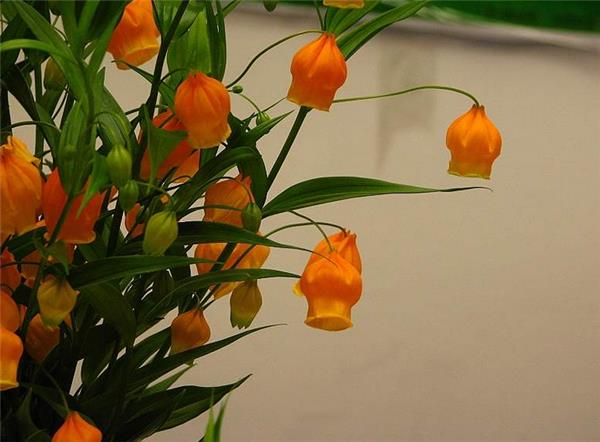
Sandersonia has a delicate, dainty and lovely appearance. Its orange-yellow bell-shaped flowers paired with bright green, glossy stems and leaves make it very appealing. It is an excellent cut flower material and bridal bouquet material. Its natural germination rate is low, its growth period is long, and it has high environmental requirements, so it has always been a high-priced flower. It is currently a trendy cut flower popular internationally, with New Zealand growing the most. So, do you know how to grow Sandersonia? Let's take a look.
I. Introduction to Sandersonia
Sandersonia is a perennial bulbous herb. Sandersonia produces golden-yellow bell-shaped flowers. It can adapt to a wide range of temperature and light variations, so in temperate and subtropical regions, it can grow normally both indoors and outdoors. From planting to flowering takes 9-12 weeks; from planting to harvesting the bulbs takes 21-25 weeks. Its form is graceful and its flowering period is long, with a vase life of up to 2-3 weeks. Practice has proven that whether for bulb production or cut flower production, considerable returns can be obtained. Sandersonia is a rather unique variety, and its golden-yellow bell-shaped flowers are good evidence of this. Sandersonia originated in moist grasslands with rainy summers, lower winter temperatures (during which the lily is in a natural dormant state), and relatively little rainfall.
II. Cultivation of Sandersonia
Bulbs are planted in spring. When the soil temperature is above 16°C, they will sprout in 2-3 weeks. If the climate is cold or the dormancy period is less than 16 weeks, we recommend forcing. Under suitable conditions, the plants will flower in 45-60 days. The natural dormancy period of Sandersonia bulbs requires at least 12 weeks, but cold storage can break dormancy. Overall, the entire growth cycle takes about 20-25 weeks. If the temperature is lower during this period, the growth period will be prolonged.
1. Environmental Conditions
Sandersonia grows best under conditions of higher soil temperature (18-24°C), with protection from wind, rain, and scorching sun. Recent research shows that excessively high temperatures affect growth and flowering. For example, high summer temperatures will shorten the growth cycle, but the stem length will also be correspondingly reduced, thereby reducing the number of flowers. Therefore, we recommend harvesting at least 60 days later. If planting in late winter or early spring, be sure to ensure the substrate temperature in the greenhouse.
2. Planting Requirements
Sandersonia is a temperate crop. The growing substrate should have good permeability, and watering should be regular. The substrate should be periodically sterilized with fungicides, and it is best to plant in a well-ventilated greenhouse. The optimal soil temperature for growth is 15-22°C, and the optimal air temperature for growth is 12-28°C.
3. Light
More than 90% light can make the stems and leaves robust and the golden-yellow bell-shaped flowers more vivid.
4. Water
Sandersonia is susceptible to high salinity, especially sodium salts. This situation is more likely to occur in artificial substrates than in soil. Too high salinity can lead to water deficiency. It is recommended to irrigate for 20-30 minutes daily from the 17th week after planting, and to use a conductivity meter to regularly test soil conductivity. Symptoms of high salinity in plants include yellow leaves, weak growth, browning of leaves, and even complete chlorosis. Chlorotic plants are often mistaken for being diseased. This chlorosis is more likely caused by excessively high ion concentration and is not disease. Irrigate from the top for the first 8 weeks after planting, then change the bulb seat zone for the next 9 weeks, and stop watering after 17 weeks of planting. Harvest the bulbs 4-6 weeks after stopping watering.
5. Growth Cycle
From planting to flowering takes 9-12 weeks; from planting to harvesting the bulbs takes 21-25 weeks.
The above is the planting guide for Sandersonia, for reference only. Due to different climate conditions in different regions, please adapt to local conditions.