The Complete Guide to the Benefits of Honeysuckle: A Full Breakdown of This Green Plant's Effects
The small honeysuckle is a fairly common Chinese herbal medicine in daily life, and it also has a certain nutritional value. Let's take a look together at the complete guide to the benefits of honeysuckle!
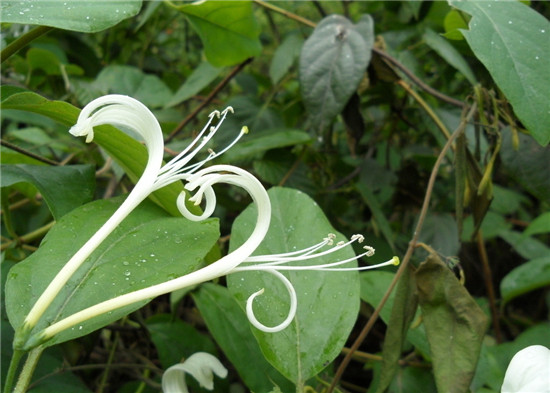
The Effects of Honeysuckle
1. Anti-pathogenic microorganism effect. It has a certain inhibitory effect on a variety of pathogenic bacteria such as Staphylococcus aureus, hemolytic Streptococcus, Escherichia coli, Shigella dysenteriae, Vibrio cholerae, Salmonella typhi, Salmonella paratyphi, and others.
2. It has bacteriostatic and bactericidal effects on Streptococcus pneumoniae, Neisseria meningitidis, Pseudomonas aeruginosa, Mycobacterium tuberculosis, Shigella dysenteriae, Streptococcus mutans, and others, and has an inhibitory effect on influenza virus, orphan virus, herpes virus, and Leptospira.
3. Anti-inflammatory and detoxifying effect: it has a relatively strong effect in dissipating carbuncles and reducing swelling, and in clearing heat and removing toxins, for carbuncle swelling, boils and sores, intestinal carbuncles, and lung carbuncles.
4. Heat-dispelling and pathogen-dispersing effect: it has a certain effect on externally contracted wind-heat or the early stage of warm disease, with fever and headache, restlessness and little sleep, clouded spirit and crimson tongue, and dry throat and mouth.
5. Blood-cooling and diarrhea-checking effect: it has the effect of removing toxins, checking diarrhea, cooling blood and soothing the throat, for heat-toxin dysentery, diarrhea with pus and blood, damp-warmth obstructing the throat, and sore swollen throat.
6. Honeysuckle tea is sweet in taste and cold in nature, and has the effects of clearing heat and removing toxins and dispelling wind-heat. Honeysuckle has the effects of clearing heat and removing toxins, soothing and clearing the throat, and relieving summer heat and restlessness. It can treat summer-heat syndrome, diarrhea and dysentery, influenza, sores, boils and swelling toxins, acute and chronic tonsillitis, periodontitis, and other diseases.
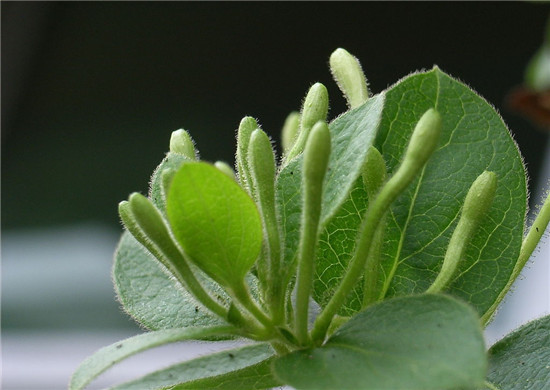
The Benefits of Honeysuckle
1. Used for externally contracted wind-heat or the early stage of warm disease
Honeysuckle is sweet and cold; it both clears heat from the qi aspect and clears heat from the blood aspect, and within its heat-clearing action it also has a mild dispersing effect, so it can treat externally contracted wind-heat or the early stage of warm disease when the exterior symptoms have not yet resolved while interior heat is already abundant. In application it is often combined with Forsythia suspensa, Arctium lappa fruit, and mint.
2. Used for sores, carbuncles and swelling toxins, and sore swollen throat
Honeysuckle has quite a strong heat-clearing and detoxifying effect, and is a commonly used item in external medicine. It is generally used for sores, carbuncles and swelling toxins with redness, swelling, heat and pain, and is relatively suitable for syndromes that in pattern identification belong to "yang syndrome." It can be decocted and taken internally with dandelion, Viola philippica, Forsythia suspensa, tree peony bark, and red peony root, or the fresh plant alone can be pounded into a paste for external application.
3. Used for diarrhea and dysentery with blood in the stool caused by heat toxin
When heat toxin gathers in the intestines and enters the blood aspect, diarrhea and dysentery with blood in the stool occur. Honeysuckle can cool the blood and resolve heat toxin, so it can treat blood dysentery with blood in the stool. In clinical practice, charred honeysuckle is often used together with Scutellaria baicalensis, Coptis chinensis, white peony root, and purslane.
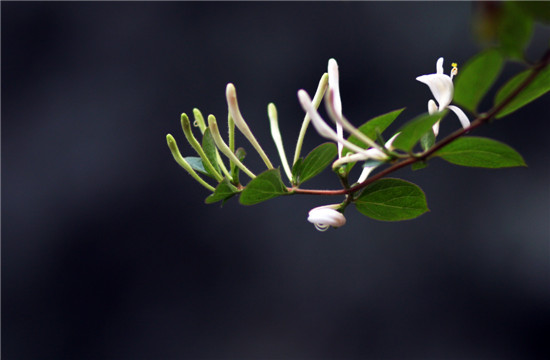
The Pharmacological Effects of Honeysuckle
1. Anti-pathogenic microorganism effect: In vitro experiments show that the flowers and vines have a certain inhibitory effect on a variety of pathogenic bacteria such as Staphylococcus aureus, hemolytic Streptococcus, Escherichia coli, Shigella dysenteriae, Vibrio cholerae, Salmonella typhi, Salmonella paratyphi, and others, and are also effective against Streptococcus pneumoniae, Neisseria meningitidis, Pseudomonas aeruginosa, and Mycobacterium tuberculosis. The water infusion has a stronger effect than the decoction, and the leaf decoction has a stronger effect than the flower decoction. If used together with Forsythia suspensa, the antibacterial range can also be complementary; when used with penicillin, it can strengthen penicillin's antibacterial effect against drug-resistant Staphylococcus aureus, which may be due to a synergistic effect in inhibiting protein synthesis within bacterial cells. Some believe that chlorogenic acid and isochlorogenic acid are the main effective antibacterial components of honeysuckle.
2. Anti-inflammatory and antipyretic effect: Intraperitoneal injection of honeysuckle extract at 0.25g/kg can inhibit carrageenan-induced paw swelling in rats. Another report states that honeysuckle injection at 30-40g/kg can reduce the degree of egg-white-induced paw swelling. Intraperitoneal injection of honeysuckle extract at 8g/kg, 2 times/day, for 6 consecutive days, also had a clear anti-exudative and anti-proliferative effect on croton oil-induced granuloma pouches in rats. Early reports stated that honeysuckle has a clear antipyretic effect, but when cholera vaccine, Bacillus tuberosus, or Bacillus subtilis infusion was injected into the ear vein of rabbits to induce fever, it was not confirmed that gavage of honeysuckle decoction at 5g/kg had a fever-reducing effect. It is believed that this may be related to differences in the honeysuckle preparation used, the dose, or the tolerance of the rabbits.
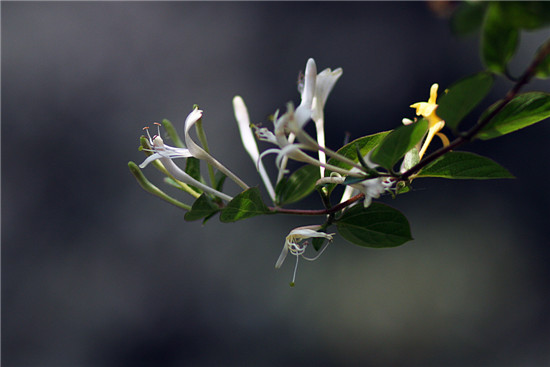
3. Effect of strengthening defense function: When honeysuckle decoction is diluted to a concentration of 1:1280, it can still promote the phagocytic function of white blood cells. Intraperitoneal injection of honeysuckle injection in mice also clearly promotes the phagocytic function of inflammatory cells.
4. Central excitatory effect: Through various experimental methods such as electric shock and rotating cage, it has been proven that after oral administration of chlorogenic acid, it can cause excitation of the central nervous system in animals such as rats and mice, with a strength of action of 1/6 that of caffeine, and combined use of the two has no additive or enhancing effect.
5. Blood lipid-lowering effect: Gavage of honeysuckle at 2.5g/kg in rats can reduce intestinal cholesterol absorption and lower plasma cholesterol content. In vitro experiments also found that honeysuckle can combine with cholesterol, but Simiao Yong'an Decoction (honeysuckle, Xuanshen, Angelica sinensis, licorice) in the treatment of experimental atherosclerosis in rabbits. No effect of lowering blood lipids and aortic wall cholesterol content was observed.
The above is the entire content of the complete guide to the benefits of the green plant honeysuckle that I have summarized for everyone. I hope this article can help everyone. Please also continue to follow us.
Lower plasma cholesterol content. In vitro experiments also found that honeysuckle can combine with cholesterol, but Simiao Yong'an Decoction (honeysuckle, Xuanshen, Angelica sinensis, licorice) in the treatment of experimental atherosclerosis in rabbits. No effect of lowering blood lipids and aortic wall cholesterol content was observed.The above is the entire content of the complete guide to the benefits of the green plant honeysuckle that I have summarized for everyone. I hope this article can help everyone. Please also continue to follow us.