Detailed Explanation of the Key Cultivation Techniques for Green Peonies
Many flower lovers want to know how green peonies should be cultivated, and what exactly the peony cultivation techniques are like. Let's take a look together!
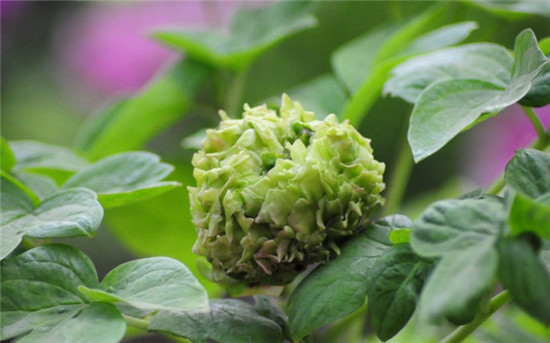
The peony belongs to the family Paeoniaceae, genus Paeonia, and is a perennial deciduous small shrub. Its roots are fleshy, thick and long, with a woody center, generally 0.5-0.8 m in length. The primary roots are white and later turn yellow (brown). Root types include taproots, slope roots, and intermediate-type roots. The plant height is mostly between 0.5-2 m. The branches are round, upright and brittle; the surface of the current year's new branches is smooth, while the surface of perennial branches is brown, often cracking and peeling. There are five plant forms: upright, spreading, open, dwarf, and single-stem. The leaves are bipinnately trifoliolate compound leaves, alternate; the upper surface of the leaf is dark green or yellow-green, and the lower surface is grayish green, smooth or hairy.
Leaves can be divided into leaf types such as large round leaves, large long leaves, small round leaves, small long leaves, and medium leaves. The total petiole is 8-20 cm long, with a groove on the surface. The flowers are solitary, borne at the top of the current year's branches, bisexual, brightly colored, and varied in form. The flower colors include ten major colors, divided into white, red, yellow, pink, purplish red, purple, dark purple (black), snow blue, green, and variegated.
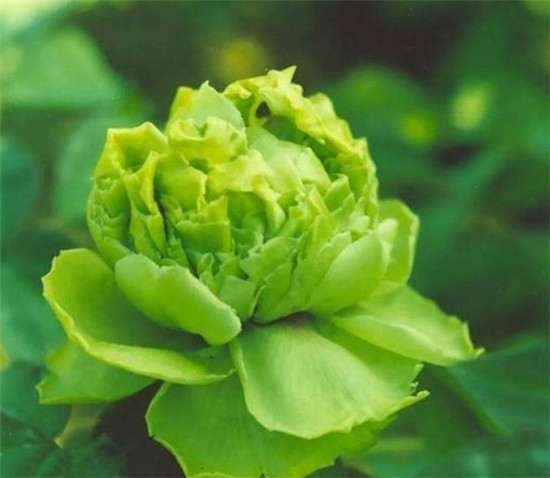
Flowers are traditionally classified into single-petal, double-petal, and thousand-petal types. According to the morphological characteristics of the flowers, they can also be divided into: sunflower type, lotus type, rose type, crown type, hydrangea type, and hemisphere type. The flowers have many stamens, strong seed-setting ability, and high seed maturity. If the female and male parts are seriously petaloid, few or no seeds are set. The follicle is five-angled, each fruit setting 7-13 seeds, oval, yellow when mature, turning blackish brown when old, with a thousand-grain weight of about 400 grams.
Sowing and Cultivation of Peonies
Depending on the region, from October to April, that is, the plant's dormant period, is the best planting period, but the freezing period should be avoided. After purchasing flower seedlings, they should be planted without waiting too long. If the soil is clayey, add some sand and crushed stone at the bottom of the roots. If the soil is very poor, add some fertilizer.
When planting peony seedlings, try not to touch their roots, because they are very fragile. The planting depth of the seedling is 5 to 10 cm from the graft union. After sowing, cover with soil level with the ground, then gently firm the soil, and immediately water thoroughly. Peonies dislike waterlogging, so water as appropriate during the growing season.
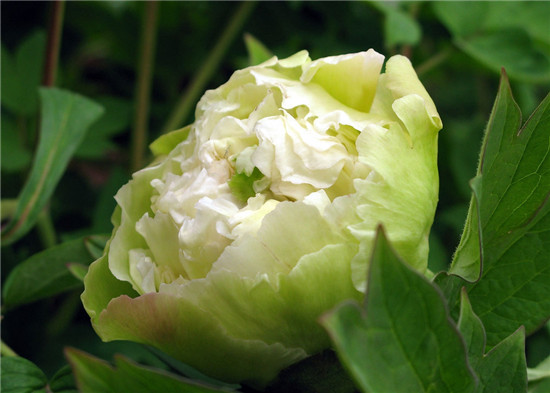
Although peonies appear delicate, they are actually very independent by nature. They will not mind the gardener's neglect. On the contrary, if you pamper them too much, feeding them too much or watering them too much, they will "ungratefully" grow only leaves without blooming, or even wither away and bid you a permanent farewell. After a long hibernation period, these new seedlings will bloom with brightly colored peony flowers from mid-April to the end of May the following year.
Cultivation and Management of Peonies
Planting:
The soil should be loose, fertile, and neutral to slightly alkaline. Cut off broken and diseased roots of the peony seedlings to be planted, soak them in insecticide and fungicide, and place them in a previously prepared pot or pit. The root system should be spread out. Fill with soil to more than half of the pot or pit, gently lift and shake the seedling, firm the soil and seal it. The depth should be such that the rhizome area is slightly lower than the pot surface or ground level.
Watering:
Water thoroughly once after planting. Peonies dislike waterlogging, so water as appropriate during the growing season. In arid northern regions, generally water before flowering, after flowering, and before freezing. For pot cultivation, to facilitate management, after flowering the faded flowers can be cut off and the whole pot buried in the ground.
Fertilizing:
One year after planting, fertilization can be carried out in autumn, mainly with decomposed organic fertilizer. It can be applied in combination with loosening the soil, by broadcasting, or by hole application. In spring and summer, chemical fertilizers are mostly used, applied with watering as pre-flowering fertilizer and post-flowering fertilizer. For pot cultivation, liquid fertilizer can be applied together with watering.
Pruning:
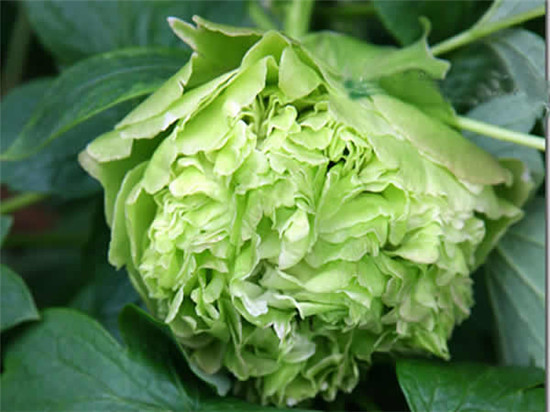
In the year of planting, cut back to the ground is mostly practiced. After sprouting in spring, keep about 5 branches and remove the rest to concentrate nutrients, so that the flowers will be large and brightly colored the next year. In autumn and winter, in combination with clearing the garden, cut off dried flower stalks, thin and weak branches, and non-flowering branches. For pot cultivation, prune into the shape you like as needed.
Cultivating:
During the growing season, cultivating should be done in time, weeds should be pulled out, and attention should be paid to the occurrence of diseases and insects. In autumn and winter, carry out plowing on the soil blocks of peonies more than two years old.
Repotting:
When potted peonies have grown for three or four years, they need to be repotted in autumn into a larger pot with added new fertile soil, or divided and replanted separately.
Spraying:
Spray lime-sulfur mixture before sprouting in early spring. In summer, use a mixed solution of insecticides and fungicides, once every 2 weeks depending on the disease condition. In combination with fertilizing, chemical fertilizers and growth regulators, etc., may also be added.
The above is all the content I have summarized for everyone on the cultivation techniques of green peonies. I hope this article can help everyone. Please also continue to follow us.