Introduction to Indigofera amblyantha and its cultivation techniques, the heroine among flowers
Indigofera amblyantha is a beautiful flowering plant with a very long flowering period. It is an excellent flowering plant for midsummer and a rare landscaping and beautification material in northern China. Indigofera amblyantha is not only beautiful in color, but also can clear heat and detoxify, reduce swelling and relieve pain, and promote bowel movements, giving it broad application prospects. Below, let us take a look together.
I. Introduction to Indigofera amblyantha
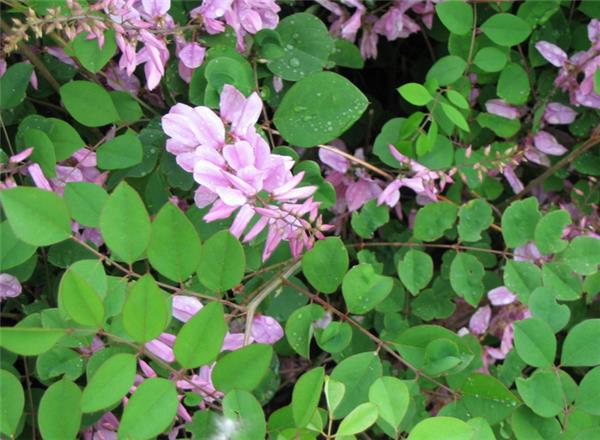
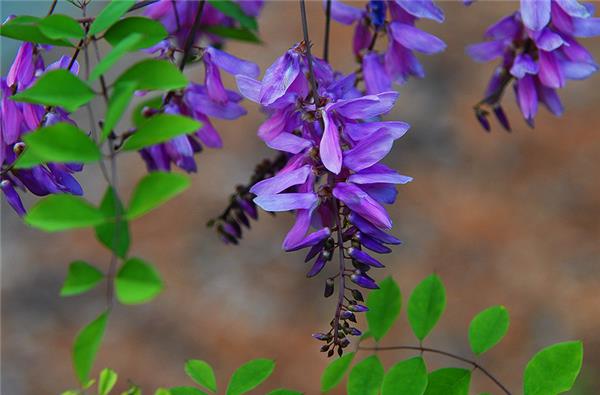
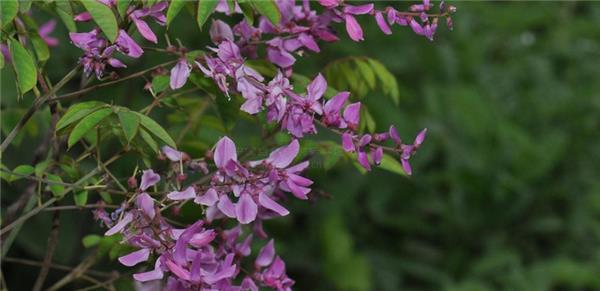
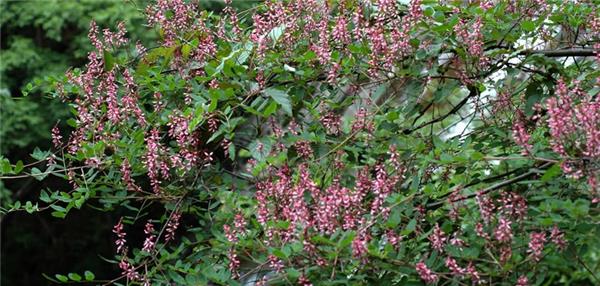
Indigofera amblyantha, also known as Girald's indigo, is a deciduous shrub in the genus Indigofera, subfamily Faboideae, family Fabaceae. It has strong adaptability, tolerates poor soil, tolerates drought, has relatively strong disease resistance, is also relatively tolerant of waterlogged conditions, and has no strict requirements for soil. It often grows in hillside thickets, open forests, or rock crevices. It is a small shrub with opposite pinnately compound leaves and cylindrical stems. It blooms with purplish-red flowers in summer in racemes, and is very attractive. It is a small shrub in the genus Indigofera, 30-100 cm tall. The stems are cylindrical, hairless, and the young branches are angular with sparse white T-shaped hairs. The pinnately compound leaves are 6-15 cm long; the petiole is (0.5-)1-2.5 cm long, the upper side of the rachis is slightly flattened with a shallow groove, covered with hairs or nearly hairless; the stipules are lanceolate, 4-6 mm long, caducous; the leaflets are in (2-)3-5 pairs, opposite, broadly ovate, ovate-rhombic, or elliptic, 1.5-4 cm long and 1-2.3 cm wide, with rounded or acute tips bearing a long small mucro, and cuneate or broadly cuneate bases, green above and glaucous green below, with sparse white T-shaped hairs on both surfaces, the midvein slightly raised above and raised below, and the lateral veins distinct on both surfaces; the petiolules are 2.5 mm long and densely hairy; the stipels are subulate, 2-3 mm long, persistent. The racemes are 5-12(-20) cm long, loosely flowered; the peduncle is 1-2.5 cm long, the rachis is angular with sparse white T-shaped hairs; the bracts are linear-lanceolate, 2-5 mm long; the pedicels are 3-5 mm long and hairless; the calyx is cup-shaped, hairless on the outside, about 3.5 mm long, the calyx tube about 1.5 mm long, the calyx teeth lanceolate-triangular with ciliate margins, the lowest calyx tooth up to 2 mm long; the corolla is pale red, rarely white, the petals nearly equal in length, the standard elliptic, 12-15(-17) mm long and about 7.5 mm wide, with a rounded tip, hairless on the outside, with short hairs along the margin, the wings hairy along the margin; the anthers are broadly ovate with tufts of hair at both ends; the ovary is hairless. The pods are brown, cylindrical, 3.5-7 cm long and about 5 mm in diameter, hairless, with purple spots on the endocarp, containing more than 10 seeds; the fruit stalk is spreading; the seeds are reddish-brown, oblong, about 5 mm long and about 2.5 mm in diameter. The flowering period is May-July, and the fruiting period is August.
II. Cultivation techniques for Indigofera amblyantha
1. Fruit collection and seed extraction
From September to October, collect pods that have reached full morphological maturity at any time, place them in a flat area to dry in the sun. After the fruit skins dry, the seeds fall out naturally. Collect the seeds of Indigofera amblyantha, remove debris, put them into woven bags, and store them in a dry place.
2. Bed preparation
Choose a relatively flat site with soil texture ranging from sandy loam to heavy loam to make a raised bed. The bed can be oriented north-south or east-west. On relatively gentle sunny slopes, beds can also be made crosswise. The bed width is 1.2-1.0 m, the bed height is 0.15-0.2 m, and the bed length depends on the ground conditions, generally 20-50 m. Spread farmyard livestock and poultry manure on the bed surface, at 500 kg per 100 sq m. Turn the bed surface to a depth of 15-20 cm so that the soil and fertilizer are fully mixed.
3. Seed treatment
7-10 d before sowing, place the seeds at the bottom of a container, slowly pour in 70°C water equal to 10 times the volume of the seeds until the container is full, and stir quickly until it reaches room temperature. The next day, pour out the water, mix the seeds evenly with sand equal to 3 times their volume, put them into woven bags, and place them in a 20-25% location to wait for germination. Alternatively, 20 d before sowing, soak the seeds in 25-30°C water for 24 h, then mix the seeds with sand, place them in a 5-10°C location, and wait for germination. Another method is to soak the seeds in water at about 30°C for 24 h, pour out the water the next day, cover the seeds with gunny sacks or old cotton quilts, and keep the indoor temperature at 25-30°C. After that, rinse the seeds once each morning with warm water until germination is seen, then prepare to sow.
4. Sowing
From mid-April to early May, use a hoe to open furrows 4 cm deep along or across the bed, with a furrow spacing of 25 cm. Scatter the seeds into the furrows at a seed spacing of about 3-4 cm. Cover with soil 2-3 cm thick, and firm the covering soil. The sowing rate is about 7 kg/667 sq m. Broadcasting can also be used, that is, evenly scatter the seeds over the bed surface, then cover all over with soil 2 cm thick.
The above are the cultivation methods for Indigofera amblyantha. I hope they can help you.